
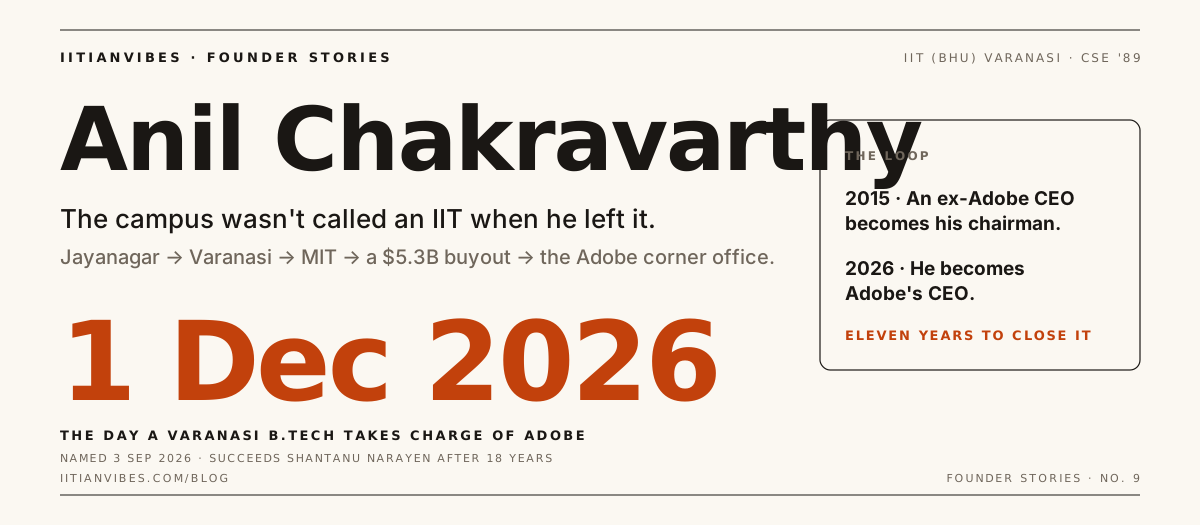
Founder Stories · IIT (BHU) Varanasi · Published 6 September 2026
On the morning of 6 August 2015, Informatica's ticker died. The data-software company's stock stopped trading on Nasdaq that day, the final act of a $5.3 billion buyout by Permira and Canada's pension fund. Two more things happened in the same press release. The chief product officer, a quiet engineer with a B.Tech from Varanasi, was named acting CEO, effective immediately. And a new board member arrived to keep an eye on him: Bruce Chizen, the former chief executive of Adobe.
Sit with that for a second. In 2015, an ex-Adobe CEO was brought in as adult supervision for Anil Chakravarthy's first day running a company. On 1 December 2026, Chakravarthy takes the Adobe chair himself, named president and CEO of a company whose stock is deep in its third straight losing year, whose board passed over the internal favourite to pick him, and whose future depends on answering the hardest question in software right now: what happens to Adobe in the age of generative AI. The loop took eleven years to close. This is how he got around it.
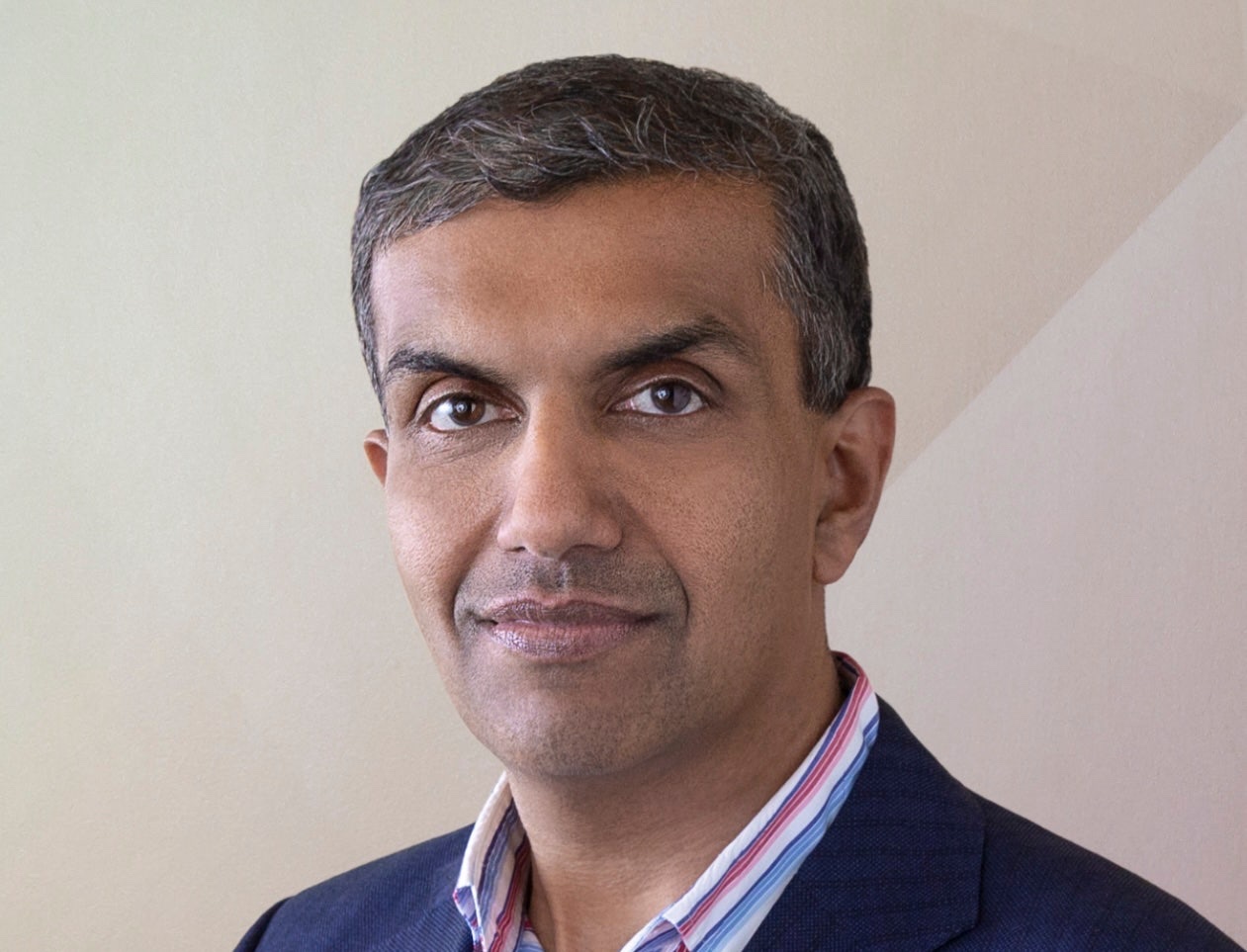
Before the IIT was an IIT: Jayanagar, Basavanagudi, and a campus on the Ganga
Chakravarthy grew up in south Bengaluru, and the paper trail is unusually specific: early schooling at Sudarshan Vidya Mandir, then Vijaya High School in Jayanagar, then pre-university at National College in Basavanagudi. After the announcement, Deccan Herald found a childhood neighbour who remembered him precisely: "He was always a very studious guy. He topped his Class 10 and was very focused on his studies. But he also played the violin. We spent a lot of our childhood playing cricket together."
The studious guy from Jayanagar then did something that scrambles today's mental map of the IIT hierarchy: he went north, to Varanasi, for a B.Tech in Computer Science and Engineering, graduating in 1989. And here is a detail that matters to anyone who cares about how institutions get their names: the campus he studied at was not called an IIT. It was the Institute of Technology, Varanasi, IT-BHU to everyone who wore its brand, and Adobe's own official announcement still lists his degree exactly that way: "a Bachelor of Technology in Computer Science and Engineering from the Institute of Technology, Varanasi, India." The IIT (BHU) name came decades after he left. He is an IIT alumnus by the campus's promotion, not his own.
Varanasi has quietly become one of the best CEO factories nobody ranks. Nikesh Arora, who runs the cybersecurity giant Palo Alto Networks, is an IIT (BHU) graduate too, and put $2 million into the institute's US alumni foundation in 2021. Between Arora and Chakravarthy, the campus on the Ganga now claims two sitting CEOs of major American software and security companies, which is a better record this decade than several of the IITs that outrank it in every coaching-centre poster.
We will be honest about the gap in the record, because the gap is itself interesting: there is no published interview anywhere in which Chakravarthy talks about his hostel, his professors, or his four years in Varanasi. Every bio, including Adobe's, jumps straight from the B.Tech to Cambridge, Massachusetts. In 1990 he moved to MIT, where he took a master's and a PhD, finishing his doctorate in 1995. Moneycontrol reports he moved to the US at 21 and later described those MIT years as the period when he "went from being an aspiring scientist to an aspiring businessman."
The thirty-year ladder, one rung at a time
What follows is the least glamorous section of any founder story we have run, and that is the point. Chakravarthy did not found anything. He climbed, patiently, for three decades, and the ladder is documented rung by rung in a biography McKinsey published alongside a 2019 interview with him:
| Years | Role | Source |
|---|---|---|
| 1985–1989 | B.Tech CSE, Institute of Technology, Varanasi (now IIT BHU) | Adobe PR |
| 1990–1995 | MS + PhD, MIT | Outlook Business |
| 1995–2000 | Consultant, McKinsey & Company | McKinsey bio |
| 2000–2001 | VP Marketing, LogicTier | McKinsey bio |
| 2001–2004 | Director, Product Management, VeriSign | McKinsey bio |
| 2004–2013 | Senior director → EVP Information Security, Symantec | Moneycontrol |
| Sep 2013 | EVP & Chief Product Officer, Informatica | Informatica PR |
| Aug 2015 / Jan 2016 | Acting CEO, then CEO, Informatica | Informatica PR |
| Jan 2020 | EVP & GM Digital Experience, Adobe; president from Dec 2021 | Adobe PR |
| 1 Dec 2026 | President & CEO, Adobe | Adobe PR |
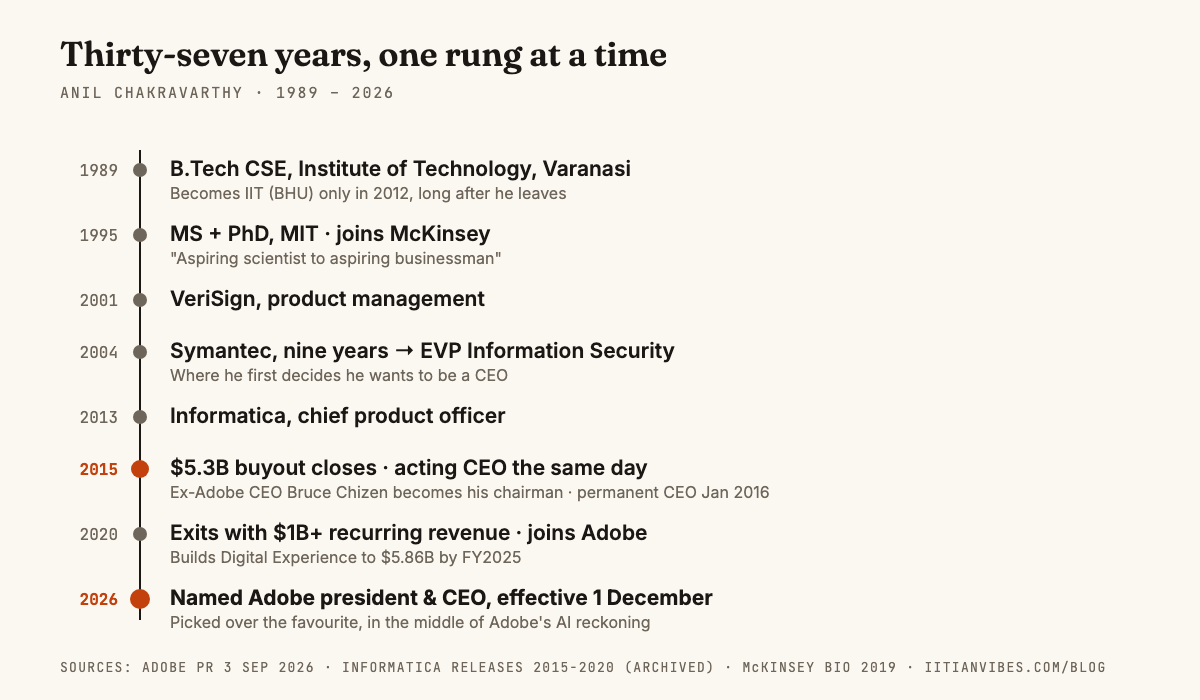
The rung that mattered most was Symantec. He spent nearly a decade there from 2004, ending as executive vice president of Information Security, and along the way ran Symantec's India technical operations. Moneycontrol, citing a 2017 CNBC podcast, records the moment his ambition changed shape: it was at Symantec, as an engineering leader, that he first realised he wanted to be a CEO. Not at MIT, not at McKinsey. Fifteen years into the ladder.
The proving ground: five years running a company that Wall Street couldn't see
In September 2013 Chakravarthy joined Informatica as chief product officer. Eighteen months later the company was gone from public view: activist pressure from Elliott Management pushed it into the $5.3 billion Permira–CPPIB buyout, announced in April 2015 and closed that August. On the day the ticker died, he was handed the company, with the former Adobe chief Bruce Chizen installed as board member, then executive chairman above him. The board made the acting title permanent in January 2016, crediting him with shipping "the most important platform release in the company's history" during the audition.
His day-one statement reads, in hindsight, like the entire playbook he would later sell to Adobe's board:
"It is a privilege to lead the world-class Informatica team in this promising new phase of growth as a private company. Our transformative innovation roadmap includes four distinct billion-dollar opportunities: cloud integration, next generation big data integration, MDM solutions and data security. And living our customer-first culture, we will evolve our business model to match customers' preferences for pay-for-use subscription offerings." — Anil Chakravarthy, 6 August 2015
Under private-equity ownership, with no quarterly earnings theatre, he did three things. He moved a licence-software company to subscriptions. He launched CLAIRE in May 2017, a metadata-driven AI engine, "with clairvoyance in mind and AI in the center" as the launch release put it, years before AI-in-everything became a keynote requirement. And he articulated, in that 2019 McKinsey interview, a view of AI and work that reads as very current seven years on: "It's hard to do the entire job with people because these tasks are extremely repetitive... it's a task that's much better done by a software robot, to automate as much of this tedious work as possible, with humans to handle the exceptions that require more judgment."
The scoreboard when he left, from the company's own January 2020 release: more than $1 billion in recurring revenue in FY2019, record expected bookings, a leader in all five Gartner Magic Quadrants it played in. He stepped down on 2 January 2020 "to pursue other professional opportunities." The opportunity had a name. Within the month he was at Adobe, running its Digital Experience business.
The pick nobody expected
The Adobe years, 2020 to 2026, were the same trick at a bigger scale: take the enterprise side of a famous consumer-software company and make it a real business. Adobe's announcement credits him with building CX Enterprise, GenStudio and Brand Visibility, scaling the Experience Platform, and championing the Workfront and Semrush acquisitions. By FY2025 the Digital Experience segment he built did $5.86 billion in revenue.
Here is why the succession stunned people anyway: the other candidate's business was three times bigger. David Wadhwani ran the creativity and productivity side, roughly three-quarters of Adobe's revenue by Jefferies' arithmetic, and was "widely viewed as a top candidate," per CNBC's reporting. On 3 September 2026, after a selection process the board's special committee ran for six and a half months, Adobe announced Chakravarthy. Jefferies' Brent Thill expects further changes "as Chakravarthy reshapes the organization." Wadhwani, 19 years at Adobe across two stints, resigned. His exit note was gracious; Adobe's press release does not mention him at all.
The market's verdict was immediate and cold. Adobe shares, already down 18 per cent for the year after two straight annual declines of more than 20 per cent, fell nearly 7 per cent the day after. The street split on cue: Morgan Stanley downgraded to Underweight at a $240 target on AI-competition fears, while Barclays and RBC raised their targets to $295 and $315. The appointment at least ends the succession watch that began when Shantanu Narayen, CEO for 18 years, signalled retirement in March. It does not end the harder uncertainty: the CFO chair is also empty, Dan Durn left for Marvell in June, and the existential question, whether generative AI erodes or expands a company built on selling creative tools, is now Chakravarthy's to answer. His own framing, from the announcement: "the next era of agentic software for creativity, productivity and customer experience."
Why did the board choose the smaller segment's operator? Read Narayen's endorsement carefully: "an experienced transformational leader" with "a proven record of building and delivering category-defining products." The board that watched AI upend its market did not pick the steward of the threatened crown jewels. It picked the man who has now twice taken an older software business and rebuilt its model, once under private equity at Informatica, once inside Adobe's enterprise wing. Whether that is the right read of the moment is precisely what the next three years will test, starting with his first earnings call as CEO-designate on 10 September.
Bengaluru claims him. Varanasi made him. Reddit doesn't mention the IIT at all.
Something odd happened when the news hit Indian Reddit, and it says a lot about how alumni identity actually works. The biggest thread was not in a startup sub or a tech sub. It was r/Bengaluru, 192 upvotes: "Kannadiga Anil Chakravarthy from Bengaluru named as next Adobe CEO." The sub spent the day litigating his exact neighbourhood, Jayanagar 4th T Block versus Basavanagudi. In every thread we pulled, across r/Bengaluru, r/ValueInvesting, r/Adobe and r/IndiaSpeaks, the number of comments mentioning IIT-BHU, Varanasi, or the word IIT is zero. The city you grew up in beats the campus that trained you, at least in the comments section.
The warmest verification came from someone who had actually worked for him. From u/Novel-Pack1062 (64 upvotes): "A decade ago when I was working in Informatica, he would visit our indian office annually. I have seen him converse fluently in Kannada like a native." The coldest came from the top comment on the same thread, u/Active_Historian_964 (115 upvotes): "American*. These guys have nothing to do with Karnataka today, and they give nothing back."
And Adobe's actual customers greeted their new chief with the house specialty, subscription rage. From r/Adobe, u/mck_motion (12 upvotes): "Head of Customer Experience. I can't think of anyone who hates Adobe more than Adobe customers." On r/ValueInvesting's 134-comment thread, a commenter claiming to be an Adobe employee (unverifiable, from a weeks-old account, and pushed back on in the replies) declared that "absolutely NO ONE at Adobe is happy about this decision," while another self-identified employee countered: "I'm with Adobe and I see Anil as the better choice. David already had major strategic bets that didn't pan out." Take both as temperature, not fact. The temperature is: contested.
What a Varanasi B.Tech's route to Adobe actually teaches
Five things from the record, none of them "follow your passion":
- The operator route to CEO is real, and it is slow. Fifteen years passed between his B.Tech and the moment (at Symantec) he even decided he wanted the top job; another decade before he got one. Every profile of a 24-year-old founder is survivorship bias; this is the base rate.
- Run the smaller thing well rather than ride the bigger thing. Twice, at Informatica (data plumbing, not consumer software) and at Adobe (the enterprise side, a quarter of revenue), he took the less glamorous business and made it the proof of competence. The board picked the operator over the custodian of the famous product.
- Private-equity years count double. Five years running Informatica for Permira, with no public glory, produced the exact resume line (subscription transition + $1 billion recurring) that an AI-scared board wanted in 2026.
- Your campus's name can change under you; the degree keeps working. He left an institute that wasn't called an IIT. It became one 23 years later, and its brand now claims him. Do the work; let the letterhead catch up.
- Say your thesis early and in public. His 2015 day-one statement (subscriptions, four billion-dollar bets) and his 2019 automation-plus-human-judgment line are both on the record, and both aged well. The paper trail is the reputation.
The 23 IITs produced Google's CEO, IBM's CEO, Micron's CEO, and now, by rename if not by name, Adobe's. If the campus on the Ganga is yours, the IIT BHU collection is where we keep the merch. Wear it for the institute that was good enough for two sitting American-software CEOs before the coaching posters noticed.
FAQ
Which IIT did Adobe's new CEO Anil Chakravarthy study at?
He earned a B.Tech in Computer Science and Engineering from the Institute of Technology, Varanasi, graduating in 1989. The institute became IIT (BHU) Varanasi in 2012, so he is an IIT (BHU) alumnus by the campus's current name. He later completed an MS and PhD at MIT in 1995.
When does Anil Chakravarthy become Adobe's CEO?
On 1 December 2026, when he becomes president and CEO and joins Adobe's board. Shantanu Narayen, CEO for 18 years, becomes executive chairman. The announcement came on 3 September 2026 after a six-and-a-half-month board selection process.
Was Anil Chakravarthy ever a CEO before Adobe?
Yes. He led Informatica, the enterprise data-management company, from August 2015 (acting) and January 2016 (permanent) until January 2020, under Permira and CPPIB's private-equity ownership. The company reported more than $1 billion in recurring revenue for FY2019 as he left.
Why did Adobe's stock fall after his appointment?
Shares fell nearly 7 per cent the day after, extending an 18 per cent decline in 2026 that followed two straight losing years. Analysts split: Morgan Stanley downgraded Adobe to Underweight on AI-competition fears, while Barclays and RBC raised their price targets. The favourite for the job, David Wadhwani, was passed over and resigned. The deeper worry is generative AI's threat to Adobe's core creative business.
Last updated: September 2026. Corrections to hello@iitianvibes.com.