ePlane: Inside the IIT Madras Flying-Ambulance Lab
How Prof. Satya Chakravarthy turned a Chennai combustion lab into the country's first eVTOL company, and put a two-tonne prototype on the tarmac in the same week Apollo Hospitals signed on to fly patients in it.
When will ePlane's flying taxi start flying passengers?
How much funding has ePlane raised?
How does ePlane compare to Joby Aviation and Archer?
What is Apollo Hospitals' role in the partnership?
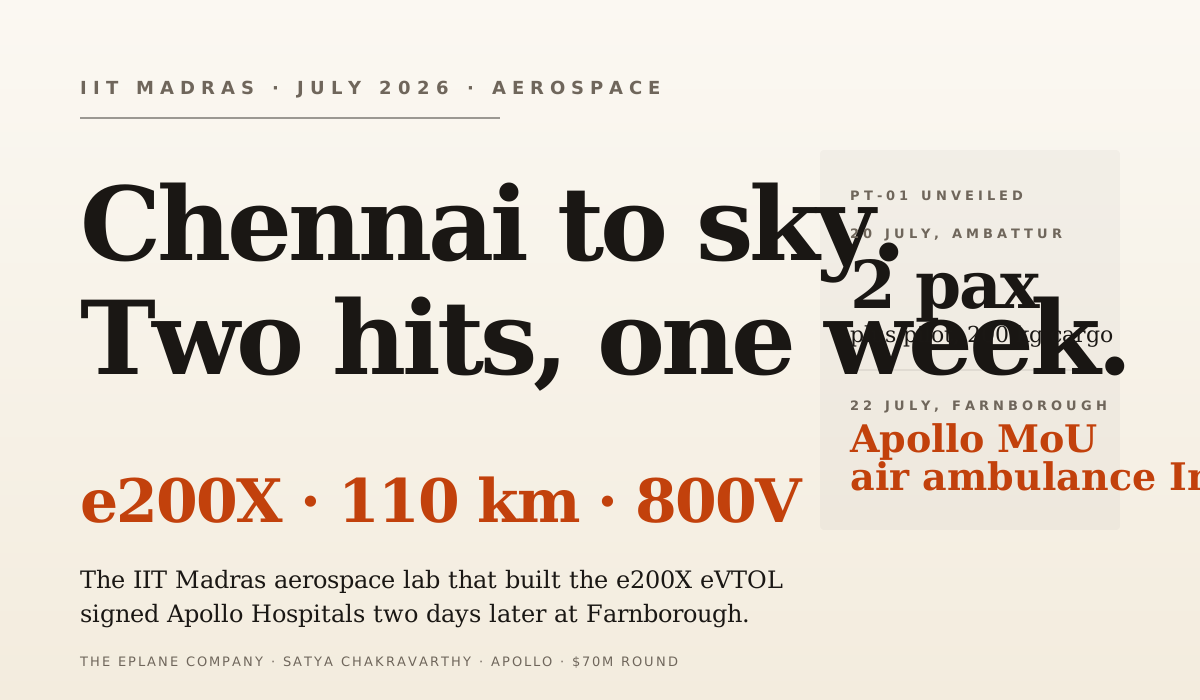
July 20, 2026. A 60,000 sq ft hangar in Ambattur, Chennai. Prof. Satya Chakravarthy stood next to a two-tonne carbon-fibre aircraft that had, until that morning, existed only as ten thousand CAD files, a wind-tunnel dataset, and a promise made to investors seven years ago. Anand Mahindra was there. So were Directorate General of Civil Aviation officials, a National Highways Authority team scouting vertiport sites, and roughly a hundred journalists who had spent the last decade being told that India's flying taxi was two years away, always two years away. This time the aircraft was in the room. Its name was PT-01, the first full-scale e200X eVTOL prototype. Two days later, at the Farnborough International Airshow near London, Apollo Hospitals Chairman Prathap C. Reddy signed a Memorandum of Understanding to fly patients in it. Two hits, one week. The story India's deep-tech ecosystem had been waiting for since Agnikul lit its first engine at Sriharikota.
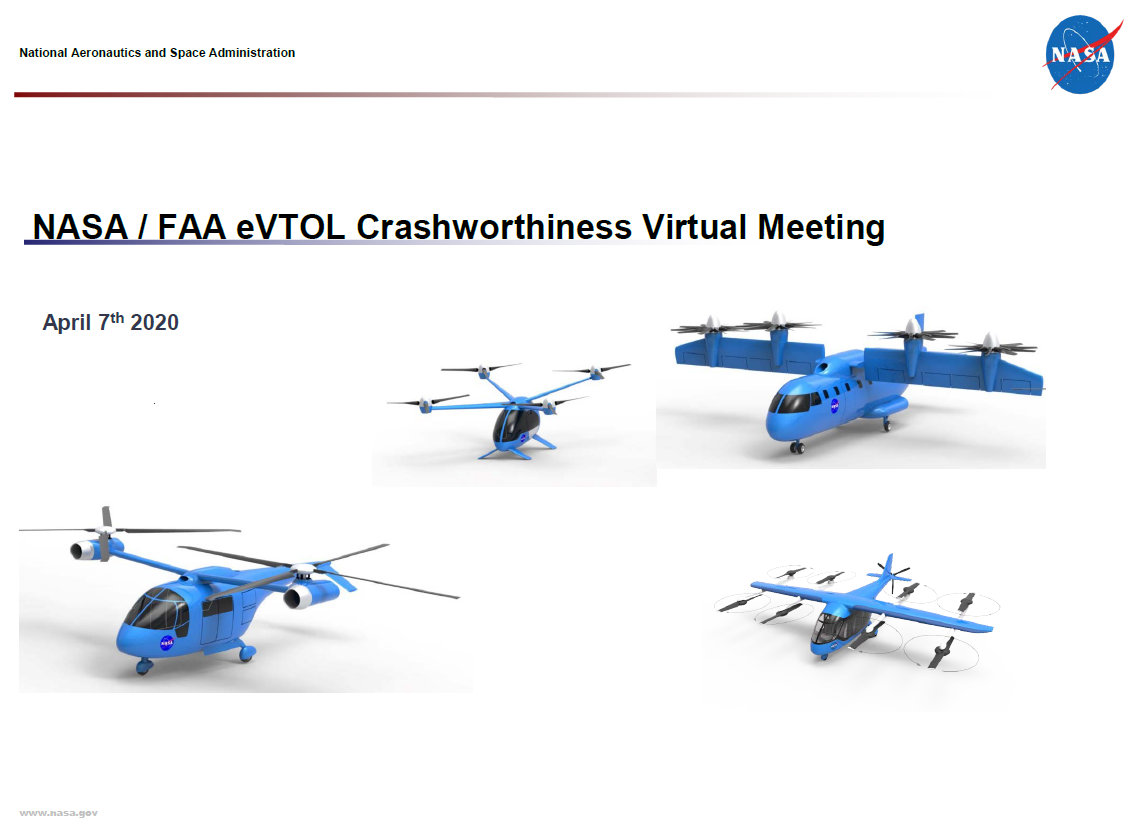
NASA eVTOL concept illustration — the general class of aircraft ePlane's e200X belongs to. Photo: NASA, Public domain via Wikimedia Commons.Editorial poster · IITian Vibes
Chapter 1: A professor who thought planes were built on the wrong side of the planet
Satyanarayanan Ramanan Chakravarthy, Satya to everyone at IIT Madras, did not grow up dreaming of eVTOLs. He grew up wanting to understand fire. He earned his B.Tech in Aerospace Engineering from IIT Madras in 1991, walked away with the HAL Prize for Best Undergraduate, then flew to Atlanta for a Master's and PhD at Georgia Tech, both in combustion. In 1997 he came home to the Aerospace Engineering department at IIT Madras as a young faculty member. By 2009 he was a full professor. His research was in gas turbines, ramjets, solid propellants. The kind of high-temperature chemistry that powers everything from a Tata Ace to a BrahMos missile.
Then in 2011, the Department of Science and Technology handed him a Rs 90 crore mandate to build the National Centre for Combustion Research and Development. Thirty faculty from six departments. Test benches for gas turbines, rocket engines, IC engines, fire research. As of 2026 it is the largest academic combustion research infrastructure in the world. Industrial partners include GE, Shell, ISRO, DRDO, Mahindra, TVS, Siemens, Cummins, Thermax, and Tata Power. Which meant that by 2018 Satya Chakravarthy had, sitting inside IIT Madras Research Park, essentially every tool an aerospace engineer could ask for.
He also had a thesis. In a rare, provocative interview with The Ken, Chakravarthy has argued that global aviation was designed on the wrong side of the planet, for wide American highways and empty European countryside, not the density and chaos of Asian cities. A Cessna needs a runway. A Robinson R44 needs a helipad with a 25-metre landing radius and a pilot willing to fly a 30-year-old rotorcraft over Mumbai. Neither works for a country where the average urban commute has grown 22% slower in the last decade while GDP per capita has doubled. What if the aircraft was small enough to land in a hospital parking lot? Small enough that a Tier-2 city could build ten of them for the price of one helipad?
That was the question that kept Satya Chakravarthy up in 2018. The person he was going to answer it with hadn't walked into his office yet.
Chapter 2: A balcony conversation at 10 PM
Pranjal Mehta was not an aerospace engineer. He was an MBA type who had drifted through a couple of startups and was, one evening in Chennai in early 2019, having a casual conversation with a friend about a Harvard Business School case study on Uber Copter, the helicopter taxi service Uber had piloted in New York. The friend mentioned that a professor at IIT Madras was thinking about the same problem. Mehta wangled an introduction. Within a week, according to Marksmen Daily's founding-story reporting, Mehta found himself on Chakravarthy's balcony at 10 PM being told, with the confidence of someone who had built a Rs 90 crore combustion centre, exactly why India was going to have flying taxis before it had a functioning metro network in most of its cities.
The pitch that night was still helicopter-based. It was Mehta who pushed toward pure electric, and Chakravarthy who ran the numbers and saw that battery energy density had finally crossed the threshold where a two-tonne aircraft with vertical lift was possible at 200 Wh/kg pack density. In mid-2019, The ePlane Company was formally incubated at IIT Madras Research Park. Chakravarthy was CEO, holding a full teaching load. Mehta ran operations. First seed cheque came from Speciale Invest, the Chennai deep-tech fund run by another IIT Madras alum, Vishesh Rajaram.
The first prototypes were embarrassing. Small-scale tech-demo airframes that could hover for a few seconds and then had to be caught by hand. A 1:5 scale model. A 1:2 scale model. A rebuild after a hard landing in 2021. Through all of this, Chakravarthy kept teaching AS3010 and AS5445 to third-year aerospace undergrads at IIT Madras. A fact that a current student flagged on Reddit as recently as this year.
"There is an IIT-M incubated startup called ePlane that is researching airtaxi and is the first startup in the country to get DGCA certification." u/Minato_the_legend on r/iitmadras, January 2025
The Reddit voice is casual. It is also, in its way, the proof of concept. When students on the campus subreddit talk about ePlane not as a foreign wonder but as "one of ours, sitting in the Research Park", the company has already crossed the credibility barrier that most Indian deep-tech startups die trying to cross. Meanwhile the actual credibility barrier, regulatory, was still ahead.
Chapter 3: The DGCA problem nobody wanted to inherit
India's Directorate General of Civil Aviation has a reputation for being polite and slow. It is polite because most of its senior officers are ex-IAF pilots with a deep respect for engineering. It is slow because the regulatory manual is inherited almost verbatim from the US Federal Aviation Administration, which is designed to certify aircraft built by Boeing and Cessna, not aircraft that don't quite have a category. eVTOLs, electric vertical take-off and landing aircraft, are technically "powered-lift" vehicles, a category the FAA only formally rulemade in March 2026 with Part 194. Before that, everyone was flying under bespoke special-condition frameworks.
India in 2019 had no such framework at all. Which meant Chakravarthy's first job as CEO was, effectively, to write it. In parallel, DGCA opened a working group on VCA (Vertical Take-Off and Landing Capable Aircraft) type certification, and published an advisory circular in September 2024 that laid out baseline airworthiness requirements. ePlane engineers helped draft chunks of it. This is what "deep-tech in India" actually looks like. You don't just build the product, you also build the paperwork universe in which the product is legal.
In May 2023, ePlane became the first private Indian company to receive Design Organisation Approval from DGCA for an electric aircraft. In January 2025, DGCA formally accepted the e200X's Type Certification application. In practical terms, this means the regulator has agreed to certify the specific aircraft, a step Joby Aviation only completed with the FAA in late 2024. India's regulator, glacially, is moving.
Not everyone believes it will move fast enough. On the r/AirTravelIndia thread where ePlane's air ambulance announcement was first shared in early 2025, one commenter cut to the bone:
"Do you have any idea what goes into certifying a aircraft? The DGCA and GoI are not equipped to handle such a task, flying taxi have fundamental safety issues..." u/foxbat_s on r/AirTravelIndia, Feb 2025
He is not entirely wrong. DGCA has 350 airworthiness engineers for a country certifying its first eVTOL, its first indigenous private launch vehicle (Agnikul), its first indigenous fifth-gen fighter (AMCA), and roughly 900 registered drone operators. The bandwidth math is ugly. Which is one reason ePlane has been so aggressive about hiring former DGCA and DRDO airworthiness professionals internally. Chief of Airworthiness Divya Manchanda is a former DGCA official. Head of Safety comes from HAL. The regulatory choke-point is being managed by embedding regulatory expertise inside the company. Not elegant, but pragmatic.
Chapter 4: The compact-airframe bet
The e200X's most controversial design choice is also its most consequential. Compare wingspans. Joby Aviation's S4: 15 metres. Archer Midnight: 15 metres. Vertical Aerospace VX4: 15 metres. EHang EH216: 5.6 metres but only 30 km range. The e200X: 8 metres, 110 km range, 2.2 tonnes.
Chakravarthy's argument, in a 2024 STAT Times interview: "We are the most compact eVTOL in the world at any size that we make." The point isn't the size for size's sake. The point is the vertiport footprint. A Joby S4 needs a 30m x 30m landing area with clearance. An e200X needs 12m x 12m. In dense Indian cities, that's the difference between "we can retrofit rooftops and hospital forecourts" and "we need to knock down a block and pour a helipad". ePlane secured multiple patents on the compact airframe layout, which is what makes the design defensible.
The bet also has an operational corollary. A compact aircraft with a shorter turnaround time can fly up to 60 short trips a day on a single battery swap, according to Chakravarthy. A 15-metre-wingspan S4 doing 200 km inter-city hops can do maybe 8-10 rotations. Different vehicle, different economics. Joby is chasing the "helicopter but cleaner" market. ePlane is chasing the "auto-rickshaw of the sky" market. Only one of those maps to India's ground reality.
Here's how the e200X stacks up against the three companies most often mentioned in the same breath.
Two things jump out. First, ePlane is not competing with Joby head-on. It is competing in the same category on paper and in an entirely different market in practice: dense-city air ambulance and short-hop passenger, not exurban commuter. Second, the certification timeline gap is only 12-18 months. Given that Joby's team is 10x bigger and has 40x more capital, that's an astonishing efficiency ratio. It is also a warning: the last 18 months of certification is where every eVTOL company either dies or ships.
Chapter 5: Apollo, Farnborough, and the pivot to air ambulance
Somewhere between 2021 and 2023, Chakravarthy made a quiet strategic decision that has since defined the company's revenue trajectory. He deprioritised the passenger air taxi as the first go-to-market. He led with air ambulance instead. In a January 2025 interview flagged on r/indianews, ePlane's Chief of Airworthiness Divya Manchanda spelled out why: "First go-to-market is air ambulances before urban air taxis." The unit economics are simpler. The public willingness-to-pay is higher. The regulatory pathway, medevac operations under existing air ambulance frameworks, is shorter than a general-purpose passenger service. And critically, the customer is a single hospital chain, not a million retail consumers.
Which brings us to the Farnborough boardroom on July 22, 2026. Farnborough International Airshow is where the global aviation industry closes its deals. Boeing announces orders here. Airbus signs its Emirates contracts here. For an Indian deep-tech startup to sign a marquee MoU at Farnborough, with Apollo Hospitals, no less, is a category leap. Prathap C. Reddy, the 92-year-old cardiologist who built Apollo from a single 150-bed hospital in Chennai in 1983 into a chain with 12,000 beds, does not sign symbolic MoUs. His quote at the signing was direct: "India loses far too many lives simply because help cannot arrive in time."
The proposed collaboration covers inter-hospital transfers, trauma response, cardiac and stroke emergencies, and organ transportation. ePlane says its aircraft can transport a patient seven times faster than a road ambulance on certain routes at a fraction of the cost of a helicopter transfer. The MoU also opens the door, subject to commercial terms, to a strategic investment by Apollo in ePlane. Apollo has separately said it may place orders for both the e200X aircraft and medical delivery drones from Amber Wings, ePlane's drone subsidiary.
Anand Mahindra, who was at the Chennai unveiling two days earlier, put it on X in the sentence that will probably end up as the Wikipedia epigraph: "IIT Madras has become one of the world's most exciting and active incubators. Thanks to them and the rapidly growing number of ambitious incubators throughout India, we're no longer seen as a country that lacks genuine innovators. Audacious aspirations matter. Accept no limits."
Chapter 6: The money question and the ecosystem question
ePlane has raised $21.5 million across eight rounds from 79 investors, per Tracxn. The $14M Series B in November 2024 was co-led by Speciale Invest and Antares Ventures with participation from Micelio Mobility, Naval Ravikant, Java Capital, Samarthya Investment Advisors, Redstart (Naukri's arm) and Anicut. That is, in Silicon Valley terms, a seed round. Joby has raised $2.3 billion. Archer has raised $1.7 billion. Vertical Aerospace, over $700 million. ePlane has built and unveiled a full-scale prototype for less than 1% of what its competitors have burned.
The capital gap will not stay that way. ePlane is currently in market for a $40-50 million round combining equity, convertibles and government-backed RDI support, with Speciale Invest again in discussions to co-lead. Board approval for a $15-20 million convertible tranche is already in place. Total target for the certification-and-flight-test funding block: around $70 million. Which sounds like a lot until you look at Joby's quarterly cash burn.
Where does the money live in India for this kind of deep-tech? Historically, nowhere. Which is why the story of ePlane is inseparable from the story of IIT Madras Research Park itself, an ecosystem that has quietly become the single densest concentration of deep-tech founding energy in the country. IIT Madras Incubation Cell crossed 500 deep-tech startups in late 2025. It sits alongside Ather Energy, Uniphore, Mindgrove, Agnikul, GalaxEye. Chakravarthy himself co-founded Agnikul Cosmos with Srinath Ravichandran and Moin SPM in 2017 (private launch vehicle, first commercial flight planned soon), Aerostrovilos Energy (small gas turbines), and GalaxEye (satellite imaging).
The pattern is legible. One professor. One combustion lab with the world's best academic infrastructure. Four startups spinning out, each attacking a different corner of aerospace. All of them incubated within 800 metres of each other in Adyar, Chennai. This is what deep-tech industrial policy looks like when it actually works, and it is worth pausing on: the same lab that trains third-year aerospace undergrads on solid propellants also happens to be, in 2026, India's most productive aerospace startup foundry. It didn't happen by accident. It happened because one professor decided, twenty years into his career, that his job description now included "startup enabler" and then went and did it.
Chapter 7: What current IITians should actually take from this
It is fashionable, at IIT Madras and elsewhere, to worship the founder story. Chakravarthy's version is less a story than a data set. Here is what the data actually says.
One. Pick a problem you saw firsthand. Chakravarthy saw Chennai traffic. He saw ambulances stuck at Adyar signal for 40 minutes with a stroke patient bleeding out. He did not read about eVTOLs in Wired and decide to import the idea. Every real Indian deep-tech founder I know followed the same path. Bhavish Aggarwal watched a taxi driver in Bangalore refuse his fare, Sridhar Vembu could not afford US-priced enterprise software so he built his own. The insight has to be lived, not clicked.
Two. Build the ecosystem before you build the company. Chakravarthy spent 2011 to 2018 building NCCRD before ePlane was ever a slide deck. NCCRD is what made ePlane possible: the test benches, the industrial partnerships with GE and DRDO, the trained combustion engineers. If you skip the ecosystem step and jump straight to founding, you burn all your capital learning what should already exist around you.
Three. Regulation is a product. In hard-tech categories, the paperwork universe in which your product is legal is as important as the product itself. ePlane hired ex-DGCA and ex-HAL airworthiness people early. Agnikul co-drafted parts of India's private space policy. This is the opposite of the SaaS founder's playbook, where you launch first and beg forgiveness. In hardware, you shape the regulator alongside the product, from day one.
Four. Compact is a strategic choice, not an engineering compromise. The e200X's 8-metre wingspan is not a scaled-down Joby. It is a fundamentally different product built for a fundamentally different geography. Founders coming out of the IIT system too often import American product design and complain when it doesn't fit. Design for where you actually live.
Five. The professor-founder model works, but only if the professor takes it seriously. Chakravarthy is CEO, not chief scientific advisor. He has skin in the game, board seats, personal stake in the ticker. Most IIT faculty who start companies keep them at arm's length. The ones who cross over, Anurag Kumar at IISc, Ashok Jhunjhunwala at IIT Madras before him, are the ones whose companies scale.
None of this is a guarantee. Certified flight testing in 2027 is still two years and probably $70M away. The DGCA can slow-walk. Battery chemistry can regress. Apollo can back out. Investors get cold feet in every category eventually.
But if you are a current student sitting in Himalaya mess at IIT Madras reading this, understand that a man who taught your parents' generation combustion is currently, in the same institute where you eat sambar rice on a Tuesday night, running a company that just signed India's largest hospital chain to fly patients in an aircraft his lab built. This is not a startup story. This is what the second decade of Indian deep-tech looks like when it stops being about landing pages and starts being about landing gear.
Frontliner__UV, a Reddit commenter following the Indian eVTOL space, put it most bluntly on r/StartUpIndia: "Infact there are some eVTOL startups in india like Nextleap Aeronautics, ePlane and BluJ. I have seen the prototype of 1st two." The prototypes exist. They are being flown, in low-altitude tethered tests, by young Indian engineers most of whom did their B.Tech at an IIT and did not leave. That, more than any pitch deck, is the flywheel Chakravarthy has spent twenty-five years building.
If you own a piece of an IIT, through your batch, through your kid, through a T-shirt in your wardrobe that says IIT MADRAS across the chest, you now own a piece of this story too. That is what the phrase alma mater means when it stops being nostalgic and starts being consequential.
Photo: Tushraa, CC BY-SA 4.0 via Wikimedia Commons — IIT Madras Research Park, where The ePlane Company is incubated.
Frequently asked questions
Who founded The ePlane Company?
Prof. Satya Chakravarthy, aerospace engineering faculty at IIT Madras and coordinator of the National Centre for Combustion Research and Development, co-founded ePlane in 2019 with Pranjal Mehta. The company is incubated at IIT Madras Research Park.
What is the e200X eVTOL?
The e200X is a two-tonne all-electric vertical take-off and landing aircraft. It carries a pilot plus two passengers or 200 kg of cargo, has a 110 km range, and is built around an 800V powertrain with an 8m x 11m carbon-fibre airframe.
When will ePlane's flying taxi start flying passengers?
Certified flight testing is scheduled to begin in mid-2027. The DGCA accepted ePlane's Type Certification application in early 2025. Commercial passenger service is targeted for the late 2020s, with air ambulance operations expected before urban air taxi service.
How much funding has ePlane raised?
$21.5 million across eight rounds from 79 investors, including a $14M Series B co-led by Speciale Invest and Antares Ventures, with backing from Micelio Mobility, Naval Ravikant, Java Capital, and Anicut. A larger $70M round combining equity and government RDI support is currently open.
How does ePlane compare to Joby Aviation and Archer?
Joby and Archer target 12-16m wingspans and long inter-city routes. ePlane's e200X has an 8m wingspan and 110 km range. A deliberate choice to fit dense Indian cities where landing space is scarce. Joby launches commercially in Dubai in Q2 2026, Archer in Abu Dhabi in Q3 2026.
What is Apollo Hospitals' role in the partnership?
Apollo signed an MoU at Farnborough on July 22, 2026 to co-develop electric air ambulance operations using the e200X and medical delivery drones from Amber Wings, ePlane's subsidiary. The deal opens the door to a strategic investment by Apollo, subject to commercial terms.