SINE IIT Bombay Closes ₹250 Cr Y-Point Deep-Tech VC Fund
SINE, the IIT Bombay incubator that helped launch Gupshup, ideaForge and Atomberg, achieved first close of its ₹250 crore Y-Point Venture Capital Fund on 25 July 2026 and unveiled a new brand identity the same day. It is the first VC fund in India housed inside an academic incubator.
Why is it called "incubator-linked" and why is that a first for India?
When did the Y-Point Fund achieve first close?
What sectors will Y-Point invest in?
How does Y-Point compare to other Indian deep-tech VCs?
Who is Shaji Varghese, the SINE CEO leading the fund?
What SINE-incubated companies have gone big?
What does this mean for a first-time deep-tech founder in India?
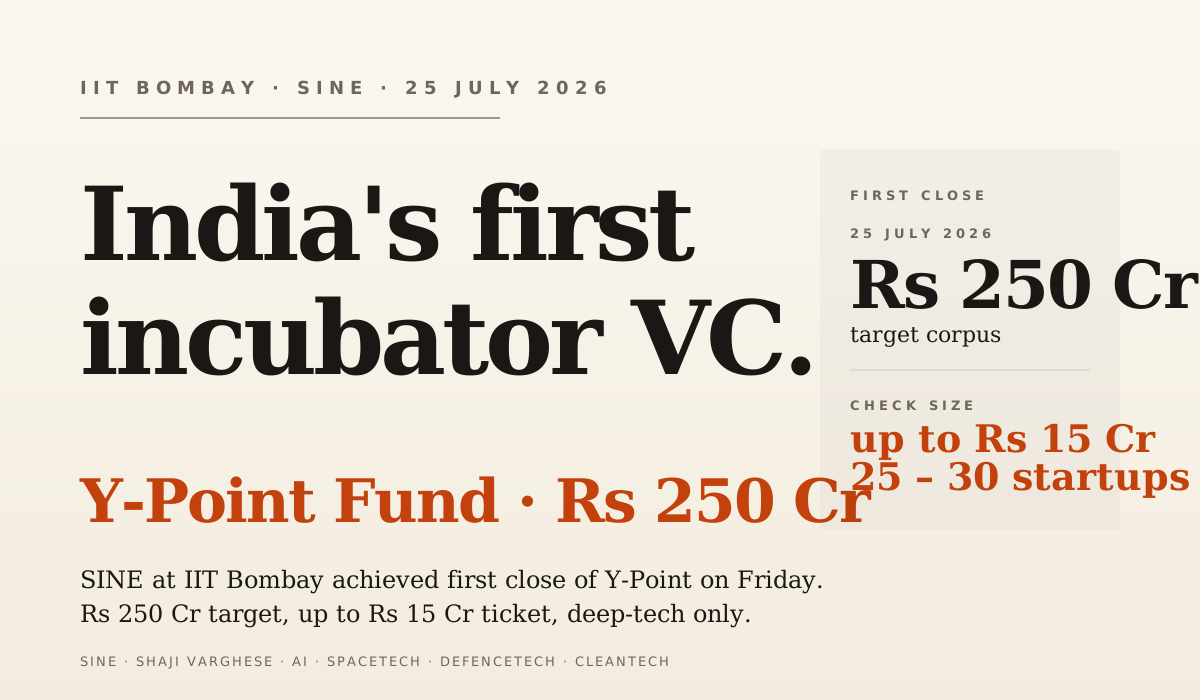
SINE, the Society for Innovation and Entrepreneurship at IIT Bombay, hit first close of the ₹250 crore Y-Point Venture Capital Fund on 25 July 2026 in Mumbai, and unveiled a redesigned brand identity the same day. Y-Point is the first venture capital fund in India housed inside an academic incubator. The general partner is SINE itself, not a spun-out fund house or a corporate arm. The fund will write pre-seed and seed cheques up to ₹15 crore into 25 to 30 startups across AI, advanced manufacturing, next-gen materials, life sciences, climate tech, space and defence, and nuclear tech, with priority for IIT Bombay ventures. The announcement was carried by Free Press Journal and reported earlier in December 2025 by YourStory when the fund first received SEBI Category II AIF registration. The primary source is the IIT Bombay press release.
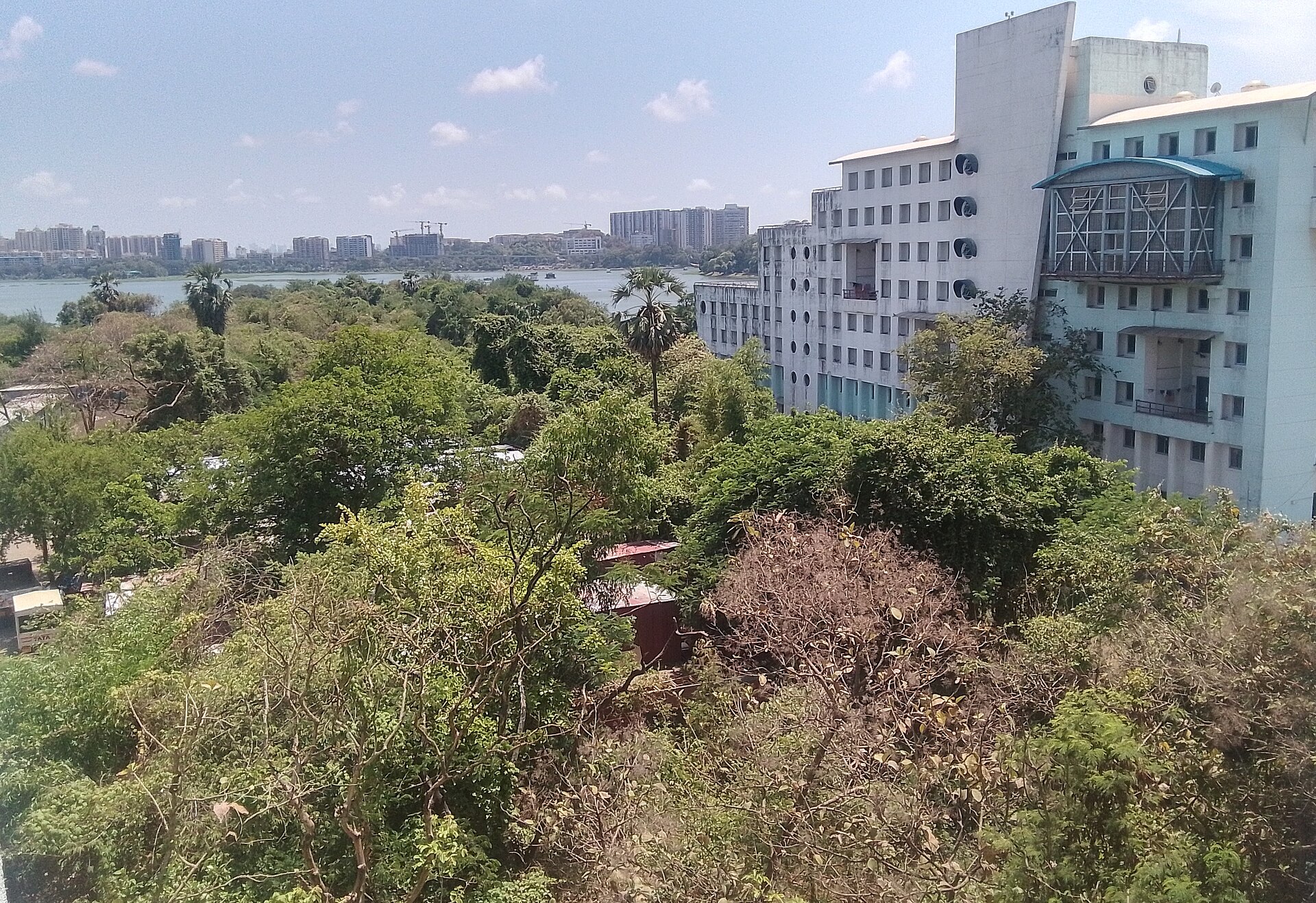
Powai Lake and Hostel 14, IIT Bombay — home turf for SINE-incubated startups. Photo: Shishirdasika, CC BY-SA 4.0 via Wikimedia Commons.Editorial poster · IITian Vibes
What Y-Point actually changes for Indian deep-tech founders
Indian VCs have written cheques into deep-tech before. Speciale Invest, Endiya Partners, YourNest, Blume Ventures and 100X.VC all have hardware, biotech, or space investments on their books, and every 2026 India VC list features at least a handful of them. What none of those firms have is a lab, a research faculty, a shared cleanroom, and 500+ startup alumni sitting three floors below the investment committee. Y-Point does. That is what "incubator-linked" means, and that is why the IIT Bombay press release keeps circling the word "first".
The wraparound is the story. Speciale can wire ₹10 crore into a hard-tech founder in a week; it cannot hand them a bench in the Kanwal Rekhi School to keep iterating. Y-Point can, because SINE has been doing exactly that since 2004. The fund is a piece of infrastructure the incubator now controls, not an external capital source it has to negotiate with.
The ₹100 crore that quietly became ₹250 crore
The fund did not appear from nowhere. In November 2024, SINE first flagged plans for a ₹100 crore deep-tech VC. Between then and the December 2025 SEBI registration, the target corpus was scaled up to ₹250 crore. IIT Bombay's Board of Governors sanctioned the fund on 11 December 2025, with Dr K. Radhakrishnan, the former ISRO chairman and BoG chair, publicly framing it as a lever to strengthen India's global competitiveness by harnessing scientific talent. Seven months later, first close is done.
Shaji Varghese, who took over as SINE CEO in December 2023 after 21 months as deputy CEO and roughly three decades in private equity and startup advisory, is now running the fund. In his first CEO interview, Varghese told Startup Success Stories that SINE would pivot harder into deep-tech. Y-Point is that pivot with a wallet attached. On the announcement day, he told reporters the team expects the full raise to close in six to nine months and two to three initial investments to land in the next two to three months.
"Innovation ecosystems create greater impact when they support ideas from discovery to deployment." — Prof. Shireesh Kedare, Director, IIT Bombay
Kedare is a solar-thermal researcher from the Department of Energy Science and Engineering who took over as Director on 6 May 2024, succeeding Prof. Subhasis Chaudhuri. He inherited SINE mid-restructure; Y-Point is the first flagship product of that new administration to actually ship. Prof. Nishant Sharma, the Ramakrishna Bajaj Chair Professor at the Industrial Design Centre and SINE's Professor-in-Charge, delivered the vote of thanks at the launch, framing the new brand identity as a signal of collaboration between researchers, entrepreneurs, investors and industry partners. Deputy Director (ART) Prof. Milind Atrey underlined that deep-tech entrepreneurship needs "patient capital, institutional support and strategic partnerships", not just scientific excellence. Read that as: cheque size alone is not the moat.
SINE's track record — 500 startups, one unicorn, one listed drone-maker
The reason anchor LPs believed the pitch is 22 years of receipts. Founded in 2004 out of the IT business incubator set up at Kanwal Rekhi School in 1999, SINE has supported roughly 500 startups over its lifetime. Tracxn's June 2026 investor profile pegs cumulative fundraising by SINE-linked ventures at $942 million with a combined valuation of $3.6 billion and six exits. The headline names are Gupshup (the first Indian academic-incubator unicorn), listed drone manufacturer ideaForge, energy-efficient fan brand Atomberg (which closed a $24 million Series C-II in December 2025 per CB Insights), CAR-T cancer immunotherapy pioneer ImmunoACT, and industrial-automation firm Sedemac. Security firms Seclore and SAFE Security round out the anchor portfolio.
SINE also holds a DST Centre of Excellence tag and is one of the incubators under the Government of India's NIDHI-TBI programme, which channels PRAYAS prototype grants (up to ₹10 lakh), EIR stipends and Seed Support (up to ₹1 crore) to early-stage tech founders. Y-Point sits on top of that public-money stack, not in place of it. A SINE-incubated founder can now theoretically walk the ladder from a PRAYAS prototype grant to an SSS seed to a Y-Point pre-seed cheque without leaving the building.
Founders on Reddit have been asking for exactly this — for months
The community reaction to the fund itself has been muted (there is no viral IIT Bombay or StartUpIndia thread on the 25 July close yet), but the demand signal from Indian deep-tech founders on r/StartUpIndia is unmistakable. A November 2025 post titled "Investors in India play safe — Deep tech startups!!" hit 126 upvotes and 31 comments, with the OP writing that VCs "rather invest in 10 min delivery with 10 players than finding cure to a disease". A separate June 2026 thread titled "Deep-tech Fundraising in India" from a returning FAANG scientist raising $2.8M for an ASI-adjacent play crossed 18 upvotes and 17 comments, and the top replies pointed people to DST NIDHI, iDEX and academic incubators exactly like SINE.
"I am a computer scientist (PhD) with almost 18 years in scientist roles in different countries around the world, including a FAANG in the US. I have now returned to India and building a deep-tech AI company … We are not experienced in fundraising through Angels and VCs." — u/anonymous_founder, r/StartUpIndia, June 2026
Those are the customers Y-Point is built for. Not a Series-A SaaS operator; a returning PhD who needs risk capital, IP support and a lab. The fund's own framing document lists "products rooted in fundamental research" as the filter. That maps almost one-to-one to who is complaining on r/StartUpIndia.
What to watch next
Three things. One, the first two-to-three deployments Varghese said land in the next 60-90 days. Portfolio quality determines whether Y-Point becomes a benchmark or a footnote. Two, the identity of the anchor LPs, which neither IIT Bombay's press release nor the Alumni & Corporate Relations note has disclosed as of 25 July 2026. Category II AIF filings will surface these on the SEBI register once full close is done. Three, whether the other IITs follow. IIT Madras's Incubation Cell (IITMIC) has been running an in-house angel network but has not yet formalised an on-balance-sheet VC fund of this size; IIT Kanpur's SIIC and IIT Delhi's FITT are further behind. Y-Point becoming the reference architecture for academic-incubator VC in India is the plausible six-month outcome, and it is the outcome founders should hope for.
For merch and campus content on the institution making the news, browse the IIT Bombay collection.
By Arun Raghav S · Co-founder, IITian Vibes · B.Tech, IIT Jodhpur
Photo: Shishirdasika, CC BY-SA 4.0 via Wikimedia Commons — IIT Bombay Main Building.
Frequently asked questions
What is the Y-Point Venture Capital Fund?
Y-Point is a ₹250 crore SEBI-registered Category II Alternative Investment Fund managed by the Society for Innovation and Entrepreneurship (SINE) at IIT Bombay. It backs pre-seed and seed-stage deep-tech startups with cheques up to ₹15 crore, targeting 25 to 30 companies over its life.
Why is it called "incubator-linked" and why is that a first for India?
The fund manager, SINE, is itself a technology business incubator sitting inside IIT Bombay. Y-Point is the first Indian VC fund where the general partner is an academic incubator rather than a standalone fund house or an angel network. That means portfolio startups can access lab space, faculty mentorship, patient capital, and follow-on cheques from the same institution.
When did the Y-Point Fund achieve first close?
SINE announced the first close on 25 July 2026 in Mumbai, alongside a new SINE brand identity. CEO Shaji Varghese said the fund team expects to complete the full ₹250 crore raise in the next 6 to 9 months and close two to three initial investments in the next 2 to 3 months.
What sectors will Y-Point invest in?
Eight priority verticals — artificial intelligence and advanced computing, advanced manufacturing, next-generation materials, life sciences and healthcare, climate and cleantech, space and defence, nuclear technology, and other deeply science-rooted areas. Startups from IIT Bombay get first look; ventures from other research institutions are also eligible.
How does Y-Point compare to other Indian deep-tech VCs?
Speciale Invest, Endiya Partners, YourNest, Blume Ventures and 100X.VC all write deep-tech cheques, but none sit inside an academic incubator. Y-Point's ₹15 crore ceiling is smaller than a Blume or Peak XV lead, but the wraparound is thicker: lab access, PhD talent, IP-support desk, and the SINE incubation graduation pathway.
Who is Shaji Varghese, the SINE CEO leading the fund?
Shaji Varghese has been CEO of SINE IIT Bombay since December 2023, promoted from deputy CEO. He is an electrical engineer from TKM College of Engineering with a PGDBA from IBS Hyderabad and a CFA (India) charter, with roughly three decades in private equity, venture capital, and startup advisory, most recently at SAFIRE Capital Advisors.
What SINE-incubated companies have gone big?
SINE's alumni include Gupshup (the first unicorn from an academic Indian incubator), listed drone-maker ideaForge (IPO 2023), fan-maker Atomberg (Series C-II of $24 million in December 2025), cancer immunotherapy startup ImmunoACT, Sedemac, Seclore, SAFE Security and Zeus Numerix. SINE reports 500+ startups supported since 2004 and six portfolio exits as of June 2026.
What does this mean for a first-time deep-tech founder in India?
One more institutional cheque book that specifically wants pre-seed deep-tech in India, without the standard growth-stage playbook demanding software-style month-on-month metrics. Founders working on hardware, drugs, materials, or space now have a fund whose investment committee understands that the road from prototype to product is measured in years, not sprints.