
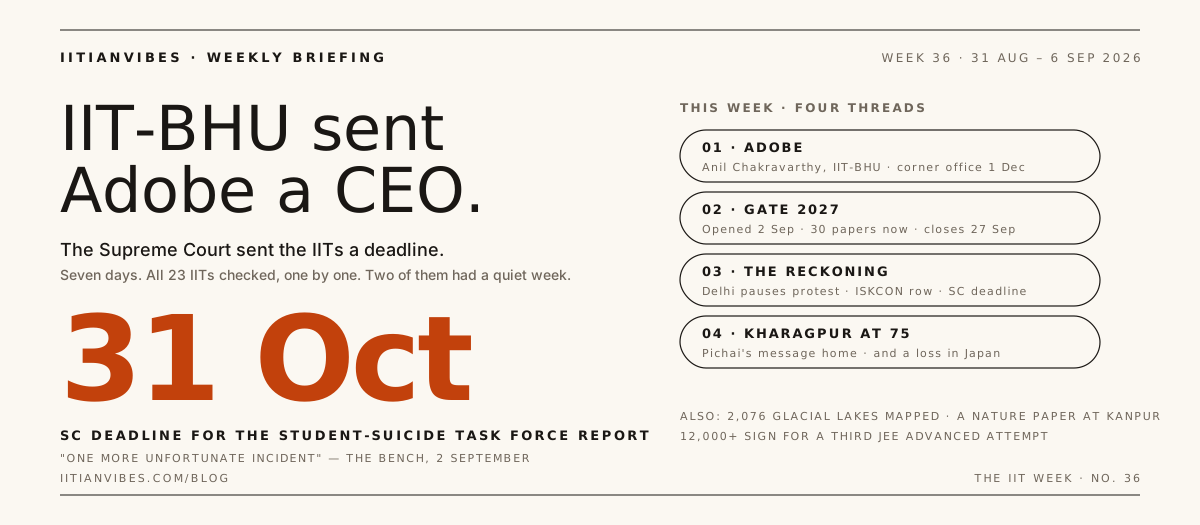
The IIT Week · 31 August – 6 September 2026 · Week 36 · All 23 IITs checked
If you or someone you know needs support, Tele MANAS is free and available 24/7 on 14416.
This was a week when the IIT system's two ledgers were open on the same desk. On one page: an IIT-BHU computer science graduate was named the next CEO of Adobe, Sundar Pichai sent IIT Kharagpur a video message for its 75th birthday, IIT Kanpur landed a Nature paper with a Nobel laureate's lab, and GATE 2027 finally opened after missing two dates. On the other: a PhD scholar died at IIT Mandi, an M.Arch student from Kharagpur drowned on an internship in Japan, and the Supreme Court — reading about "one more unfortunate incident" — put a hard date on the national student-suicide task force. The success ledger writes itself. The other one is the deep dive.
The deep dive: the wellbeing reckoning now has a deadline, a panel, and a fight about who should run it
TL;DR: IIT Delhi's protest paused after students won an external inquiry they get to help staff. The Supreme Court set 31 October for the national task force's final report. IIT Kanpur outsourced part of the answer to ISKCON and spent the week defending it. And IIT Mandi lost a PhD scholar.
Last week we wrote that three campuses had answered the same question three different ways — protest, architecture, workshop. This week the question moved up the org chart, and the answers got stranger.
| Date | Where | What happened |
|---|---|---|
| 29–31 Aug | IIT Delhi | Students pause their week-long protest after winning an external inquiry committee whose chairperson and student members they nominate |
| 1 Sep | IIT Kanpur | Two-year MoU with ISKCON for voluntary well-being programmes sparks a row; institute deletes its own announcement |
| 1 Sep | IIT Mandi | A 24-year-old PhD scholar is found dead in his rented accommodation at Kataula; no note recovered, inquiry opened |
| 1 Sep | IIT Indore | The national wellbeing workshop we covered last week wraps with 94 participants from 21 institutions |
| 2 Sep | Supreme Court | Bench of Justices JB Pardiwala and R Mahadevan says the National Task Force will submit its final report by 31 October |
| 6 Sep | IIT Mandi | A caste-hierarchy poster at a campus event draws backlash; the institute says the event wasn't officially its own and it will look into the matter |
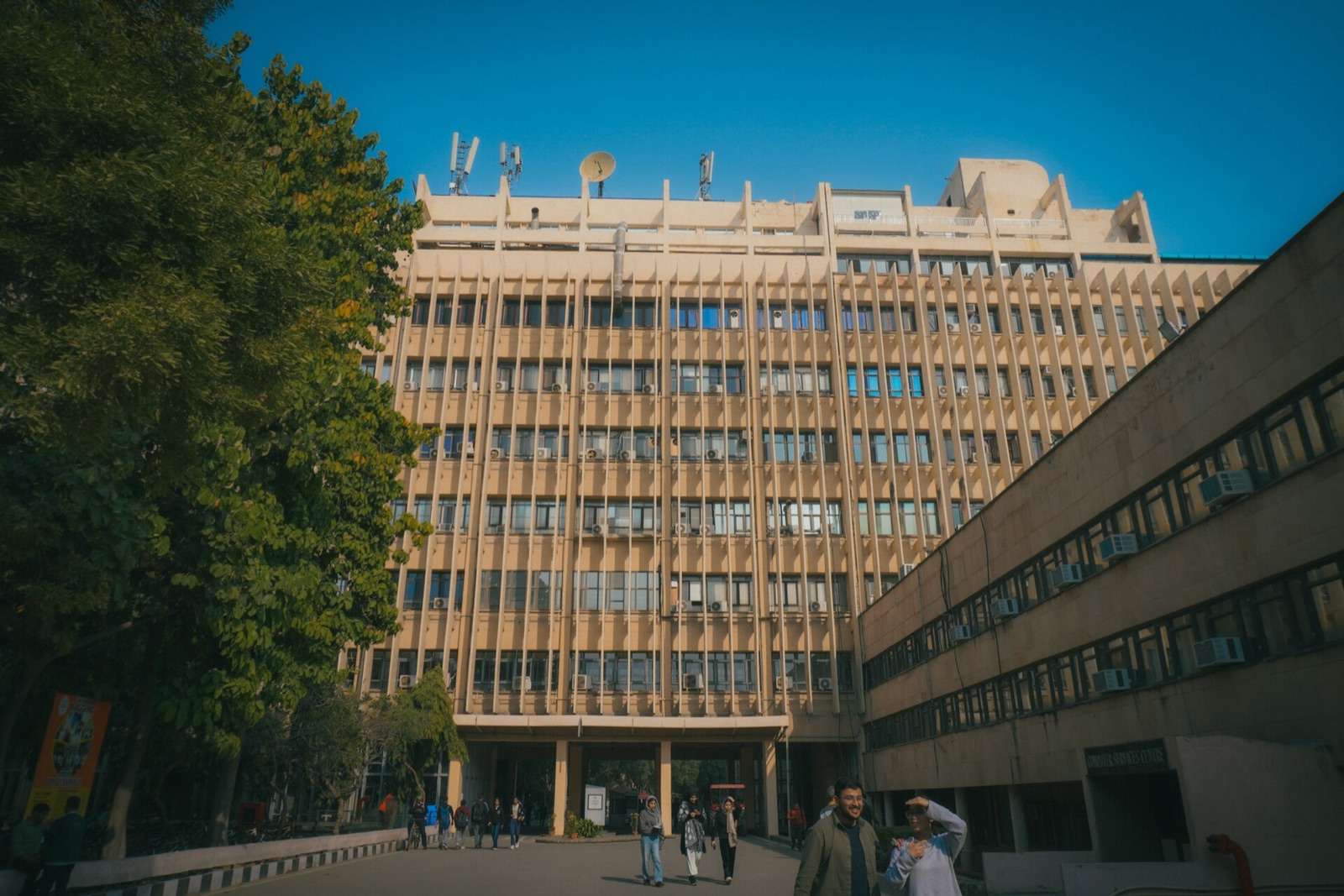
Take the Delhi development first, because it is the only one that looks like process working. The students' statement, reported by Hindustan Times, is precise about what was won: an external inquiry committee into the death of a 31-year-old MSc Physics student, "whose chairperson and student members would be nominated by the protesting students." And precise about the terms of the ceasefire: "The protest has been paused until the committee's report is shared with all students, all faculty, and all staff." Paused, not ended. The mother of the student declined financial compensation and asked instead for residential facilities for students dealing with mental-health difficulties — a request the director said he would look into.
Two days later the Supreme Court gave the whole system a date. "We read in the newspapers about one more unfortunate incident of suicide. We hope the directions passed by us were followed," the bench said on 2 September, and set 31 October for the National Task Force on student suicides to file its final report. That task force has existed since March 2025. A deadline is not a policy, but it is the first fixed point this story has had in months.
IIT Kanpur's contribution to the week was the most contested. The institute signed a two-year MoU with ISKCON for voluntary educational and well-being programmes, announced it, watched the criticism arrive, and deleted the announcement — while keeping the MoU. Director Manindra Agrawal's defence was pragmatic: "We run multiple programmes to help students on campus who are facing difficulties. Any outside organisation which offers help, we are open to taking it." The criticism was equally simple: a public technical institute routing student welfare through a religious organisation is a category decision, not a capacity decision. Both things can be true. What the row actually exposed is that demand for support on these campuses exceeds what the institutes staff for — which is how outside offers get entertained at all. The campus's own verdict is on the record in a 151-upvote r/IITK thread: "I don't care whatever the religion may be, it should always be kept seperate from education, especially government-sponsored education," ran one of the top comments, while another asked for the unglamorous fixes instead — less academic pressure, more course freedom, exercise sessions.
And at IIT Mandi, the ledger's other page. A 24-year-old PhD scholar was found dead in his rented accommodation at Kataula on 1 September. Police recovered no note and opened proceedings under Section 194 of the BNSS; his family told police he had been distressed after his PhD comprehensive results. We are not naming him. The same campus ended the week answering for a "Bhagavad Gita – The Timeless Wisdom" poster that rendered caste hierarchy as timeless wisdom; the registrar told reporters the event wasn't officially the institute's and it would look into the matter.
What to watch: two reports now have clocks on them — the Justice Mukta Gupta committee at IIT Delhi (due around mid-September) and the National Task Force (31 October). If both land, October becomes the first month in this story where the system has to respond to findings rather than to grief.
An IIT-BHU computer science grad will run Adobe from 1 December
TL;DR: Anil Chakravarthy succeeds Shantanu Narayen, who ran Adobe for 18 years. It stays an Indian-origin, IIT-trained corner office.
Adobe named Anil Chakravarthy — IIT-BHU alumnus, MIT graduate — its next president and CEO on Friday. Per Times of India, he takes the corner office and a board seat on 1 December; Narayen, who joined Adobe in 1998 and ran it as CEO for 18 years, becomes executive chairman. Narayen's endorsement leaned on the AI moment: "I could not be more confident that Anil is the right person to lead Adobe's growth in an AI-driven era."
The campus detail matters more to this audience than the org chart. Chakravarthy is not from the Bombay–Delhi–Madras axis that dominates the Fortune-500-CEO listicles — he studied at IIT (BHU) Varanasi, the campus that made last week's roundup for filing 250 invention disclosures in two years without transferring one. The same institute spent this week signing a much smaller, much more typical deal: an MoU with Talendy Holdings to route its students toward internships with Japanese companies. That is the honest span of one campus in one week: a Varanasi-trained engineer takes over one of the world's biggest software companies, while the campus itself works on getting its current students their first internship abroad. (A footnote on how identity travels: the week's biggest Reddit thread on the appointment wasn't in an IIT sub at all — r/Bengaluru claimed him as "Kannadiga Anil Chakravarthy from Bengaluru." The city you grew up in usually beats the campus you left, at least in the comments section.)
GATE 2027 finally opened — with a new Robotics paper and the same deadline
TL;DR: Registration went live 2 September after missing 14 August and 27 August. Thirty papers now, including new Robotics and Automation. Regular close: 27 September. DigiLocker still mandatory.
After two missed opening dates that we tracked last week, IIT Madras opened GATE 2027 registration on 2 September at gate2027.iitm.ac.in. The structural news is a brand-new Robotics and Automation (RA) test paper, taking the exam to 30 papers — the clearest signal yet of where the ministry thinks postgraduate engineering demand is heading. The exam runs across three February weekends (6, 7, 13, 14, 20, 21), results on 19 March 2027.
The arithmetic we warned about last week did happen: the close dates never moved while the open date slid three weeks. Regular registration closes 27 September — a 25-day window instead of the six weeks originally planned. Late-fee window runs to 5 October, corrections 14–21 October. The DigiLocker mandate survived the delays: the portal still tells every Indian applicant to "create/update your VERIFIED DigiLocker account NOW!" If you are applying, do the DigiLocker verification today, not in the last week of September alongside everyone else.
The third-attempt petition crossed 12,000 signatures and reached the IIT Council
TL;DR: The JEE Advanced attempts campaign we flagged last week grew from ~10,000 to over 12,000 signatures and is now formally in front of the Ministry, the IIT Council and JAB.
Over 12,000 aspirants have now petitioned the Ministry of Education, the IIT Council and the Joint Admission Board to either raise JEE Advanced attempts from two to three, or let the existing two attempts be spread across three consecutive years. The petition's core argument, as quoted in The Telegraph and HT, is the system's internal inconsistency: "students are limited to only two consecutive attempts, while JEE-Main allows three attempts within the same admission system. If improvement is allowed in JEE-Main, why is it restricted in JEE-Advanced?"
The honest read: this is no longer a Change.org curiosity. It stood at 10,000 signatures last week and crossed 12,000 this week, it is being covered by every education desk in the country — by Sunday a reporter was inside r/JEENEETards hunting for signatories to interview — and there is precedent — an extra attempt was allowed during COVID. Nothing forces JAB to answer before the JEE Advanced 2027 information brochure, which is exactly why the campaign is pushing now, before that brochure locks the rule for another cycle. No decision has been announced, and the two-consecutive-attempts rule remains in force today.
IIT Kharagpur turned 75, and the week held both of its ledgers at once
TL;DR: Sundar Pichai sent the diamond-jubilee video. The same week, the institute lost an M.Arch student to a drowning accident in Japan.
For the 75th anniversary of India's first IIT, Google and Alphabet CEO Sundar Pichai sent a video message that was more personal than corporate: "Campus is where I met my wife, Anjali, where I first learned to program, and where I had my very first few opportunities to use a computer, carrying floppy disks around campus." He called his Kharagpur education "truly a gift," and pitched the next five years of AI as it "moving away from the lab and the early adopters and into the hands of people doing the work — the healthcare workers, the government officials, the farmers, developers."
The view from inside the diamond-jubilee campus was, characteristically, less misty-eyed. Two days after the anniversary, the top thread on r/iitkgp was a 46-upvote rant titled "Survival is difficult!" — "F CAMPUS, F HALLS, F FOOD... F THEIR PR TEAM" — with the runner-up a photo post about mess food. Seventy-five years in, the gap between the institution's story and the student's Tuesday remains the most durable thing on campus.
The anniversary week also carried grief. A postgraduate M.Arch student died in a drowning accident in Kure City, Hiroshima Prefecture, on 30 August, while on an international internship at Hiroshima University. Director Suman Chakraborty told Times of India: "This is a deeply painful incident. We received the news this morning through his professor in Japan. We have established contact with the embassy and informed his family. IIT Kharagpur is making all necessary arrangements to bring his body back." The internship-abroad pipeline is one of the system's proudest exports — this is the rare, terrible week when both ends of it were visible at once.
IIT Kanpur put AI-designed proteins in Nature and a one-week depression test on the map
TL;DR: Two Kanpur research results in one week: miniproteins co-designed with Nobel laureate David Baker's lab, and a brain-gut signal model that predicts antidepressant response in 7–10 days instead of 4–6 weeks.
The headline result: IIT Kanpur researchers worked with the lab of Nobel laureate David Baker at the University of Washington on AI-designed miniproteins that target GPCRs — the receptor family behind a third of all approved drugs. The study, "De novo design of miniproteins targeting GPCRs," is published in Nature. For an Indian institute, a Nature paper with the Baker lab is not a participation trophy; it is the protein-design equivalent of playing in the top flight.
The quieter result may touch more lives sooner. Working with GSVM Medical College, Kanpur's cognitive science department showed that combined EEG (brain) and EGG (stomach) electrical signals, recorded in roughly the first week of treatment, can predict antidepressant response with 84% sensitivity — 77.3% overall accuracy on an independent cohort of the 206-participant study. Today, patients wait four to six weeks to learn a drug isn't working, and more than half don't respond to their first prescription. Cutting that feedback loop to ten days would be a real clinical dent — and in the week described above, it is worth noting that the sharpest mental-health science in the country is coming from inside the same system that is struggling with the lived version of the problem.
Two IITs mapped how India floods — uphill and downtown
TL;DR: IIT Mandi counted 2,076 Himalayan glacial lakes (up ~710 in a decade) and flagged nine as critical. IIT Gandhinagar showed Gurugram floods as one connected system, not as isolated waterlogging spots.
IIT Mandi's decade-scale mapping study found 2,076 glacial lakes above 3,500 metres in Himachal Pradesh in 2025 — around 710 more than 2015 — with cumulative lake area up 28.45 per cent in ten years. Nine rapidly expanding lakes, including Chandratal, Samudra Tapu and Gepang Gath (which alone grew by roughly 244,000 square metres), are flagged as potential outburst-flood sources — "water bombs" in the study's blunter framing. Coming weeks after Himalayan flash floods dominated the news, this is the rare risk report with a constituency ready to read it.
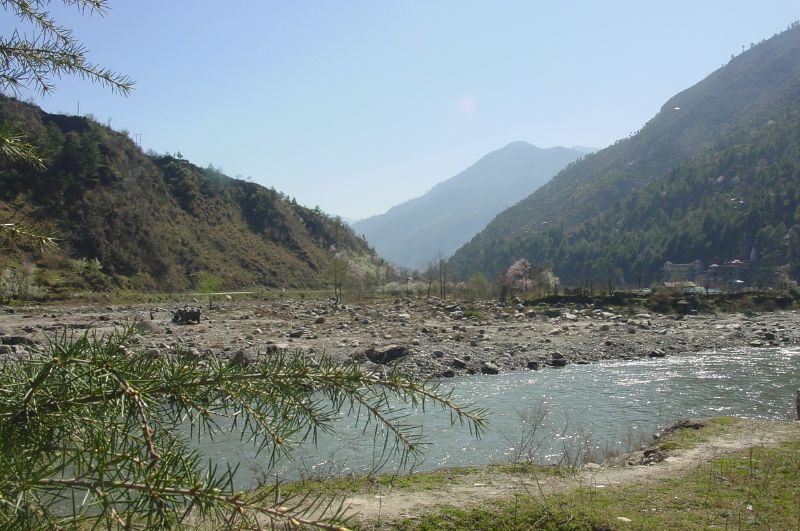
Six hundred kilometres south-west, an IIT Gandhinagar study commissioned by Gurugram's municipal corporation made the urban version of the same argument: the city floods as a whole, with storm water crossing 117 sectors through 257 separate boundary crossings in a single design storm across 125 connected drainage areas. The practical meaning: pumping out one waterlogged junction doesn't fix anything, because the junction is a symptom of a network. Together the two studies make a quiet trend visible — Indian governments increasingly outsource their hydrology homework to IITs, and the IITs keep returning the same answer: you built in the water's way, and the water is coming faster now.
Careers Watch: the money went to chargers and cameras, not code
One IIT-linked round was disclosed this week, and it fits the pattern we keep logging: hardware, not SaaS.
| Company | Round | Stage | Founders / IIT link | Lead | Sector |
|---|---|---|---|---|---|
| Zenergize | ₹33.5 Cr (Inc42 reports it as $4 Mn) | Pre-Series A | IIT and IIM alumni (campuses undisclosed) | Giraffe Studios | EV charging |
Zenergize claims India's first indigenous silicon-carbide DC fast charger, a ₹30 crore revenue run rate and a ₹150 crore order book within a year of commercialisation — which, if the order book converts, is a hiring signal in power electronics, not an app. (InspeCity's ₹100 crore space-tech round, covered in last week's table, got the profile treatment from India Today this week — four in-orbit missions planned in 12–18 months.)
Two non-round signals worth more than most rounds. First, Panoculon Labs — two IIT Madras graduates, incubated at the IIT Madras Incubation Cell, building wrist- and head-worn cameras that collect egocentric training data for physical AI. They report 1,500+ units sold B2B within months of starting production. Robotics companies need human-motion data the way LLMs needed text, and a two-person Chennai hardware shop selling picks and shovels into that is exactly the shape of company worth tracking early. Second, philanthropy as career infrastructure: US-based entrepreneur Rahul Mehta's family foundation, which already put its name on IIT Madras's biosciences school, told ET it has set a target of 12,000 graduates from its funded programmes by 2031 — seats in biotech, AI and health sciences that didn't exist a decade ago.
The trend: six outside institutions built something permanent on an IIT campus this week
Not MoU-of-the-week filler — look at the shape. ZEISS opened its first innovation hub outside Germany at IIT Madras Research Park, with the group CEO in attendance. The Indian Air Force signed an MoA with IIT Bombay for a master's programme for test pilots and flight test engineers. The Odisha government put a renewable-energy research centre on IIT Bhubaneswar's campus via GRIDCO. Bihar made IIT Patna its principal geospatial consultant for heritage conservation, with a state-funded centre of excellence. IIT Delhi's Sonipat campus got its first academic programme ever — a solar-systems PG diploma run with the International Solar Alliance and INES France, opening with nine international fellows from eight countries. And IIT-BHU wired its students toward Japanese employers through Talendy.
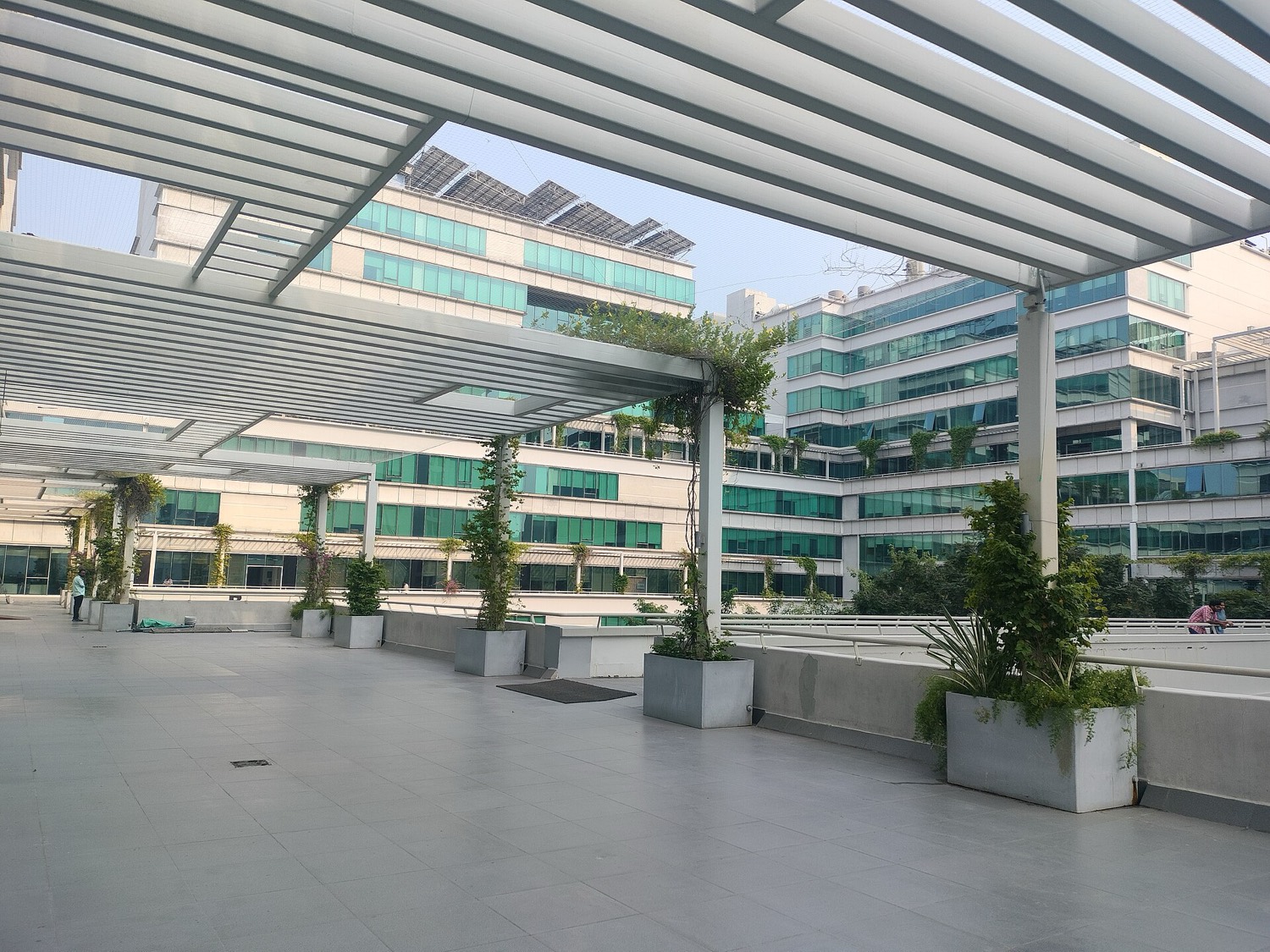
The pattern: companies, ministries and state governments have stopped treating IITs as places to recruit from and started treating them as places to be. For students the practical consequence is that the interesting employers are increasingly a bicycle ride away, embedded on campus with real budgets — worth remembering when the placement-season discourse pretends the only doors are the ones in the placement portal. (And if your campus is having a moment this week — Kharagpur at 75 — the IIT collection is where we keep the merch.)
Across the 23 IITs this week
Stories that didn't earn a full section but round out the 23-IIT picture. Every campus below was checked individually — its own press pages, LinkedIn and regional coverage — before we called anything quiet.
Older IITs (Bombay–Kharagpur cohort)
- IIT Bombay: Signed the IAF flight-test master's MoA (see trend section).
- IIT Delhi: Beyond the deep dive — the Sonipat campus launched its first-ever academic programme, and Nitin Gadkari said old diesel trucks can be retrofitted with an IIT Delhi-developed emission device costing about ₹4,000–5,000 that cuts particulate matter by up to 90%.
- IIT Madras: Patented a chemical-free antibacterial "nanograss" surface (68%+ biofilm inhibition, 91% human-cell viability), and with CMC Vellore released three AI tools for early kidney-disease detection, including a CT classifier trained on 12,000+ images. Also: GATE 2027 host (see above) and ZEISS landlord (see trend).
- IIT Kanpur: Full sections above — the Nature paper, the depression test, and the ISKCON row.
- IIT Kharagpur: Full section above — the 75th, and the loss in Japan.
- IIT Guwahati: Assam CM Himanta Biswa Sarma used its 33rd Foundation Day to announce 100 planned state scholarships; researchers also unveiled a brain-inspired spiking AI model, presented at ICML 2026 and benchmarked across 17 datasets.
Second-generation IITs
- IIT Roorkee: Released a national framework report for scaling floating solar in India, unveiled alongside MNRE.
- IIT Hyderabad: Prof Kirti Chandra Sahu's raindrop-physics lab earned a National Award to Teachers 2026; the institute will also use AI and drones to study station-area traffic for South Central Railway.
- IIT (BHU) Varanasi: The Adobe story above, plus the Talendy Japan-internships MoU.
- IIT Indore: Wrapped the national student-wellbeing workshop — 94 participants, 21 institutions.
- IIT Bhubaneswar: The GRIDCO renewable-energy centre (see trend section).
- IIT Gandhinagar: The Gurugram flood study above.
- IIT Ropar: Signed an MoU with CRRID for AI-based public-policy tools.
- IIT Jodhpur: Closed out FINNOVATION, the SBI PSB Hackathon Series 2026, with a fintech-cybersecurity finale.
- IIT Mandi: The glacial-lakes study above, and the deep dive's hardest rows.
- IIT Patna: Became Bihar's principal geospatial consultant for heritage, with a state-funded CoE coming.
- IIT (ISM) Dhanbad: Quiet week — checked its media pages and regional coverage; the campus is deep in its centenary-year branding, but nothing dated landed in the window.
Newest IITs
- IIT Bhilai: A student team won Union Bank's IDEA 2.0 hackathon at the 3 September finale; the institute also opened its Hindi Month.
- IIT Dharwad: Hosted the third international Bharatiya Traditional Knowledge Systems conference on 5–6 September.
- IIT Jammu: Quiet week — its only appearance was as a stop on a PIB media-outreach tour.
- IIT Palakkad: A difficult follow-up: the student assaulted on campus in February remains in intensive care in Coimbatore after surgery, per Times of India and Mirror Now reports on 6 September. We'll follow the case, not the speculation.
- IIT Goa: Quiet week — checked press announcements and regional coverage; nothing in-window.
- IIT Tirupati: Director K N Satyanarayana pitched Andhra Pradesh as a Quantum-AI ecosystem, anchored on the ₹6,000 crore National Quantum Mission.
Coming next
- ~Mid-September: Justice Mukta Gupta external committee report at IIT Delhi expected (constituted 27 August with a ~two-week timeline).
- 27 September: GATE 2027 regular registration closes (late fee until 5 October; corrections 14–21 October).
- Any week now: NIRF 2026 rankings — the data cycle closed in March, no date announced; last year's edition dropped on 4 September. IIT Madras defends a seven-year overall streak.
- 31 October: Supreme Court's deadline for the National Task Force's final report on student suicides.
FAQ
Who is Adobe's new CEO and what is his IIT connection?
Anil Chakravarthy, an alumnus of IIT (BHU) Varanasi and MIT, was named Adobe's next president and CEO on 4 September 2026. He takes over on 1 December, succeeding Shantanu Narayen, who ran Adobe for 18 years and becomes executive chairman.
Has GATE 2027 registration opened?
Yes — finally. IIT Madras opened the portal on 2 September 2026 after missing two earlier announced dates. Regular registration closes 27 September (late fee until 5 October). There are now 30 test papers, including a new Robotics and Automation (RA) paper, and a verified DigiLocker account is mandatory for all Indian applicants. Exams run 6–21 February 2027 across three weekends; results 19 March.
Did the NIRF 2026 rankings come out this week?
No. As of 6 September 2026 the Ministry of Education has not announced a release date. The data-submission cycle closed on 16 March, and last year's rankings were released on 4 September — so a release could land any week now.
Which IITs had news this week?
We checked all 23 individually. Twenty-one had in-window news: Bombay, Delhi, Madras, Kanpur, Kharagpur, Guwahati, Roorkee, Hyderabad, BHU, Indore, Bhubaneswar, Gandhinagar, Ropar, Jodhpur, Mandi, Patna, Bhilai, Dharwad, Jammu, Palakkad and Tirupati. Two had genuinely quiet weeks — Dhanbad and Goa — each checked against its own press pages and regional coverage before we said so.
Support: Tele MANAS, the national mental health helpline, is free and available 24/7 on 14416.