
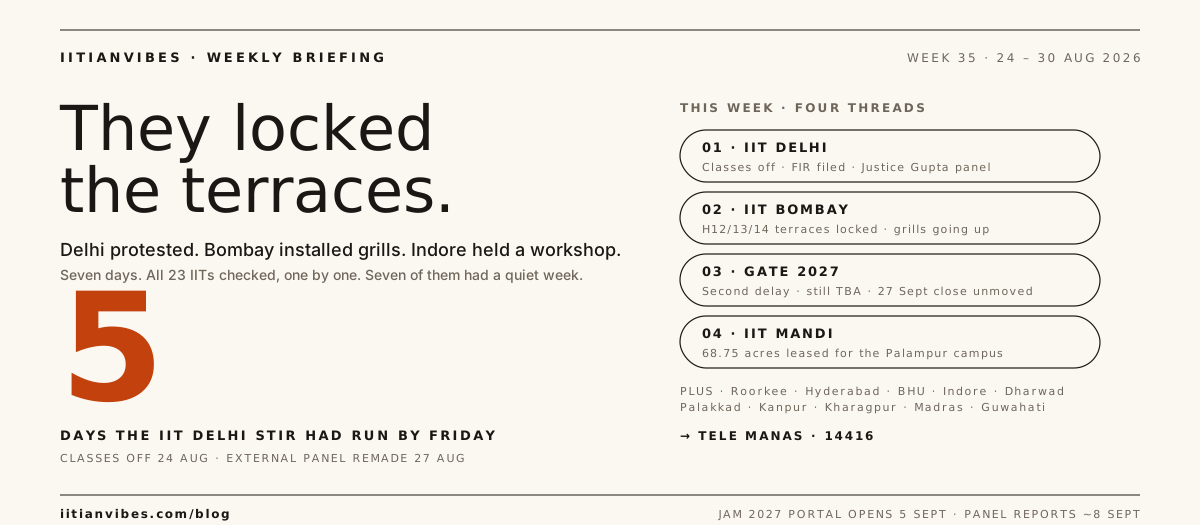
The IIT Week · 24–30 August 2026 · Week 35 · All 23 IITs checked
If you or someone you know needs support, Tele MANAS is free and available 24/7 on 14416.
Three campuses answered the same question this week, and they answered it three different ways. IIT Delhi suspended classes while hundreds of students demanded an independent inquiry into a death the administration had already emailed about. IIT Bombay locked the terraces and balconies of three hostels and began fitting grills to the rest. IIT Indore hosted a national workshop on student mental health, run under a Ministry of Education programme, with a UGC joint secretary and an AIIMS psychiatrist in the room.
Protest, architecture, and a conference. Only one of those three is a policy. The other two are what an institution does when it has not decided on one yet — and the gap between them is the most honest picture of where the IIT system currently stands on student welfare. Everything else that happened this week, from a second GATE 2027 delay to 68.75 acres changing hands in Himachal, happened underneath that.
The deep dive: five days that broke the template at IIT Delhi
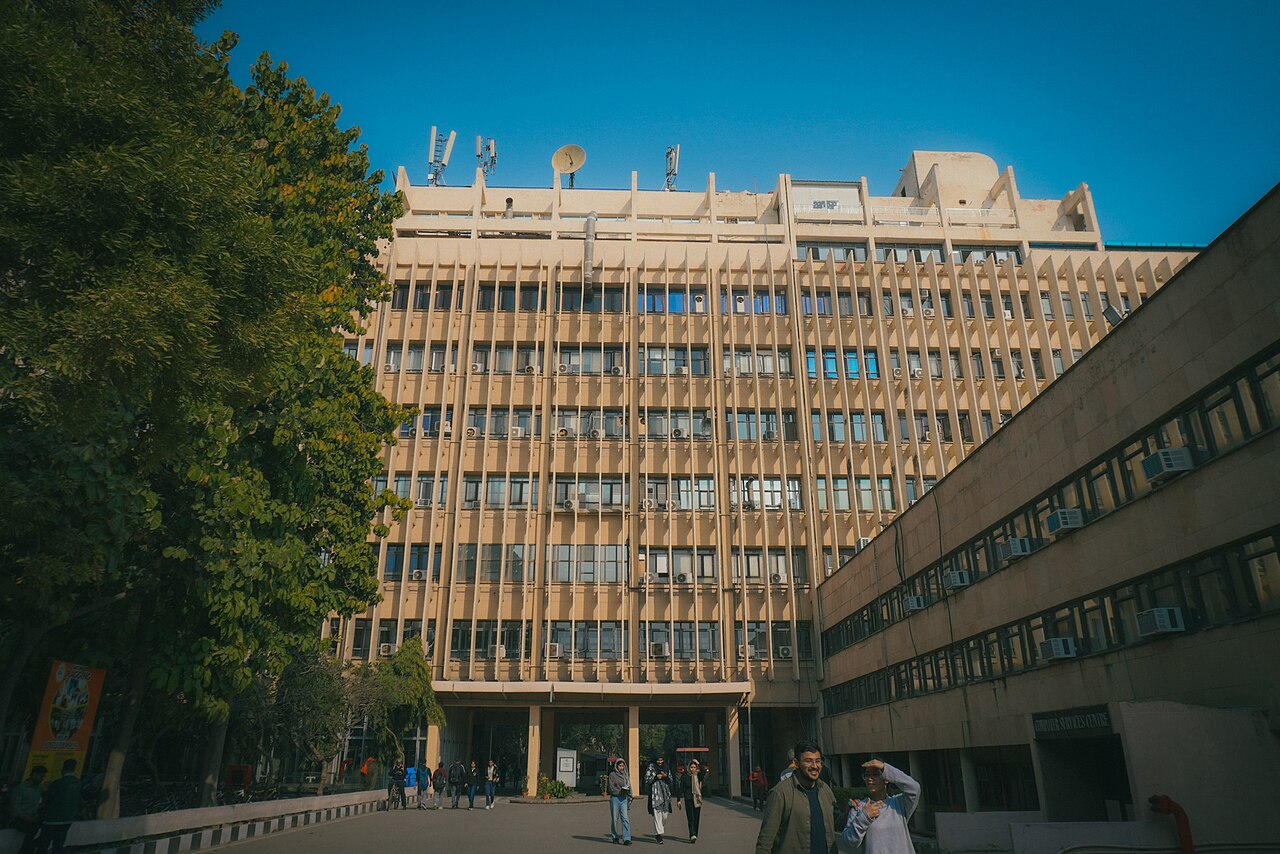
Rishikesh Kumar, a 31-year-old MSc Physics student from Patna, died at IIT Delhi on 22 August, falling from the sixth floor of the Lecture Hall Complex. He was in his second year. His family has spoken to the press since, and the students who spent this week outside the director's office have used his name deliberately, because the thing they are protesting is the speed with which it would otherwise stop being said.
What followed is the part that has no precedent. By Monday morning the Deputy Registrar had circulated a line that students would spend the week quoting back: "due to unavoidable circumstances, all classes scheduled for today, 24 August 2026, stand cancelled." Hundreds gathered outside the director's office. Their demands were specific rather than rhetorical — an independent probe into alleged administrative lapses, the resignation of the Dean and Associate Deans of Student Affairs and the Head of Physics, and ₹1 crore in compensation for the family.
The week then moved faster than IIT administrations usually move.
| Date | What happened | Source |
|---|---|---|
| Mon 24 Aug | All classes cancelled campus-wide; several hundred students protest outside the director's office | ThePrint |
| Tue 25 Aug | Institute commits to an external inquiry committee; proposes an external ombudsperson for unresolved grievances | Business Standard |
| Wed 26 Aug | Delhi Police register an abetment-to-suicide case against unidentified persons; no note recovered | PTI / ThePrint |
| Thu 27 Aug | Panel reconstituted under retired Delhi HC judge Justice Mukta Gupta after the original chair steps down; institute publishes its welfare record | The Tribune |
| Fri 28–Sat 29 Aug | Director warns of disciplinary action after a night march reaches faculty housing; external panel begins work, report due in two weeks | The Tribune |
The reconstitution on Thursday is the detail worth pausing on. The first committee was to be chaired by a former Uttarakhand DGP; students objected, citing his past remarks on students and activism, and he withdrew citing prior commitments. The replacement panel is chaired by a retired Delhi High Court judge and includes Professor Pratap Sharan, who heads psychiatry at AIIMS Delhi, four student representatives, and the Registrar as convenor. Students asked for an independent inquiry and, within four days, got a materially more independent one. That is not nothing, and it is worth saying plainly in a week where most of the coverage was about confrontation.
The confrontation was real too. On the night of 27 August the march moved into residential areas between roughly 10.30pm and 12.30am, and Director Rangan Banerjee wrote that "the Institute will take disciplinary actions against individuals disrupting the peaceful functioning of the campus including residential areas, classes, academic and other activities." Students disputed the characterisation, saying their slogans were appeals for solidarity — "Aravali hostel bahar aao humaara saath do, Professors bahar aao humaara saath do" — and that they had video of them. Notably, several students defended Banerjee personally even while opposing the warning; one told NDTV he was "actually the only person in the administration who listens to us."
The story also stopped being an IIT Delhi story. On Sunday 23 August, JNU students held a solidarity protest outside Gate No. 5, with JNUSU General Secretary Sunil Yadav saying the demonstration was held because suicides at IITs were being normalised: "The institutions are responsible for the students' suicides. This cannot be normalised." Five or six professors from Physics and Management Studies stepped out in support of their own students during the week. A campus agitation that draws in another university's union and a section of its own faculty is no longer a grievance about one death.
What the institute says it has, and what students say it feels like
IIT Delhi's 27 August statement called student well-being a "fundamental prerequisite" and listed a genuinely substantial set of measures: 15 counsellors, one full-time and two part-time psychiatrists drawing on AIIMS and VIMHANS, external mental-health treatment reimbursed in full, first-year class sizes capped at 30–60, reduced first-semester credit load, and the removal of the minimum CGPA requirement for the BTech degree from 2024-25.
Read that list against what students said in the same week. A fifth-year PhD student on the counselling provision: "A lot of the mental health infrastructure that has been stated is on paper. The counsellors are there, but if you ask students about their experience with such counsellors, it is harrowing." Another student told The Hindu: "There has been no monthly roster of counsellors in the past year." And on the ritual itself: "Every death is followed by a copy-paste e-mail from the administration, following which the campus is almost immediately expected to go back to normal."
Both things can be true. An institute can fund fifteen counsellors and still run a system students cannot navigate when it matters. The distance between a budget line and a lived experience is exactly what an external ombudsperson is supposed to measure, which is why that proposal — quieter than the protests, easier to miss — may end up being the most consequential thing IIT Delhi announced this week.
One number needs care. Protesters have repeatedly said this was the eighth student suicide on campus since 2023, or eight in thirty months. That figure comes from the protesters, and separately a civil-society group has claimed 65 across the IITs in five years, sourced to a social-media post. Neither is verified institutional data and we are not going to launder either into a statistic. What is verifiable is that a Delhi Police FIR for abetment now exists, that no note was recovered, and that the institute is obtaining counselling records.
The pattern: prevention you can bolt on, and prevention you have to staff
Nine hundred miles away, IIT Bombay spent the same week doing something that has attracted far less coverage and may say more about the system.
The terraces of Hostels 12, 13 and 14 have been locked. Grills are going up on the balconies of Hostel 13. Students were told this is compliance with a Supreme Court order on student suicide prevention. One of them went and read the order, and posted the objection that defines the week better than any press release:
"The terraces of Hostels 12, 13 and 14 have already been locked. Now the institute has started installing grills on the balconies of Hostel 13 as well — balconies that residents use every single day to dry clothes, get some air, and have at least some open space in an already cramped hostel environment. At this rate, what exactly are they planning to leave open for students? Windows?"
— r/iitbombay, 28 August 2026
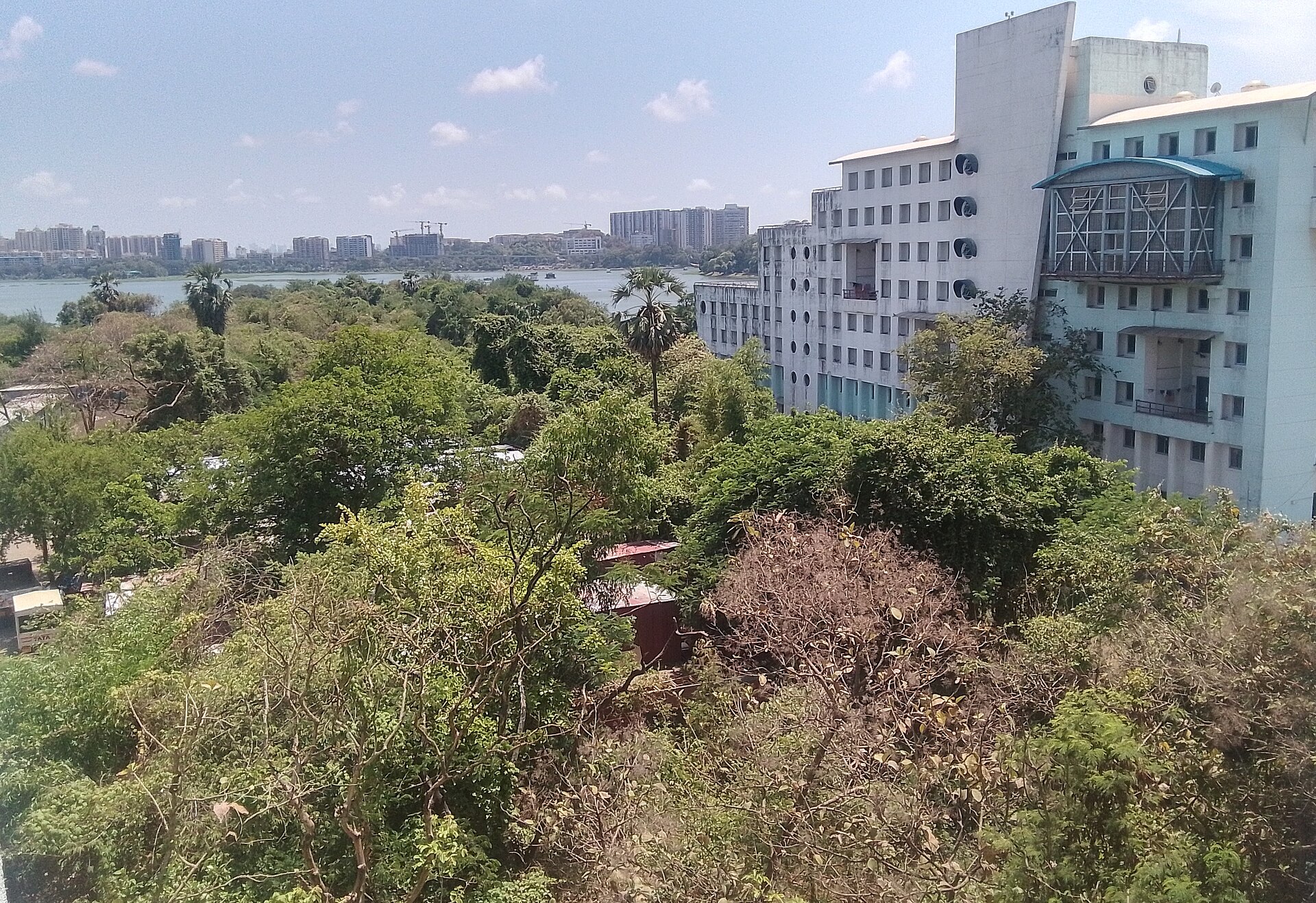
The argument underneath the exasperation is the serious one. The same Supreme Court directions being invoked to justify grills also carry roughly fifteen requirements on counsellor-to-student ratios, mental-health training for staff, and functioning harassment redressal. The institute is visibly implementing the one that can be bought from a fabricator and installed over a weekend. The others require hiring, training, and admitting that the current system does not work.
Two things stop this being a cheap shot. First, the timing: the terrace decision predates the IIT Delhi death, confirmed by students in the same thread — so this is standing policy, not panic. Second, physical means-restriction genuinely does reduce suicide rates; it is one of the better-evidenced interventions in the literature. The criticism is not that grills are useless. It is that grills are the entire visible programme, and that a hostel with nowhere to stand outside is its own kind of pressure.
Set that beside IIT Indore, which on 30–31 August hosted Samvardhan, a two-day national capacity-building workshop on student mental health under the Ministry of Education's Malaviya Mission, drawing institutions from Gujarat, Maharashtra, Goa, Punjab and Madhya Pradesh, with sessions on learning disabilities, substance-use prevention, hostel life and peer mentoring. It is the most structurally serious response of the three — and it is a workshop, convened while one campus was in revolt and another was welding.
That is the state of play: one system, three answers, no policy.
GATE 2027 registration has now been postponed twice, and the deadline hasn't moved
TL;DR: Registration was meant to open 14 August, then 27 August. It is still not open. The 27 September close date is unchanged.
IIT Madras, organising GATE 2027, has now missed a second announced opening date. We fetched gate2027.iitm.ac.in on 30 August: the Important Dates panel reads "Registration TBA", and the featured notice says only that "GATE online application registration will start soon." India TV reported the second delay on 29 August.
The reason this matters is arithmetic, not inconvenience. The regular-close date of 27 September has not moved, nor have late close (5 October), correction window (14–21 October), or the exam dates themselves — now listed as six days across 6, 7, 13, 14, 20 and 21 February 2027, one more than the July brochure indicated. Every day the portal stays shut compresses the same application volume into a shorter window, and GATE applications involve DigiLocker verification that is itself a new failure point this cycle. The DigiLocker mandate survives the delay: a verified account remains compulsory for all Indian applicants.
If you are applying, the practical advice is to finish DigiLocker verification now, while the queue is empty, rather than in the last week of September alongside everyone else.
Uttar Pradesh just made three IITs its infrastructure auditors
TL;DR: Every UP project above ₹100 crore now gets a technical quality audit by IIT BHU, IIT Kanpur or IIT Roorkee.
IIT (BHU) Varanasi has been assigned quality-audit responsibility for projects over ₹100 crore across five divisions — Basti, Gorakhpur, Azamgarh, Varanasi and Mirzapur — under an arrangement that hands other zones to IIT Kanpur and IIT Roorkee. Amar Ujala reported on 27 August: "आईआईटी बीएचयू पांच मंडल के 100 करोड़ रुपये से ज्यादा लागत वाली परियोजनाओं की गुणवत्ता का ऑडिट करेगा।" The audits cover design, construction technique, material quality, standards compliance and safety on roads, bridges and sewerage works.
This is a bigger deal than a routine MoU. A state government outsourcing structural sign-off on its largest public works to engineering institutes is a real transfer of technical authority — and it is revenue, reputation and student project exposure arriving at three IITs at once, two of which rarely feature in national coverage. It also creates an obvious conflict question worth watching: the same institutes that train the engineers building these projects are now grading them.
IIT (BHU) filed for 250 inventions in two years and transferred none
TL;DR: 620 patents filed in 13 years, 336 granted — and 12 technology transfers total, none of them in 2025 or 2026.
The sharpest institutional story of the week is a set of numbers IIT (BHU) publishes about itself. Against its own patent list as of 7 July 2026: 620 patents filed since it became an IIT, 572 published, 336 granted, with 153 grants and 254 publications in the last two years alone, peaking at 162 filings in 2025. Over the same 13 years, 12 technologies were actually transferred to industry. In 2025 and 2026 combined, ownership rights were sought on roughly 250 inventions and, as Amar Ujala put it, "एक भी तकनीक ट्रांसफर नहीं हो सकी" — not a single technology could be transferred.
IIT (BHU) · 13 YEARS OF IP Filed620 Published572 Granted336 Transferred12 Zero transfers in 2025 and 2026. Source: institute patent list, 7 July 2026.Patent counts are a metric institutes report upward, to ministries and ranking bodies. Technology transfer is the metric that means a thing got built. The first is going up steeply and the second has flatlined at zero for two years, which suggests the incentive is pointed at filing rather than at commercialising. IIT (BHU) is not remotely alone in this — it is simply the institute whose own disclosure makes the gap legible. Worth holding that up against IIT Palakkad this same week, which had a patent granted jointly with a startup it incubated. That is what the other end of the pipeline looks like.
IIT Roorkee is mapping what happens if the Beas dams fail
TL;DR: First comprehensive dam-break analysis and emergency action plan for a 135-km stretch of the Beas, covering three Himachal districts.
The Bhakra Beas Management Board, assisted by IIT Roorkee's ICED Centre, is preparing what The New Indian Express described on 29 August as the first such exercise for the river: "a comprehensive dam-break analysis and emergency action plan is being prepared by the Bhakra Beas Management Board (BBMB), with assistance from the ICED Centre of the Indian Institute of Technology (IIT), Roorkee, for a 135-km stretch of the Beas river across Mandi, Hamirpur and Kangra districts." Vulnerable populations will be sorted into red, blue and green risk zones, with a draft report inside six months.
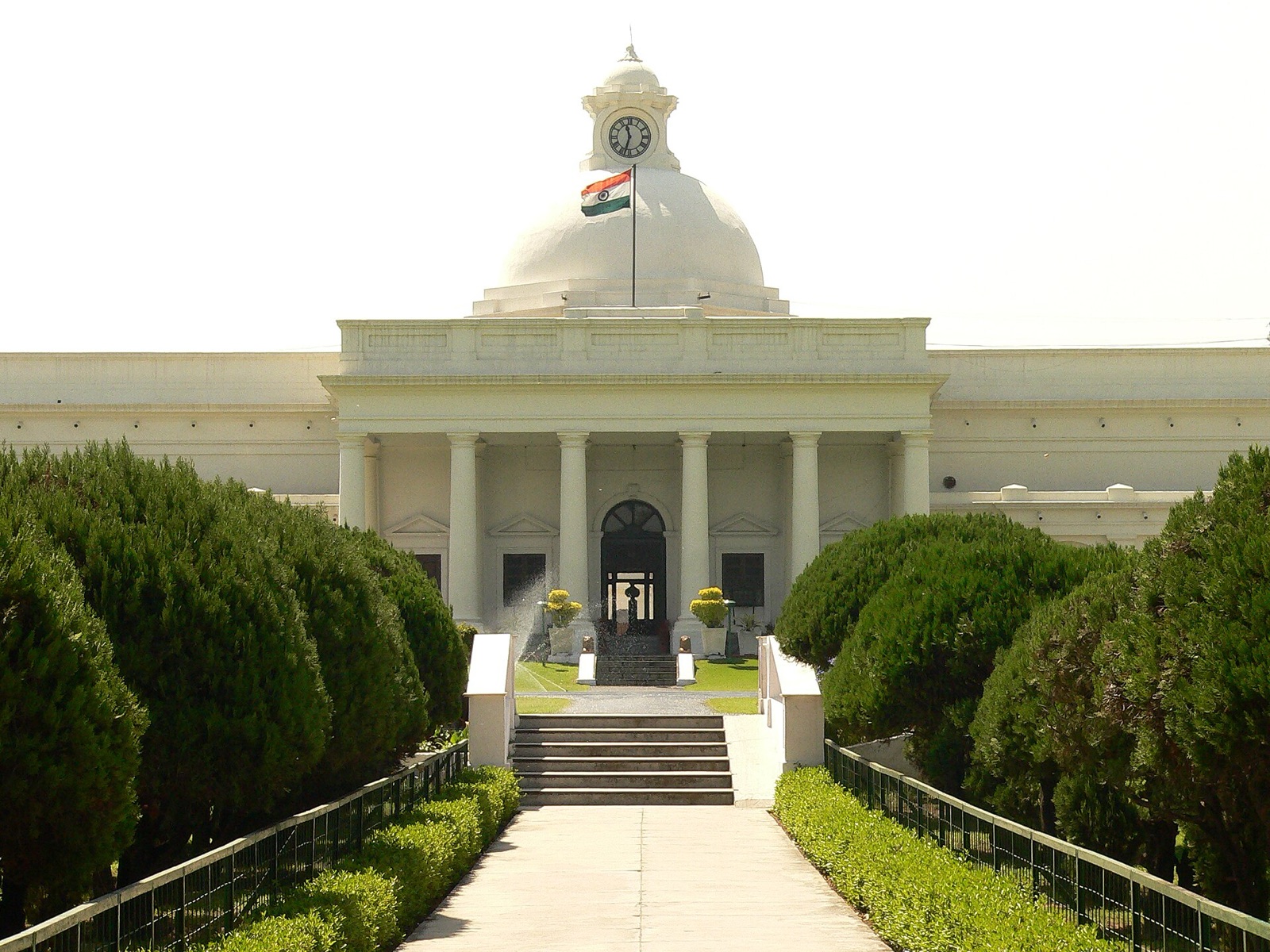
In the same week a Roorkee team published a high-resolution climate dataset in Scientific Data (DOI 10.1038/s41597-026-08081-7) projecting that India's monsoon will increasingly arrive as fewer, heavier downpours, with the extreme-day share rising 25–40% by 2100 under a high-emissions scenario. Read the two together and it is the same institute quantifying a risk and then mapping who drowns if it materialises — after a monsoon season in which Himachal has repeatedly been the state making the news.
IIT Hyderabad had the most useful week of any IIT nobody wrote about
TL;DR: A railway traffic study, a steel research centre, and a national teaching award.
South Central Railway's Secunderabad Division has engaged IIT Hyderabad to run traffic assessment studies at Secunderabad and Lingampalli stations, using drone surveys, AI and ML analysis of CCTV, passenger field surveys and traffic simulation. Separately, Jindal Steel and IITH signed an MoU for a Centre of Excellence on high-strength, value-added steel on campus, which the institute says will carry internships and placement routes for its students. And Professor Kirti Chandra Sahu of chemical engineering was selected for the Ministry of Education's National Awards to Teachers 2026, to be conferred by the President on Teachers' Day — one of 21 higher-education and polytechnic faculty chosen nationally.
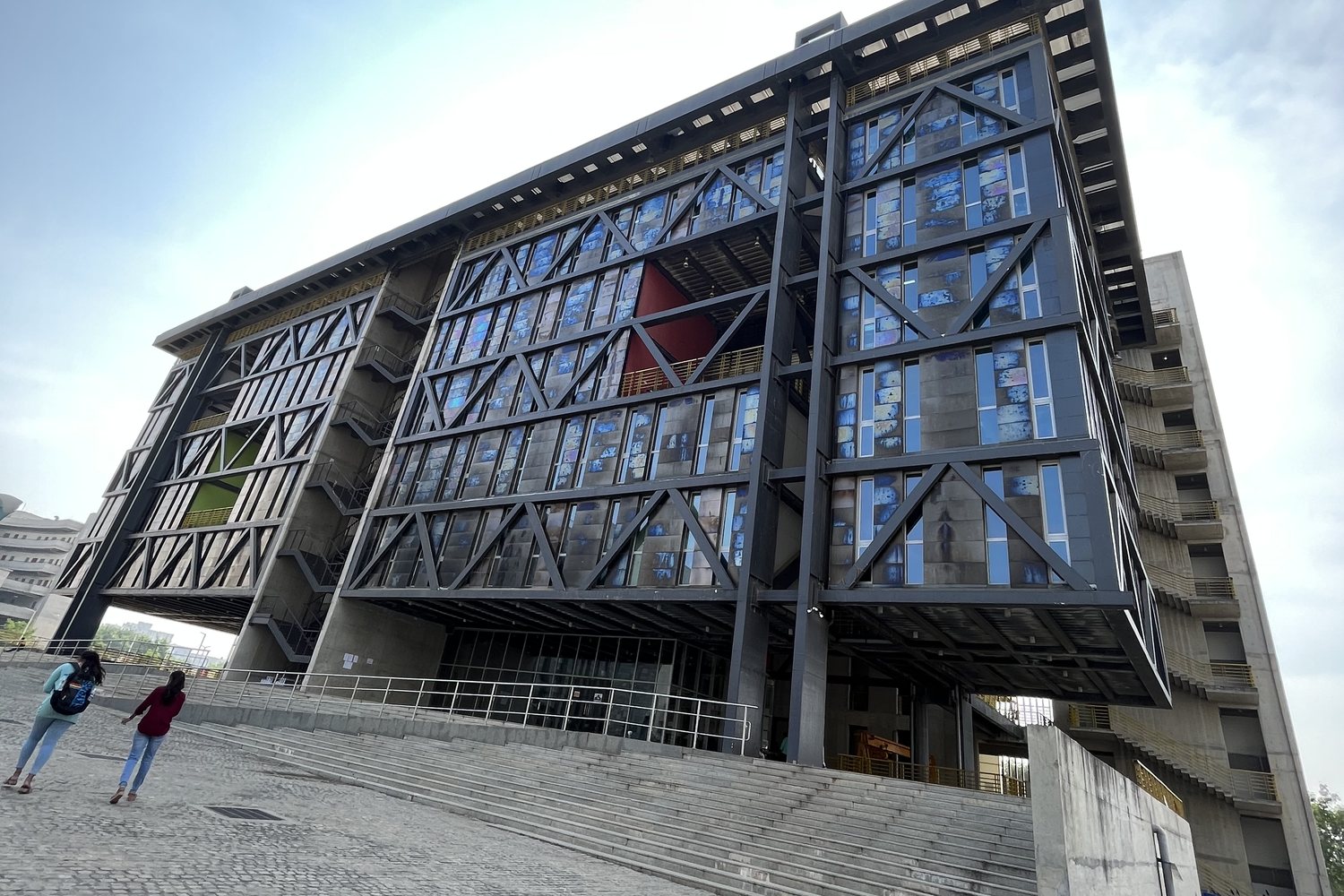
Three items, three different kinds of legitimacy: public-infrastructure trust, industrial partnership, individual teaching recognition. None of them made a national front page. This is the ordinary texture of a well-functioning IIT, and it is invisible precisely because nothing went wrong.
IIT Mandi's second campus finally has land
TL;DR: Himachal has formally leased 68.75 acres at Palampur, with ~100 more to follow after forest clearance.
The Palampur campus has been discussed for years. On 29 August it acquired a legal basis: the Himachal Pradesh government formally leased 68.75 acres — 550 kanals — to IIT Mandi, en route to a campus of roughly 175 acres. The CM's Principal Advisor Gokul Butail called it "a major milestone towards establishing the IIT Mandi campus at Palampur," and Registrar Kumar Sambhav Pandey said the institute is "committed to developing a grand, state-of-the-art facility at Palampur within the stipulated timeframe." Preliminary surveys were largely done by NIT Hamirpur.
Worth noting what this does and does not mean. A lease is not a building. The remaining ~100 acres still depend on forest clearance, which in Himachal is the step that historically consumes years. But a second IIT Mandi campus in Kangra district has been discussed since well before this government, and until Saturday it had no legal footing at all.
Two exam-reform stories aspirants should actually track
TL;DR: The Nilekani task force wants your input by 13 September. A 10,000-signature petition wants a third JEE Advanced attempt.
The high-powered task force on public examination reform, led by Nandan Nilekani and constituted after the NEET-UG 2026 leak, opened public consultation this week and will take stakeholder suggestions until 13 September. Its remit covers the NTA — which runs JEE Main, the filter into JEE Advanced — and it is explicitly examining "examination integrity and security," technology deployment, accessibility, and "safeguarding student well-being." Suggestions go via examreforms-taskforce.dopt.gov.in. In parallel, the Centre appointed two directors and a joint director to the NTA on 27 August, part of an overhaul that includes four-tier paper checking; the new joint director is an IIT Delhi mechanical engineering graduate.
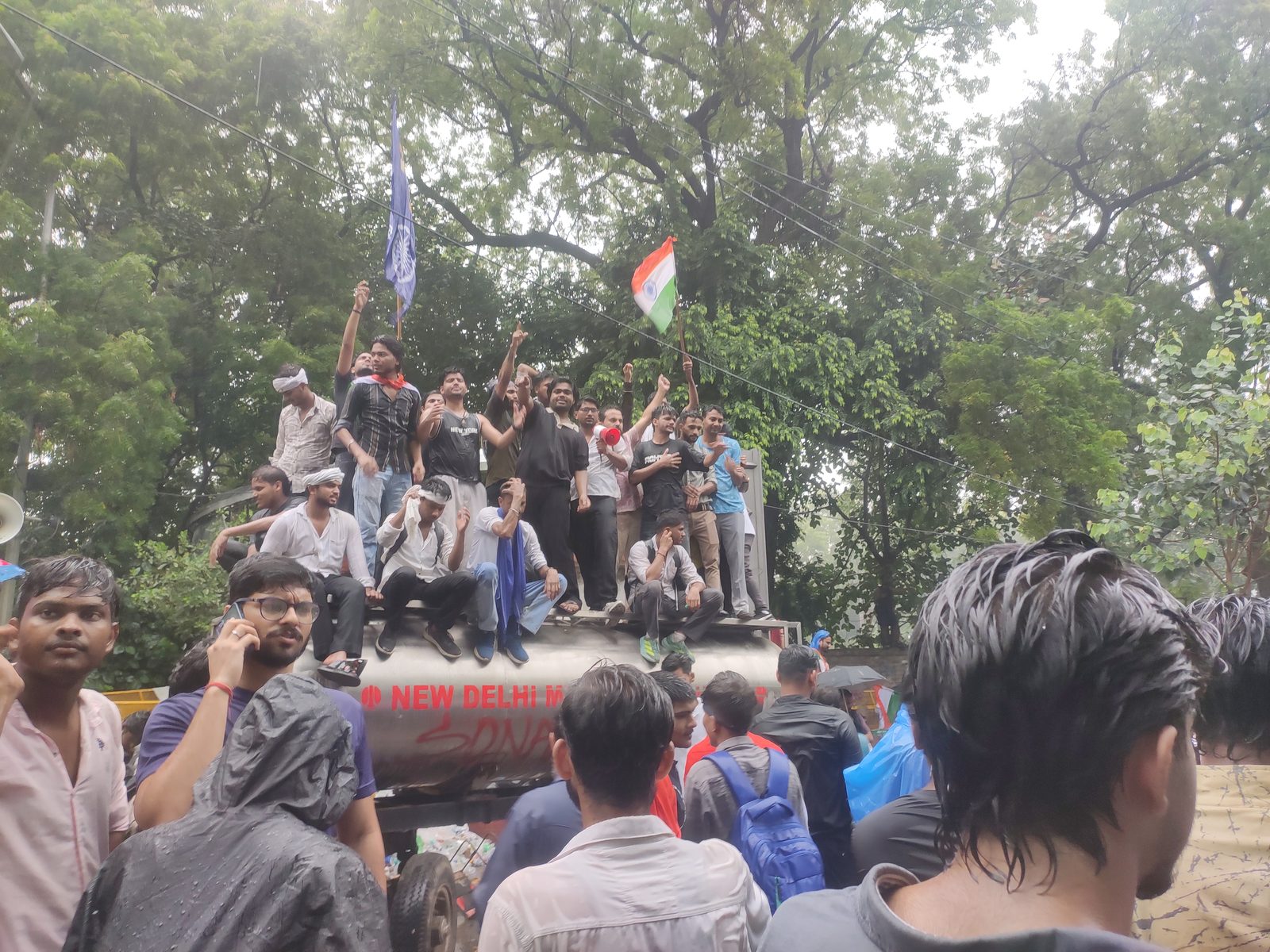
Separately, more than 10,000 aspirants have signed a petition asking the Joint Admission Board to restore a third JEE Advanced attempt from 2027, citing the COVID-era extra attempt as precedent. Petitioner Dev Kaushik framed it as "not for an unfair advantage, but for a more inclusive opportunity." Two models are on the table — three attempts in three years, or two attempts spread across three. To be clear about status: this is a demand, not a decision. JAB has not responded, and nothing about the current two-attempts-in-two-consecutive-years rule has changed.
Also dated this week: IIT Kharagpur published the JAM 2027 schedule, with the brochure on 31 August, the application portal opening 5 September, and the exam on 14 February 2027 — roughly 3,000 seats across 90 postgraduate programmes at 49 institutions.
Careers Watch: deeptech money is arriving faster than IIT founders are
Indian startups raised roughly $210–219 million across 23–24 disclosed deals this week. Exactly two of them have an IIT founder link, and both are atoms-and-materials businesses rather than software.
| Company | Round | Stage | Founder / IIT | Lead investors | Sector |
|---|---|---|---|---|---|
| InspeCity | ₹100 Cr (~$10.4 Mn) | Pre-Series A | Prof. Arindrajit Chowdhury — IIT Bombay (incubated at IIT Bombay) | Speciale Invest + Ashish Kacholia | Space |
| CarbonStrong | ₹12.5 Cr (~$1.3 Mn) | Seed | Harsh Jain — IIT Roorkee | IAN Angel Fund + Rainmatter | Climate |
InspeCity is targeting four in-orbit missions in 12–18 months and says it is expanding engineering, manufacturing and mission-execution capacity — a genuine hiring signal, not a press-release flourish. CarbonStrong is building its first production facility for low-carbon cement binders, and counts IIT Madras Research Park among its pilot customers.
The honest read is not "IITs are winning funding." It is the opposite shape. Twenty-plus rounds closed this week and IIT founders were on two of them, both hardware. Zero IIT-founded SaaS or consumer rounds. Meanwhile the week's largest deeptech cheque — $37 million to drone company Airbound — went to a 20-year-old founder with no degree at all. Capital for hard tech is arriving in India faster than the IIT founder pipeline is filling it, and the pipeline that is filling is not obviously credential-shaped.
The week's best counter-example to that came from a campus rather than a cap table. Armatrix, which builds snake-like robotic arms for confined industrial spaces, won Best on Campus at the Economic Times Startup Awards 2026. It was founded in 2024 on the IIT Kanpur campus by Vishrant Dave, Prateesh Awasthi and Ayush Ranjan while they were third-year undergraduates, and has since raised ₹18.42 crore. Co-founder framing worth keeping: "Building robots in university teams helped us take on the challenge of building something in India for the world, right after college. To every student working on a hard, physical problem, starting early is more possible now than ever." That is the pipeline working. It just takes two years to show up in a funding table.
Two more capital-supply signals worth logging: Micromax announced a ₹250 crore deeptech family office and Industrial47 closed the first tranche of a ₹200 crore defence and space fund, both this week. And the counterweight — Even Healthcare laid off around 350 people, 30–35% of headcount, in the same week it raised a $50 million round led by Khosla. If you are reading placement signals, note that a fresh round is not a hiring guarantee.
Across the 23 IITs this week
Stories that did not earn a full section, plus the honest status of every campus we checked. We cover all 23 — the full IIT collection included — so a quiet week gets said out loud rather than skipped.

Older IITs (Bombay–Kharagpur)
- IIT Bombay: Terraces of Hostels 12, 13 and 14 locked, grills going up on H13. Also held its 64th Convocation, awarding 3,763 degrees including a record 620 PhDs, and is reported to have set an eight-year ceiling on PhD completion for new registrations after finding some doctorates pending over a decade — reported but not confirmed by the institute, which had not responded at publication.
- IIT Delhi: See above. Classes suspended, FIR registered, external panel reconstituted under Justice Mukta Gupta, external ombudsperson proposed. Students separately petitioned for better GPU compute, arguing the newly inaugurated Param Pragya cluster runs five-year-old A100s — a claim contested in the same thread by an HPC engineer who called the facility "nothing to scoff at."
- IIT Madras: Launched Phiball, a new three-team sport played on a 26-metre circular court, ahead of National Sports Day. Also carrying the GATE 2027 delay as organising institute. Separately, its VESPA cardiovascular screening mission — built on the institute's long-running ARTSENS work — has now screened more than 6,400 people across ten states.
- IIT Kanpur: Signed a two-year agreement with ISKCON for voluntary wellness and stress-management courses — eight one-hour sessions each — inked by dean of students Pratik Sen. Also one of the three IITs picked for UP's ₹100 crore-plus project audits. And Armatrix, the snake-arm robotics company started on its campus in 2024, took Best on Campus at the ET Startup Awards.
- IIT Kharagpur: Published the JAM 2027 schedule. An institute team also published a 44-year (1980–2024) analysis of elevation-dependent warming across Jammu and Kashmir in Scientific Reports, finding roughly a degree of warming in two decades and sharper heating at higher altitudes. On campus, hall elections turned physical enough that students publicly asked why that energy never reaches food, toilets and sanitation; a separate crowdsourced drive began collecting photographic evidence of mess food quality to put before the Director and Dean.
Second-generation IITs
- IIT Roorkee: Beas dam-break analysis with BBMB; Scientific Data paper on monsoon extremes; a Samarkand State University delegation concluded a nine-day visit toward a joint master's in hydrology.
- IIT Guwahati: Published work on a rotating-anode electrocoagulation reactor that strips arsenate and fluoride from groundwater simultaneously — 98.2% and 91.8% removal respectively, at ₹18–₹58 per 1,000 litres, in the Chemical Engineering Journal. For Assam, where both contaminants sit in the same aquifers, a single unit that handles both at that cost is the whole point. Its 33rd Foundation Day falls on 1 September. (Note: the "E-Eye" stories circulating with 25 August datelines trace back to a 6 August press release.)
- IIT (BHU) Varanasi: UP infrastructure audit mandate; the 250-inventions-zero-transfers disclosure.
- IIT Hyderabad: South Central Railway traffic study; Jindal Steel Centre of Excellence; Prof. Kirti Chandra Sahu selected for the National Awards to Teachers 2026.
- IIT Indore: Hosted Samvardhan, the Malaviya Mission national workshop on student mental health, 30–31 August. Also held a chemical engineering open house and announced the second Malwa Chemical Conclave for 12 October. Note: the institute is currently running under an Acting Director.
- IIT Bhubaneswar: Engaged by the Odisha government to design a queue-management system for darshan at the Puri Jagannath Temple, targeting 8,000–10,000 devotees an hour; models were presented at a meeting chaired by Law Minister Prithiviraj Harichandan. Also took first prize in the Rajbhasha Excellence Award 2026. The temple work is the more interesting of the two — crowd flow at Puri is a genuine public-safety problem, and it is the kind of civic commission that rarely reaches an IIT.
- IIT Gandhinagar: A study with Germany's Helmholtz Centre for Environmental Research, reported this week from Nature Communications, models reallocating cereal land across 664 Indian districts — rice area down 8.8%, wheat down 12.1%, in favour of maize and millets — and finds it cuts fertiliser surplus, groundwater draw and methane simultaneously without reducing calorie output or farmer returns. Prof. Udit Bhatia's framing: "Indian agriculture pulls two emergency levers at the same time: too much fertiliser and too much groundwater." The institute also signed an MoU with the Bajaj Auto Foundation on 27 August and named the first 13 recipients of the Rupa Rahul Bajaj Scholarship for Women in Engineering. And a first-year mechanical engineering student, born with congenital hearing loss and fitted with cochlear implants as an infant, joined after finishing in the top 100 of the PwD category in JEE Advanced — the third year running that IIT Gandhinagar has admitted a student with speech-and-hearing impairment.
- IIT Ropar: The glacial-lake study above — 107 lakes in 1990 to 669 in 2024, 88 of them flagged for outburst-flood risk to Himachal's dams. Separately named by Chief Minister Bhagwant Mann as part of a Punjab push to deploy AI across the state's agriculture with Punjab Agricultural University and the Union Ministry of Agriculture. Worth being precise on that second item: Ropar is a named partner inside a state IT announcement, not the author of a launch of its own.
- IIT Jodhpur: Quiet week — checked the institute's news, announcements and research-highlight pages (all published without item-level dates), its LinkedIn, and Rajasthan press in both English and Hindi. The nearest item, an Amar Ujala feature on the campus drone hub building 50 kg-plus heavy-lift craft and an air-taxi prototype, is dated 17 August and falls outside this window.
- IIT Mandi: 68.75 acres formally leased at Palampur, the first legal step toward its second campus.
- IIT Patna: Quiet week — checked iitp.ac.in/news across all six tabs (newest dated item 6 Aug 2026, a hybrid magneto-rheometer), the homepage carousel, and academics.iitp.ac.in. Note for anyone searching: the widely circulated "12th Convocation on August 26 with Dharmendra Pradhan as chief guest" story is from 2025. The institute's own academics portal dates that convocation to Tuesday, 26 August 2025. It is not this week's news.
- IIT (ISM) Dhanbad: Quiet week — checked the homepage (footer updated 28 Aug), the in-media Media Highlights page (items undated), and the press-release archive (fully dated, newest 21 June 2026). Only dated in-window item was a recruitment shortlist notice.
Newest IITs
- IIT Bhilai: Quiet week — checked iitbhilai.ac.in homepage (newest activity: a vehicular-pollution workshop, 10–11 Aug), the news-flash page (items date to 2021), and the happenings page (2017–18). The recent-activities page returns a server error. Its 10th Foundation Day fell on 7 August, before this window.
- IIT Dharwad: The busiest of the newest cohort. Prof. Dileep A. D. of CSE was a panelist at the Ministry of Tribal Affairs' National Conclave on Tribal Languages in Mysuru (24–26 Aug), speaking on speech recognition, text-to-speech and machine translation for tribal languages. Two ANRF grants announced — Prof. Sai Ram Boggavarapu won the Prime Minister's Early Career Research Grant, Prof. Ramesh Nayaka an ANRF-IRG, both as PI. An Indian patent was granted for a fractal-textured geogrid for mechanical interlocking in soils. Sanskrit Week ran 25–31 August with the Central Sanskrit University.
- IIT Jammu: Quiet week — checked iitjammu.ac.in/news (newest 19 Aug 2026), the events page (empty), and the homepage ticker. Banking a forward hook: its ICWA-partnered national conference on "Geopolitics, Borderlands, and Soft Power" lands 25–26 September, a rare humanities story from a new IIT.
- IIT Palakkad: Completed Phase-1 offline sessions of two AICTE-QIP-PG certificate programmes — 3D Printing and Additive Manufacturing (24 participants) and Robotics (30) — with Phase-2 due December. An Indian patent was granted to Dr. Sreenath Vijayakumar's electrical engineering group jointly with Revin Tech Solutions, a startup incubated at the institute, for a planar-coil angle sensor with PWM output. Maj Gen Gautam Mahajan of MCTE Mhow visited to explore collaboration.
- IIT Goa: Quiet week — checked iitgoa.ac.in/news (newest 20 July 2026, on the 7th convocation and the Farmagudi land handover), the 10th-anniversary calendar (two August events listed with no day-level dates), and the awards page (empty). Anti-Ragging Week ran 12–18 Aug, before this window.
- IIT Tirupati: Quiet week — checked iittp.ac.in/news, whose archive runs 2017–2025 with no 2026 section at all, plus the homepage news block, announcements and awards pages. The Kia India 'Inspire Works' Makers Lab story that circulates is dated 14 August, outside this window.
If you came looking for fest news, there isn't any
Worth stating plainly, because people search for this every week: no IIT fest made news between 24 and 30 August. Not Mood Indigo, Techfest, Saarang, Shaastra, Rendezvous, Antaragni, Techkriti, Kshitij, Alcheringa, Thomso or any of the others. The single item was Techfest IIT Bombay's 2026-27 website going live on 26 August with competition registrations and a stated prize pool above ₹1 crore — and that reached us through a PR wire rather than earned coverage, so treat the framing accordingly.
This is the calendar, not a drought. The major IIT fests run October to January. Late August is the gap between core-team recruitment and lineup announcements, which is exactly when the rumour mill about headline artists starts and is least worth believing. Real lineups begin landing from late September.
The quieter pattern: five IITs, one problem
Strip out Delhi and a second story appears, and it is the more remarkable one. Three IITs, working separately and with no evident coordination, published in the same week what amounts to a single causal chain running through one river system.
IIT Kharagpur supplied the driver: a 44-year reconstruction (1980–2024) in Scientific Reports (DOI 10.1038/s41598-026-61302-2) showing Jammu and Kashmir warming faster at higher elevations, roughly a degree in two decades. IIT Ropar, with the University of Technology Sydney, supplied the consequence: Himachal's glacial lakes have grown from 107 in 1990 to 669 in 2024, a 525% increase, their combined area doubling to 11.20 sq km, with 88 flagged as susceptible to outburst floods and modelled peak discharges of 1,385 cumec in the Beas and 3,507 in the Satluj — threatening Pandoh, Koldam and Bhakra-linked infrastructure, and 588 buildings in the Satluj basin alone. And IIT Roorkee supplied the response: the first dam-break analysis and emergency action plan for 135 km of that same Beas, sorting people into red, blue and green zones.
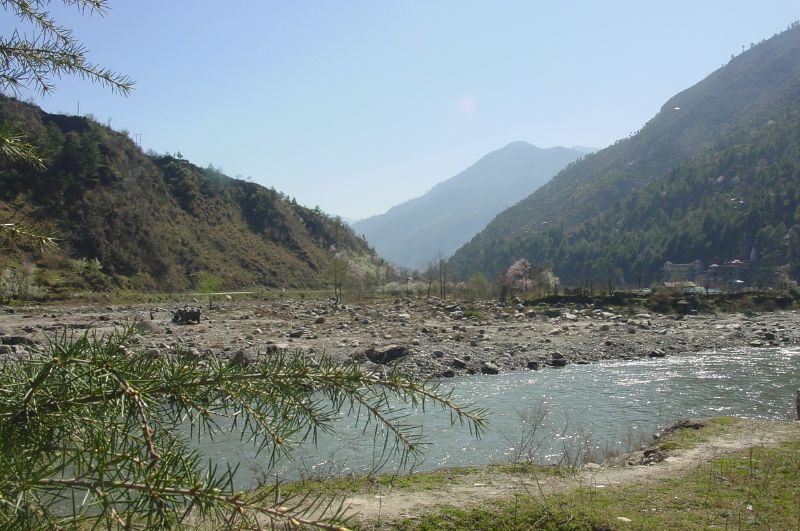
Warming at altitude, lakes multiplying behind unstable moraine, and an evacuation plan for the valley below. Three institutes in three states arrived at consecutive links of one problem in seven days, and nobody framed it as a single story because our coverage of the IITs is organised by campus rather than by question.
Two more sit alongside it. IIT Guwahati built a reactor stripping arsenate and fluoride from groundwater simultaneously at ₹18–₹58 per thousand litres. IIT Gandhinagar, with Germany's Helmholtz Centre, modelled reallocating cereal land across 664 districts and found that optimising for nitrogen surplus — rather than for water directly — cuts water use 18.6% and farm greenhouse gases 8.7%, averting on the order of ₹10,000 crore a year in pollution damage while holding calorie output flat.
None of this trended. This is what the IIT research system looks like when it is working on India's actual constraint rather than on whatever is fundable this quarter, and it is exactly the material that gets crowded out of a week with a protest in it.
Coming next
- 31 Aug — JAM 2027 information brochure published (jam.iitkgp.ac.in)
- 5 Sep — JAM 2027 application portal opens; also Teachers' Day, when the President confers the National Awards to Teachers
- ~8 Sep — IIT Delhi's external inquiry committee report is due, two weeks from its constitution
- 13 Sep — Public consultation closes for the Nilekani task force on examination reform
- 25–26 Sep — IIT Jammu's national conference on geopolitics and borderlands
- 27 Sep — GATE 2027 regular registration close, assuming registration has opened by then
- 12 Oct — Second Malwa Chemical Conclave at IIT Indore
- Watch: NIRF 2026 remains unreleased; NIRF 2025 is still the latest. It typically lands in early September.
FAQ
What happened at IIT Delhi in August 2026?
Rishikesh Kumar, a 31-year-old MSc Physics student, died on 22 August 2026. Classes were cancelled campus-wide on 24 August as hundreds of students protested, demanding an independent inquiry into alleged administrative lapses, senior resignations, and compensation for the family. Delhi Police registered an abetment-to-suicide case against unidentified persons on 26 August. The institute constituted an external inquiry committee, reconstituted on 27 August under retired Delhi High Court judge Justice Mukta Gupta, with a report due in about two weeks.
Has GATE 2027 registration opened?
No. As of 30 August 2026, gate2027.iitm.ac.in shows "Registration TBA". The opening was scheduled for 14 August, moved to 27 August, and has been postponed again. The regular close date of 27 September has not changed, and a verified DigiLocker account remains mandatory for all Indian applicants.
Is there a third attempt for JEE Advanced 2027?
Not currently. A petition with more than 10,000 signatures has asked the Joint Admission Board to introduce one, but no decision has been announced. The existing rule — two attempts in two consecutive years — remains in force.
Which IITs had news this week?
We checked all 23 individually. Sixteen had in-window news: Bombay, Delhi, Madras, Kanpur, Kharagpur, Roorkee, Guwahati, BHU, Hyderabad, Indore, Bhubaneswar, Gandhinagar, Ropar, Mandi, Dharwad and Palakkad. Seven had genuinely quiet weeks — Jodhpur, Patna, Dhanbad, Bhilai, Jammu, Goa and Tirupati — each checked against its own press pages, LinkedIn and regional coverage before we said so.
Support: Tele MANAS, the national mental health helpline, is free and available 24/7 on 14416.