

Founder Stories · IIT Roorkee · Published 11 October 2026
On Monday, 5 October 2026, Razorpay announced that Indian brands could now buy ads inside ChatGPT through its platform, with Tanishq, Tata Neu, Fastrack and NMIMS among the first names on the list. Mint reported that OpenAI's ad business had reached a $1 billion annualised run rate in under 200 days. Razorpay's co-founder and CEO, Harshil Mathur, posted that morning: "A new growth channel, run by AI and accessible to every business."
Twelve years earlier the same man was riding a motorbike around Jaipur with his co-founder, pitching a payment gateway to schools and colleges. Shashank Kumar told Moneycontrol: "The college authorities would think we came there to seek admission." In between came about 100 bankers who mostly said no, a Y Combinator batch, a $7.5 billion valuation, and a year in which India's central bank told Razorpay to stop signing up new online merchants.
Mathur graduated from IIT Roorkee in 2013 with a B.Tech in Mechanical Engineering, not the computer science he wanted. This is how a first-year who got fined for hacking his institute's website ended up running a company that, by its own count, processes more than $180 billion in annualised payments, and what an IIT student in 2026 can take from the way he got there.
Roorkee, 2009–2013: the first-year who hacked the institute website
Mathur grew up in Jaipur. Mint's 2025 profile says his father worked at a bank and his mother ran a beauty parlour. He reached IIT Roorkee in 2009 with a JEE rank that did not get him the branch he wanted. "Unfortunately, even though I was very deeply interested in programming and software, I didn't secure the right rank," he said on the Matrix Moments podcast in 2020. He studied mechanical engineering instead.
The software interest went somewhere less official. "I was trying non-theoretical things like hacking. So, I used to spend a lot of nights just tinkering with websites," he said in the same conversation. One of those nights ended with a fine. "That's how almost everyone knew me...that somebody in the first year had hacked the institute website." The question he says he asked himself next was how to "channelise this into creating something more productive."
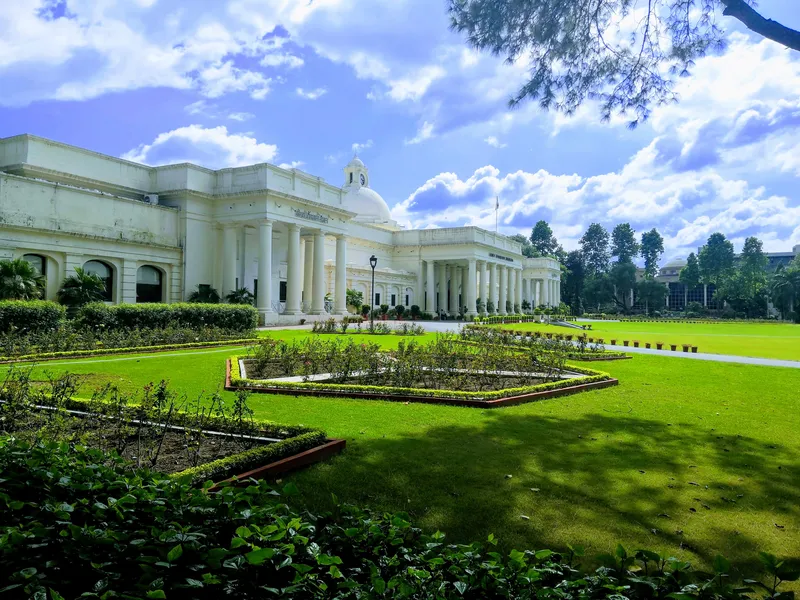

The productive outlet was SDSLabs, a student software group. Shashank Kumar, a computer science student from Patna who had joined IIT Roorkee in 2008, started it with a few seniors because students "had to pretty much learn on their own." YourStory reported that "It was through this community that he first met Harshil." Kumar later described the first meeting in his hostel room to Moneycontrol: "Harshil was 6'1" and had an imposing figure. The chair I offered him seemed to be too small. There was an aura around him." Mathur's reply to the pitch for a project outside the syllabus, as Kumar remembers it, was "Yeh karne main bahut mazaa ayega" (this would be so much fun).
The two tell the year slightly differently. Mathur says he was in first year and Kumar in second; Kumar says second and third. Both agree on the gap: "He was one year my junior at IIT," Kumar told Moneycontrol.
SDSLabs also gave Mathur his first fundraise, and he still calls it the worst one. The lab got $50,000 from the campus for hardware. "We had to take money from the Dean. That is the hardest funding exercise we have ever done. All the future funding we did from VCs was much easier and simpler," he said on the podcast, describing a pitch to the Dean, then a committee, then "carrying those files to the dean and professor to get signatures." Any IIT student who has chased a signature for a club budget will recognise the scene.
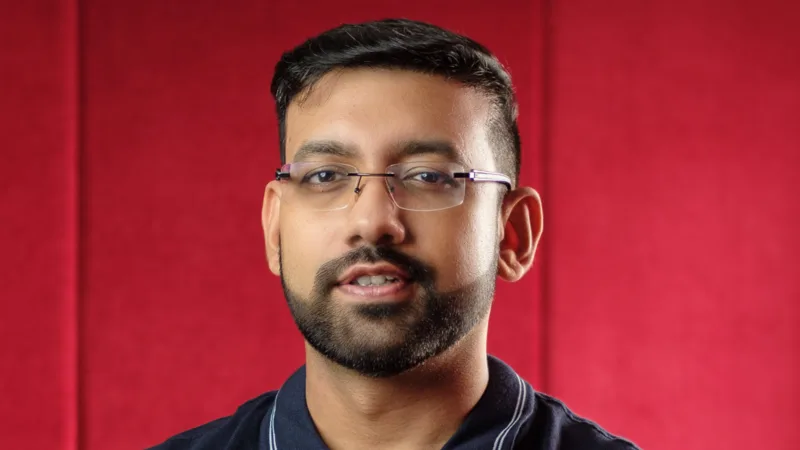
Kumar graduated in 2012 and took a campus offer from Microsoft in the US. Mathur graduated a year later. IIT Roorkee's own records list them exactly that way: "Mr. Harshil Mathur (2013 – B.Tech. – Mechanical Engineering)" and "Mr. Shashank Kumar (2012 – B.Tech. – Computer Science and Engineering)", on the page for the institute's Distinguished Young Alumnus Awards 2019, which both received. The institute also lists Mathur in its NIRF 2025 innovation filing as an alumnus founder.
Schlumberger, a side project, and the payments wall (2013–2014)
Out of Roorkee, Mathur took what Business Today calls "one of the most sought-after campus placements", at the oilfield services company Schlumberger. Hindustan Times, citing his LinkedIn, gives the title as Wireline Field Engineer. Reports place the job in Dubai, Abu Dhabi or Mumbai depending on the outlet, so we leave the city out. He did not last. "I was very clear this is not for me. I am a guy who wants to sit and code. I don't want to step on the field," he told Business Today in July 2026.
The two friends were coding together on the side, Mathur from the Schlumberger job and Kumar from Microsoft. "We didn't have a lot of hobbies and we loved to code," Mathur told Mint. The project was not payments. "It was a social crowdfunding platform, kind of like a Go Fund Me," he told YourStory in 2019, where people facing a medical emergency could raise money publicly.
To take donations, the site needed a payment gateway, and that is where it stalled. "We thought payments should be the easiest part. It turned out to be the hardest part of building it," he told Business Today. Moneycontrol dates the realisation to around September 2013, when the pair saw that every small Indian business trying to accept money online was hitting the same paperwork. The crowdfunding site became the side project; the gateway became the company.
Mathur was the cautious one. Moneycontrol reports that he "was not convinced initially but later when he had this conversation with HDFC in February 2014 and got the verbal approval, he went ahead and quit his job." In February 2014, both left their jobs and went to Jaipur.
Building Razorpay in three scenes (2014–2021)
Scene 1. Jaipur, 2014: ₹10,000 a month and about 100 bankers
They started in Mathur's hometown because it was cheap. "In Jaipur, we were able to live with Rs 10,000 at that time," Kumar told Moneycontrol. Mathur's version of the same advice, in Mint: "The easiest way is to start in your parents' house because you don't have an operating cost."
A payment gateway in India needs a bank to sponsor it, and the banks were not interested in two engineers in their early twenties. "I would have met and mostly been rejected by almost 100 bankers in that three-to-six-month period," Mathur told Business Today. He has told the number consistently: "a hundred-ish bankers" to Mint in 2025, and in 2019 YourStory wrote that of 20 to 30 banks that received a proposal, "almost everyone turned them down."
What he took from the rejections was a syllabus. "Every time we spoke to them, they gave us something more. They told us what we were missing and what we didn't understand." HDFC Bank was the one that said yes, according to Mint. The product formally launched in October 2014.
Scene 2. Y Combinator, Winter 2015: wear a suit
Late in 2014 Razorpay got into Y Combinator's Winter 2015 batch. It was one of the first Indian startups in the accelerator; the company's own releases call it the second Indian company in YC, and YourStory names ClearTax as the first. The most quoted piece of advice from that batch came from Sam Altman, then YC's president, and it was not about code. "We were telling Sam that we were finding it difficult to get banks and VCs to take us seriously. We looked too young, we looked like techies," Mathur recalled to Mint. Altman's answer, as he tells it: "You should look like bankers if you want to interact with bankers."
The batch was not smooth. At YC's Startup School in Bengaluru in April 2026, Mathur described a sponsor bank pulling out around Demo Day, which took Razorpay offline for four or five days. "We got abused by some of our merchants then, whose payments failed to go through, but we stayed in touch with them and explained the problem," he said, according to The Economic Times. Those merchants, he added, are still customers.
In April 2015, after YC and a seed round, the company moved to Bengaluru. "10 of us moved into a four-bedroom apartment in Koramangala. We lived and worked out of it for years," Mathur told Mint. Mint adds that he lived in that flat with Kumar and a friend until he got married, around 2024.
Scene 3. October 2020: a unicorn in a pandemic
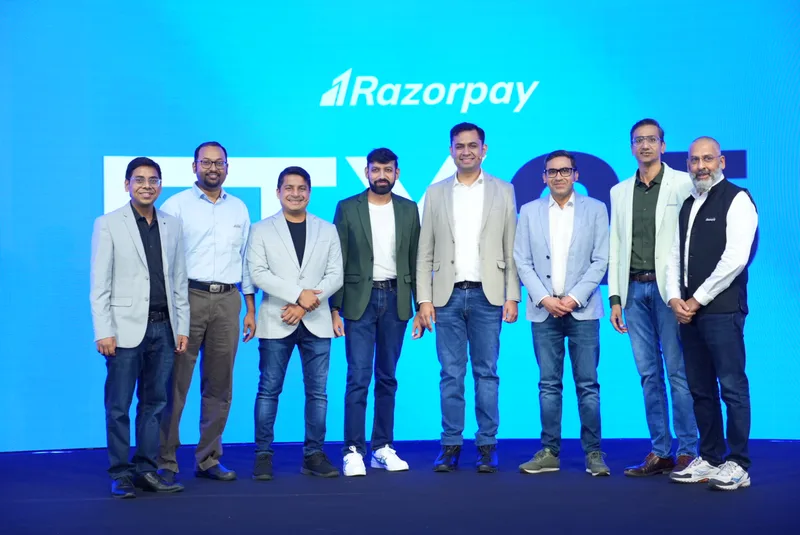
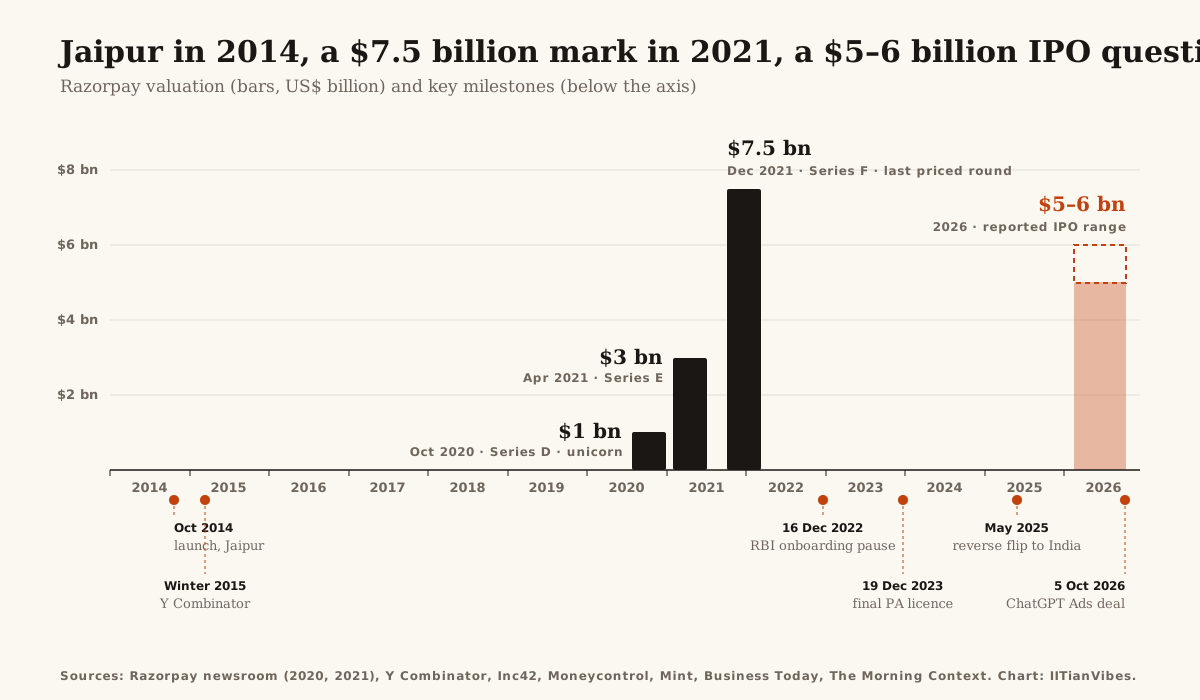
On 12 October 2020 Razorpay announced a $100 million Series D co-led by GIC and Sequoia India, valuing it at more than $1 billion. Mathur's memory of the day is flat. "We celebrated for a day and then got back to work. It happened in the middle of the pandemic, so even the celebration was virtual," he told Business Today. The next 14 months moved fast: $3 billion in April 2021, then a Series F of about $375 million in December 2021 that took the valuation to $7.5 billion, with $740 million raised in total since 2014. That is still the last priced round.
| Date | What happened | Source |
|---|---|---|
| 2009–2013 | Mathur's B.Tech, Mechanical Engineering, IIT Roorkee | IIT Roorkee |
| Feb 2014 | Both quit their jobs and start in Jaipur | Moneycontrol |
| Oct 2014 | Formal launch | YourStory |
| Winter 2015 | Y Combinator batch; Bengaluru move in April 2015 | Y Combinator |
| 12 Oct 2020 | $100 million Series D; valuation above $1 billion | Razorpay |
| 20 Dec 2021 | About $375 million Series F at $7.5 billion | Razorpay |
| 16 Aug 2022 | Acquires Ezetap (point-of-sale payments) | Inc42 |
| 16 Dec 2022 | Pauses onboarding of new online merchants at the RBI's suggestion | Inc42 |
| 19 Dec 2023 | Final RBI payment aggregator authorisation | Moneycontrol |
| May 2025 | Parent company moves from the US to India; about ₹1,245 crore in tax | Inc42 |
| FY25 | Operating revenue ₹3,783 crore, up 65%; loss after a ₹1,209 crore ESOP expense | Inc42 |
| 14 Jun 2026 | IPO papers reportedly filed confidentially with SEBI | Moneycontrol |
| 18 Aug 2026 | Launches Vulcan, an AI payments model built with NVIDIA and AWS | Moneycontrol |
| 5 Oct 2026 | ChatGPT Ads for Indian brands with OpenAI | Mint |
December 2022: the year the RBI said wait
The scene that tested the company most was not a fundraise. In July 2022 Razorpay had received in-principle approval for a payment aggregator licence. Then, on 16 December 2022, it stopped signing up new online merchants. "As part of this process, the RBI has suggested us to temporarily withhold onboarding new online merchants till such details are submitted," a company spokesperson told Inc42. Cashfree was in the same position. For a payments company that grows by adding merchants, it meant a year of selling only to the businesses it already had.
The pause ended on 19 December 2023, when Razorpay received final authorisation to operate as a payment aggregator. What happened next is the number Mathur returns to.
"Once the moratorium was lifted, within a period of two months, we onboarded 150,000 merchants because almost 80% of the businesses that had signed up before it was imposed came back and started using Razorpay again."
Harshil Mathur, to Mint, February 2025
He describes it as a test of whether customers would miss them: "These were customers who had gone live with other companies in this space but when we were live again, they wanted to switch back to us." At YC's Startup School in 2026 he made a broader point from it, which ET summarised: building in a regulated space has advantages, because not every founder has the patience for the regulator. For a company that began by sitting through about 100 bank meetings, the pause was the same lesson at a larger scale.
The pause still comes up on Reddit. In a September 2026 r/StartUpIndia thread asking why Razorpay never became India's Stripe, one reply put the blame on the regulator, not the company: "That comes down to RBI rules, nothing to do with razorpay. RBI has very specific onboarding requirements, and had shut down new onboarding for multiple payment players for around a year while they were figuring out what all to include." (u/Rational-Mushroom, r/StartUpIndia, 9 upvotes, 6 September 2026)
The other big decisions of these years were structural. Razorpay bought Ezetap for in-store payments in August 2022 and a majority stake in Malaysia's Curlec in February that year. In May 2025 it completed a move of its parent company from Delaware to India, paying about ₹1,245 crore in tax to do it, which cleared the way for a listing in India. The move showed up in the accounts: FY25 operating revenue rose 65% to ₹3,783 crore, but a ₹1,209 crore ESOP expense pushed the year into a loss, and the company did not disclose the exact figure. Mathur said at the time that online payments, the original business, was EBITDA profitable.
October 2026: ChatGPT ads, Apple Pay, and an IPO at a lower price
The last three months show where Mathur is taking the company. On 18 August Razorpay launched Vulcan, a payments model built with NVIDIA and AWS and trained on nearly 3 trillion data points across 4 billion payments. On 30 September Apple Pay went live for domestic payments; Mathur's post read "No card numbers. No CVV. No OTP. Just authenticate and pay." On 5 October came the ChatGPT Ads deal. Back in March he had told Moneycontrol that Razorpay was not doing any R&D that was not AI-first.
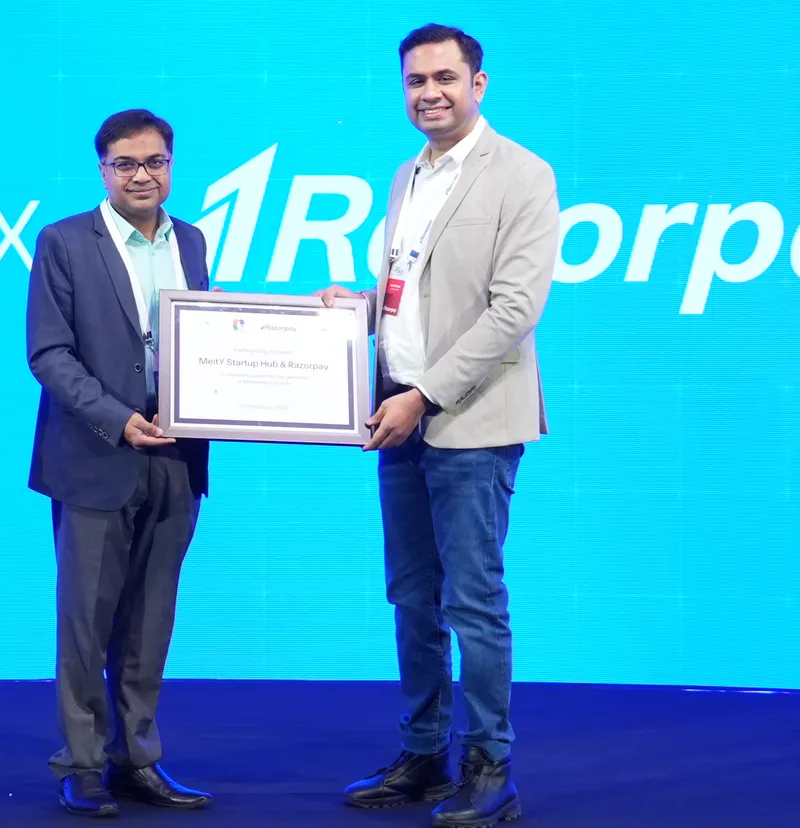
At the Global Fintech Fest in September he talked about India's share of instant payments. "We feel proud that 49 per cent of all real-time payments in the world are happening through India, and it's great. But I hope that other parts of the world capture a lot of the growth," he said, reported by BusinessLine.
The open question is price. Moneycontrol reported on 14 June 2026 that Razorpay had confidentially filed draft IPO papers with SEBI; The Hindu put the issue at ₹5,000–6,000 crore. No public draft or listing date had appeared by 9 October.
On valuation, reports in April put it at around $5 billion, and The Morning Context wrote on 30 September that the company is "heading to the public markets with a reduced price tag: a valuation of $5-6 billion." That is below the $7.5 billion of December 2021. Mathur's own line on this, from August, reads like it was written for the moment: "If you are creating more value for yourself than for your customers, you are living on borrowed valuation. Those valuations eventually correct themselves."
On Reddit, the people who use Razorpay every day see it from a different angle than the IPO coverage. Developers mostly praise the product. In an April 2026 r/developersIndia thread about why everyone says to "just use razorpay payment gateway" despite the 2% fee, a reply with 297 upvotes read: "From my experience, Razorpay has the easiest and fastest setup compared to others. Their developer documentation is top notch, and their support is really receptive." (u/O_rAdiCal, r/developersIndia, 2 April 2026)
Founders building small software products are harsher. In the same September thread that asked whether Razorpay would be "the next domino" after other startup markdowns, a user wrote: "In India even today you dont have any payment provider if you start a saas today and is unregistered," and called the onboarding rules a "Same elitist mentality we will onboard you if we deem you worthy" (u/Just_Difficulty9836, r/StartUpIndia, 15 upvotes, 5 September 2026).
For engineers who want to work there, a 2024 r/developersIndia post titled "Had the worst interview experience of my life - Razorpay" drew more than 1,300 upvotes. One reply: "For a company that processes payments, they seem to have a terrible ROI on their interview process." (u/eseus, r/developersIndia, 239 upvotes, 24 October 2024)
Where he is now, and five things an IIT student can take from it
As of October 2026 Mathur is co-founder and CEO of Razorpay, and Kumar is co-founder and managing director, the titles Y Combinator lists. Business Today reports that it processes more than a billion transactions a quarter. The Hurun Global Rich List 2025 put each founder's net worth at ₹8,643 crore, both aged 34 at the time, according to Hindustan Times. He keeps a low personal profile on purpose. "In the finance space, you want to create a sense of trust and responsibility, and I think oversharing (one's) personal life somewhere dilutes that," he told Mint.
Five things worth taking from his route, if you are in an IIT now:
- Your branch is not your career. He missed the rank for computer science, studied mechanical engineering, and built a software company anyway. The skill came from a student lab, not the timetable.
- Find your co-founder in a club, not a hackathon. Mathur and Kumar worked together at SDSLabs for years before Razorpay. You learn how someone handles a dull, late-night problem by doing one with them.
- Build something else and watch where it breaks. Razorpay came from a crowdfunding site that could not take payments. The best problem is the one that blocks your own project.
- Treat rejection as free consulting. About 100 bankers said no, and each one, he says, told them what they were missing. Write down every objection; it is your product spec.
- The permission is the moat. From the Dean's committee to a bank sponsor to a year-long RBI pause, the slow, regulated steps kept out competitors who would not wait. In October 2026 his advice on LinkedIn was about AI: "It's okay to delegate the work to AI. Don't delegate the understanding."
If Roorkee is your campus, the IIT Roorkee hoodies are where we keep the merch, for the place where a first-year with a fine on his record met the senior who would co-found Razorpay with him. For more on the campus, read our IIT Roorkee campus guide, the IIT Roorkee placements 2025-26 breakdown and the Thomso 2026 guide. Last week's founder story was Pawan Kumar Chandana of Skyroot.
FAQ
What is Harshil Mathur's educational qualification?
He has a B.Tech in Mechanical Engineering from IIT Roorkee, class of 2013. IIT Roorkee gave him its Distinguished Young Alumnus Award for 2019. He has said he wanted computer science but did not get the rank for it, and learned software through SDSLabs, a student coding group on campus.
How old is Harshil Mathur and what is his net worth?
The Hurun Global Rich List 2025 listed Harshil Mathur and Shashank Kumar as 34 years old, with a net worth of ₹8,643 crore each. No birth date has been published. His wealth is mostly his Razorpay stake, so it moves with the company's valuation.
Who founded Razorpay?
Harshil Mathur (CEO, IIT Roorkee Mechanical Engineering 2013) and Shashank Kumar (managing director, IIT Roorkee Computer Science 2012) founded Razorpay in 2014. They met through SDSLabs at IIT Roorkee, started in Jaipur, and joined Y Combinator's Winter 2015 batch before moving to Bengaluru.
What is Razorpay's valuation and IPO status in 2026?
Razorpay's last priced round valued it at $7.5 billion in December 2021. It reportedly filed IPO papers confidentially with SEBI in June 2026 for an issue of about ₹5,000–6,000 crore, and reports put its expected listing valuation at $5–6 billion. No listing date had been announced by 9 October 2026.
Hero photo: Harshil Mathur, 2026 press portrait, Razorpay newsroom press kit (razorpay.com/newsroom/leadership-team). Card design: IITianVibes.
By Arun Raghav S · Co-founder, IITian Vibes · B.Tech, IIT Jodhpur. Last updated: 11 October 2026. Corrections to hello@iitianvibes.com.