The IIT Week · 14–20 September 2026 · Week 38 · All 23 IITs checked
On Friday afternoon a second-year student at IIT Bombay was found with a phone in a mid-semester exam. By Friday night he was dead in his hostel room and four hundred of his classmates were outside the main building. By Saturday night the invigilating professor — until recently the institute's Dean of Student Affairs — was named in an FIR for abetment of suicide and under the SC/ST (Prevention of Atrocities) Act. The case had been handed to the Mumbai Crime Branch after the family refused to claim the body for seven hours. The Times of India called it "possibly the first such instance" of an IIT Bombay faculty member being named an accused in a student's death. That is the week.
It was not the only thing that happened. In the same seven days, an IIT Madras student team won an international autonomous-ship competition in Norway against 22 rivals from nine countries, four first-year IIT Hyderabad students came back from Taiwan with an award for solar-cell work nobody expected freshers to be doing, a research scholar from IIT (ISM) Dhanbad received a chip his team designed from the Prime Minister's hands, and an IIT Patna undergraduate took bronze at a mental-calculation world championship in Germany. Those stories are in here at full length, not as a footnote, because the week's real picture is both things at once.
The throughline of the hard news is not the death itself but what happens after one. This was a week in which the machinery of accountability across the IIT system was visible in every gear. An FIR at Bombay. A two-week extension for the inquiry at Delhi that was supposed to have reported already. A state government asking the Calcutta High Court for a fresh medical board in a four-year-old death at Kharagpur. IIT Ropar quietly reinstating a PhD scholar it had pushed out. The Gujarat High Court putting IIT Gandhinagar on notice over a job interview. The counter-story is at IIT Kanpur, which decided it will grant medical degrees before it has a medical college. And the National Institutional Ranking Framework, which was due on 4 September, is now 16 days late and answers with a maintenance page.
The deep dive: a phone in an exam hall, a death in Hostel 4, and a professor in the FIR
This section discusses a student's death by suicide. If you are struggling, Tele MANAS is free and available 24/7 on 14416. Details of method are omitted deliberately.
The sequence, as reported by fifteen outlets over three days, runs like this.
| When | What happened | Source |
|---|---|---|
| Wed 16 Sep | Two days before the death, IIT Bombay stops keeping Lecture Hall Complex rooms open overnight during mid-sems, citing littering and security. Four rooms in the Energy Science building are opened instead. | Indian Express, 18 Sep |
| Fri 18 Sep, 2–4 pm | A second-year B.Tech student in Energy Science and Engineering is found using a mobile phone during a mid-semester exam. The institute says he had uploaded the question paper to ChatGPT. | IIT Bombay statement via ANI |
| Fri 18 Sep, evening | He is found dead in his room in Hostel 4. | Indian Express, 19 Sep |
| Fri 18 Sep, ~10.30 pm | More than 400 students gather at the main building. Director Shireesh Kedare meets them; the crowd moves to the convocation hall. Mid-semester exams are postponed. | Indian Express, 19 Sep |
| Sat 19 Sep | On the father's complaint, Powai police register an FIR naming the invigilating professor, Suryanarayan Doolla, and unnamed "other senior officials" under BNS Section 108 (abetment of suicide) and the SC/ST (Prevention of Atrocities) Act. | The Hindu, 19 Sep |
| Sat 19 Sep, ~9 pm | After a seven-hour standoff at Rajawadi Hospital, police agree to transfer the case to the Mumbai Crime Branch under an ACP-rank officer. The family claims the body. | Hindustan Times, 20 Sep; TOI, 19 Sep |
| Sat 19 Sep, night | Students post a 12-point charter: resignation of the director, the dean of student affairs and exam officials; a task force on student suicides; student seats on academic committees. Protests end after the Crime Branch transfer. | Hindustan Times, 20 Sep |
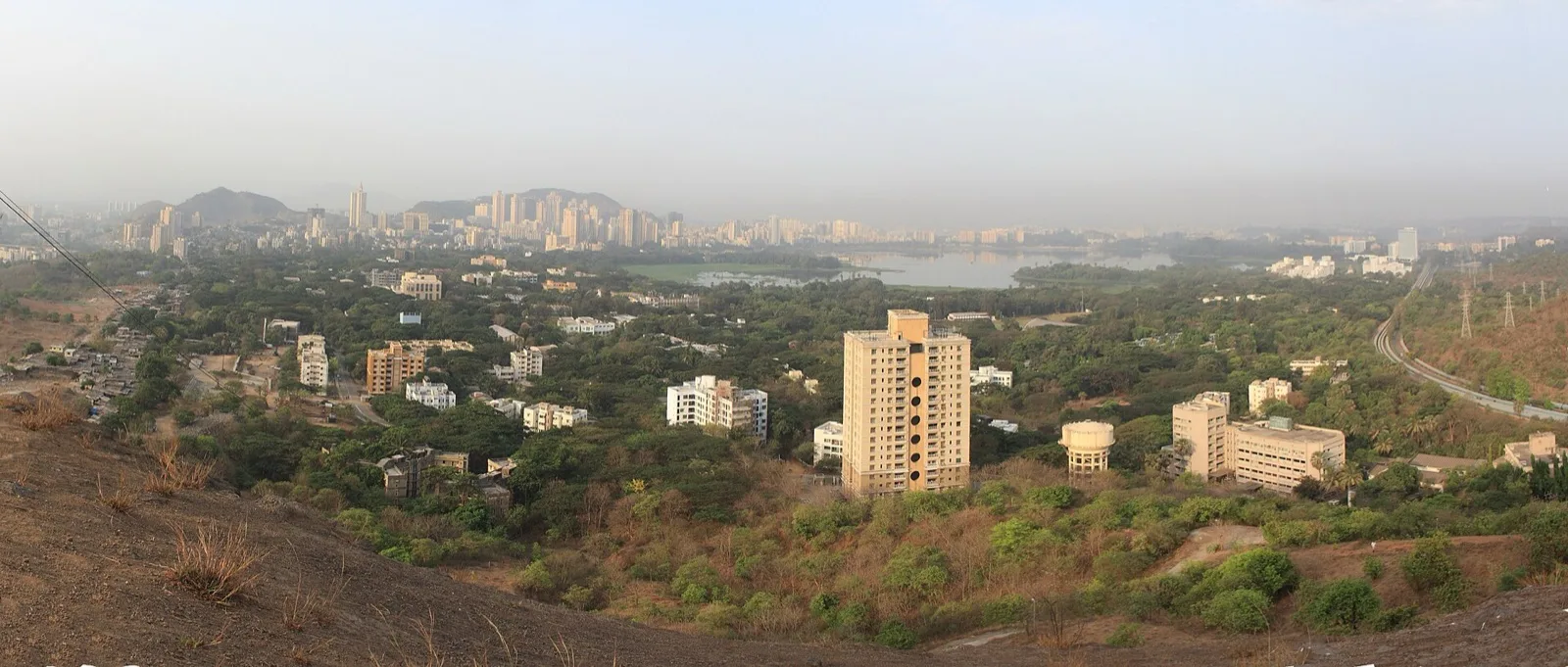
Two accounts of Friday afternoon now exist and they do not agree. The institute's is precise about what did not happen: "No disciplinary action was initiated against the student. The matter was also discussed with the student by the instructor and the Head of the Department, who counselled him and assured him that the incident would not adversely affect his academic career." The students' and the family's account is that he was taken out of the hall and told he faced a year's suspension — NDTV reports the allegation that it "could have required him to leave the hostel and stay outside the campus." Both cannot be right, and the gap between them is precisely what the Crime Branch now has to close.
The FIR goes further than the exam. The father's statement, as reproduced by The Hindu, alleges three months of caste-based abuse: "for the last three months, on the instructions of Director Shri Shireesh B. Kedare, faculty member Suryanarayan Dulla had been abusing him using caste terms." (The Hindu renders the surname as Dulla; the Indian Express and the Times of India spell it Doolla.) That is an allegation in a police complaint, not a finding. The director's denial to the Times of India is categorical: "And there is absolutely none in this case. In fact caste-based information of every student is completely hidden and not available for anybody's information." The institute's SC/ST cell has told students by email that it never received a complaint from him. The family says he told his father, not the institute. Both of those can be true at once, and it is worth saying so before the story hardens into two camps.
Some things should not be repeated as fact. A video clip of the director addressing students in the early hours of Saturday went viral with the claim that he had offered to resign, with 21 September mentioned as a date. Outlook reports there is "no official confirmation of the resignation from IIT Bombay, the Ministry of Education or Kedare himself." A Reddit post claiming a professor had resigned has no press corroboration at all. And the ChatGPT detail, which drove a good deal of the national coverage, rests on one source — the institute's own statement — while the family disputes the whole narrative of the afternoon. The reader should hold it loosely.
What is not in dispute is the count. This is the third death by suicide on the Powai campus in 2026, after February and July. A compilation by an IIT Kanpur alumnus who runs a support group for SC and ST students across the IITs, quoted by Hindustan Times, puts it at "74 IIT student suicides/unnatural deaths from September 2021 to September 18, 2026, including 13 in 2026 so far. IIT-Bombay alone accounts for six deaths during this period." Those are advocacy numbers assembled from RTIs and press reports, not an official series, and the absence of an official series is itself one of the things the Supreme Court's National Task Force was set up to fix. Its report is due 31 October. It did not move this week either.
The campus is not of one mind, and that matters for how this story goes from here. The most-upvoted post on r/iitbombay this week — 1,491 upvotes and 277 comments by Sunday — attacks the protest rather than the administration: "Maybe the professor was wrong for saying that the student will receive 1 year suspension, he is not the one to decide it, the DAC will decide it. And to be honest, a semester suspension/ year suspension is very much needed for this kind of cases and this is what is followed worldwide." The second-most-upvoted, titled in capitals, asks "How is it acceptable to surround and publicly blame the Dean, an elderly person, to the point where he is standing there completely drenched?" Against that, a post written half an hour after the news broke, titled "One year, Three Suicides": "I am a part of this problem as well, cause I can't speak up publicly, cause I care too much about my internship, placement, acads, etc. so I ignore the problem, until the next one happens." And an alumnus, on the same sub: "It's not about normalising cheating, it's about normalising Failures, it was the fear of failure that drove that person to resort to cheating and fear of failure that led to his suicide."
Why it matters. Every previous IIT student death in this column has been followed by a committee, a report and a set of recommendations addressed to the institute. This one is the first in which the institution's own staff are the subject of a criminal investigation run by an outside agency, on caste grounds, with the family's lawyer already asking for supervision at Joint Commissioner level. Whatever the Crime Branch finds, the shape of the response has changed: the question is no longer only what an IIT owes its students, but whether a professor can be held personally liable for how he handles one. The institute told students it will constitute its own committee and that eight psychologists work on campus as consultants. Watch three dates: the Crime Branch's first charge or closure, the anticipatory-bail hearing the family has said it will oppose, and 31 October, when the Supreme Court's task force is supposed to say what the system as a whole should do.
Trondheim and Taipei: IIT Madras won an autonomous-ship contest, and four IIT Hyderabad first-years took an award home
TL;DR: Two student teams won at international engineering competitions in the same week — one in Norway, one in Taiwan — and two more IIT students had a week their campuses will talk about for years.
Norway. The Njord Challenge, run by the Norwegian University of Science and Technology in Trondheim, is not a poster session. Teams have to build an autonomous surface vessel — a boat that navigates with no human aboard — and then run it in real water, in real weather, through a course that tests obstacle avoidance, docking and navigation. This year it drew "23 teams from nine countries: India, Turkiye, Norway, Poland, Canada, Japan, Spain, Croatia, and Scotland." IIT Madras's Team Aritra, from the Department of Ocean Engineering, won it. Per India Today, "Team Aritra scored 90.42 points to win the competition. Turkiye's MYS YAVUZ finished second with 79.90 points, while Poland's AGH Solar Boat came third with 79.63 points." The team was Aarav Patel, S. Gurukesav and Madhava Sai, mentored by Dr Abhilash Sharma Somayajula and Prof M. A. Atmanand out of the Marine Autonomous Vessels Laboratory. A previous Aritra cohort had finished third and taken the Sustainability Award in 2023; this cohort won outright. The competition ran 10–14 August; the institute announced the result on Friday, which is why it is this week's news.
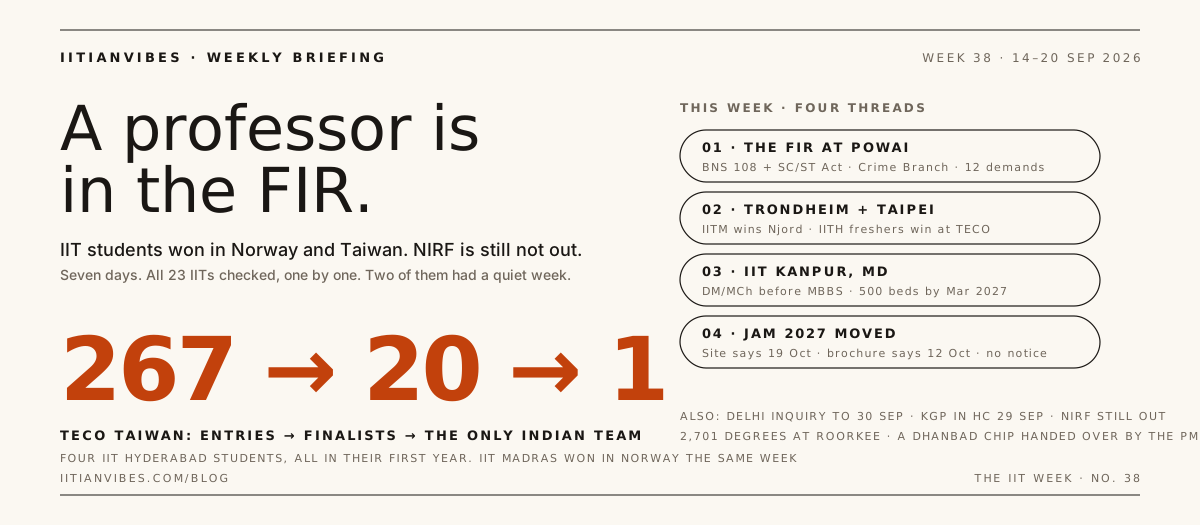
Taiwan. The TECO International Contest, judged at National Taiwan University with Taiwan's president as chief guest, received 267 applications from around the world and shortlisted 20. One of the 20 was a team of four first-year B.Tech students from IIT Hyderabad — Mahak Gadia and Raqi Mohammad from Industrial Chemistry, Udit Maini from Mechanical Engineering and Yug Nikesh Gandhi from Engineering Physics — "the only one from India selected among the top 20 finalists from 267 applications received from across the world." Their demonstration: "the formation of perovskite thin films under high-humidity conditions and at 70°C on a 25 sq cm mini-module scale" — the practical problem with perovskite solar cells being that they degrade in exactly the heat and humidity India has. They won the Excellence Award and ₹1.5 lakh, supervised by Dr Ashish Kulkarni of the Chemistry department and working with Pavakah Energy, a start-up incubated on the IITH campus. To be precise about what was won: an Excellence Award among twenty finalists, not the overall prize. It is still four students in their first year representing the country at a contest most PhD groups would enter.
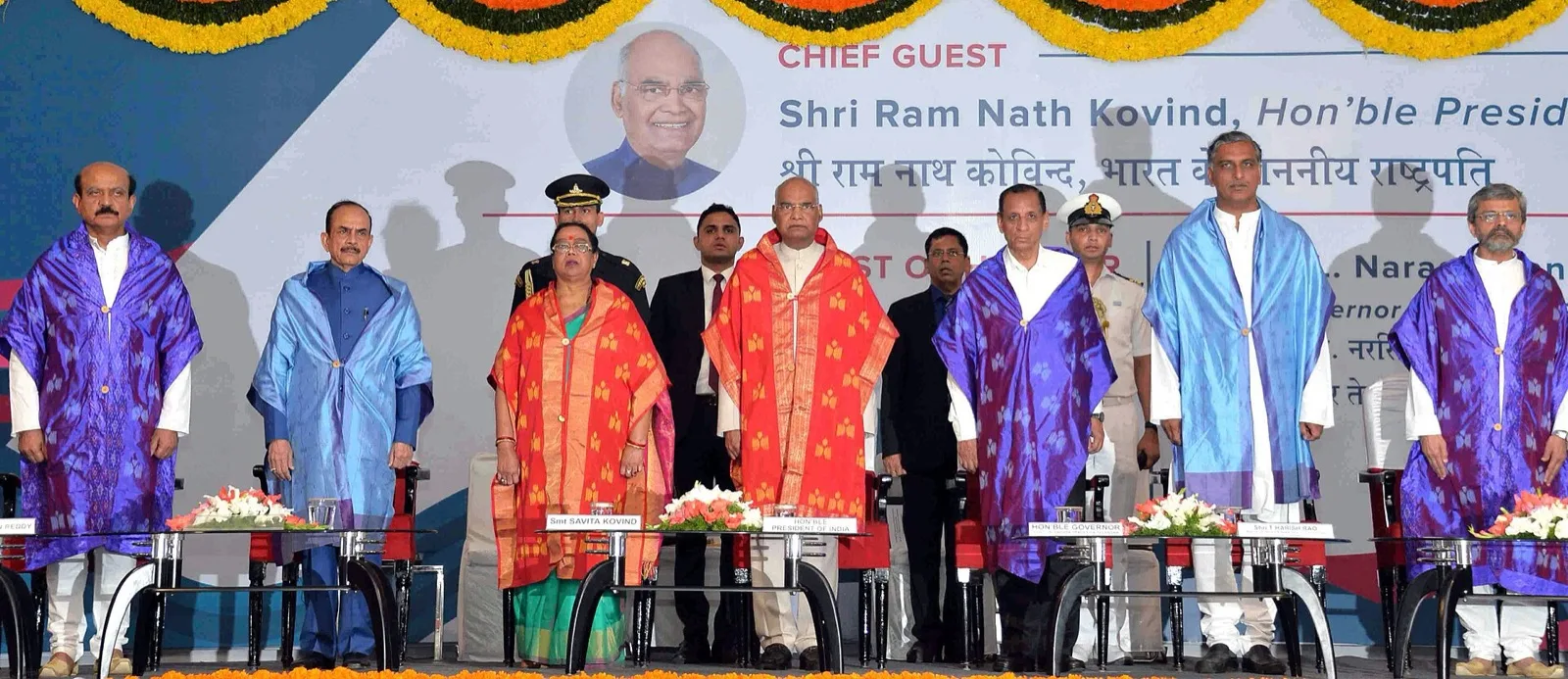
Two more. At SEMICON India in New Delhi on Thursday, research scholar Rahul Ranjan of IIT (ISM) Dhanbad walked up and received, "from Prime Minister Narendra Modi, alongside representatives of 20 institutions," a chip his team designed under Prof Rajeev Kumar Ranjan — a MeitY-funded digital ASIC for real-time image processing, meant for assistive smart glasses, fabricated at the Semiconductor Laboratory in Mohali. The ceremony was telecast live to the Penman Auditorium on the Dhanbad campus. And in Germany, IIT Patna Engineering Physics student Deepak Nagar brought the institute what the Times of India called international recognition by "winning a bronze medal in the senior+ category at the Junior Mental Calculation World Championship," against about 100 competitors from 24 countries; he was also picked as an international trainer for the event.
| Who | IIT | What | Where | Field |
|---|---|---|---|---|
| Team Aritra (Patel, Gurukesav, Sai) | IIT Madras | Won the Njord Challenge, 90.42 pts, 1st of 23 teams from 9 countries | Trondheim, Norway | Autonomous surface vessels |
| Gadia, Mohammad, Maini, Gandhi (all first-years) | IIT Hyderabad | Excellence Award, only Indian team in 20 finalists from 267 entries | Taipei, Taiwan | Perovskite solar thin films |
| Rahul Ranjan (research scholar) | IIT (ISM) Dhanbad | Received his team's MeitY-funded ASIC from the Prime Minister | SEMICON India, New Delhi | Assistive-vision chip design |
| Deepak Nagar (Engineering Physics) | IIT Patna | Bronze, senior+ category, ~100 competitors from 24 countries | Germany | Mental calculation |
| Dipjyoti Patgiri (PhD) | IIT Roorkee | Selected as a postdoctoral researcher at NASA Goddard | Maryland, USA | Ionosphere physics |
Why it matters. Three of these five come from campuses the national press rarely names — Dhanbad, Patna, Hyderabad — and one of the five is a team of undergraduates who have been on campus for under two months. That is the counter-evidence to the "IIT pressure cooker" frame that every outlet reached for this week, and it is worth stating plainly: the same system that produced Friday's tragedy also produced, in the same seven days, a boat that drove itself through a Norwegian harbour and a group of 18-year-olds who took a solar-cell problem to Taipei. Both are true. A roundup that prints only one of them is not reporting the week; it is choosing a mood.
The same week, four other IITs were answering for something
TL;DR: IIT Delhi's inquiry got two more weeks; IIT Kharagpur's 2022 death is back in the High Court; IIT Ropar reinstated a PhD scholar it had let resign; IIT Gandhinagar has a High Court notice over an interview it should not have held.
IIT Delhi. Last week we wrote that the Justice Mukta Gupta committee, constituted on 27 August with a two-week timeline to examine the 22 August death of a 31-year-old MSc Physics student, had not reported. This week we know why. A registrar's email dated 14 September, obtained by Hindustan Times, says: "Based on the request from the committee, the director has accorded his approval for the extension of the tenure of the external inquiry committee up to 30th September 2026 for completion of the enquiry proceedings and submission of its report." The student protest that paused pending the report has not resumed; we looked, and found no report of it doing so. The new deadline is a week from Wednesday.
IIT Kharagpur. On 15 September the West Bengal government told the Calcutta High Court it wants to constitute a medical board to reconcile "conflicting findings in two post-mortem reports" in the October 2022 death of Faizan Ahmed, a third-year mechanical engineering student whose family has maintained for four years that he was murdered after refusing to take part in ragging. Justice Md. Shabbar Rashidi fixed 29 September to decide. The family opposes the board; this is a single-outlet report from The Telegraph and we have not found a second, but the court date is a matter of record. The case is older than most of the current undergraduates, and the fact that it is still generating procedural motions in 2026 is the point.
IIT Ropar. A first-year chemistry PhD scholar who resigned in November 2025 after complaining of faculty harassment argued her own case in the Punjab and Haryana High Court, which held the resignation was "not voluntary" and ordered her reinstated. IIT Ropar appealed, then on 10 September — the day the appeal was listed for judgment — withdrew it. The institute's PRO told Careers360: "IIT Ropar has withdrawn the matter in compliance with the high court's order on Maqsood's reinstatement on consideration of her undertaking." The withdrawal is a week older than our window; the reporting is inside it, and it is the only account we have found.
IIT Gandhinagar. On 12 September the Gujarat High Court issued notice to the institute and the Centre on a petition alleging it interviewed candidates for a junior superintendent post despite a 2015 central bar on interviews for junior-level jobs. The petitioner says he scored "72.5 marks out of 100 in a written test, and the person who was selected for the post ... scored only 25 marks." That is his version; the institute has not yet answered. Responses are due 8 October.
Why it matters. None of these four is a national story on its own. Together they show where the IIT system's accountability actually lives: not in the institutes' own inquiry committees, which slip, but in High Courts, state governments and police stations. Three of the four were forced by someone outside the institution — a High Court, a state, a scholar representing herself. The IIT Mandi caste-poster inquiry that reported last Saturday, by contrast, was internal, found "no evidence of any intention to target, insult or hurt any individual or community", and produced no further development this week at all.
IIT Kanpur will grant medical degrees before it has a medical college
TL;DR: DM and MCh first, MBBS in three to four years, a 500-bed hospital taking its first patient by March 2027, and 60 new faculty approved — while three other IITs also spent the week building medical infrastructure.
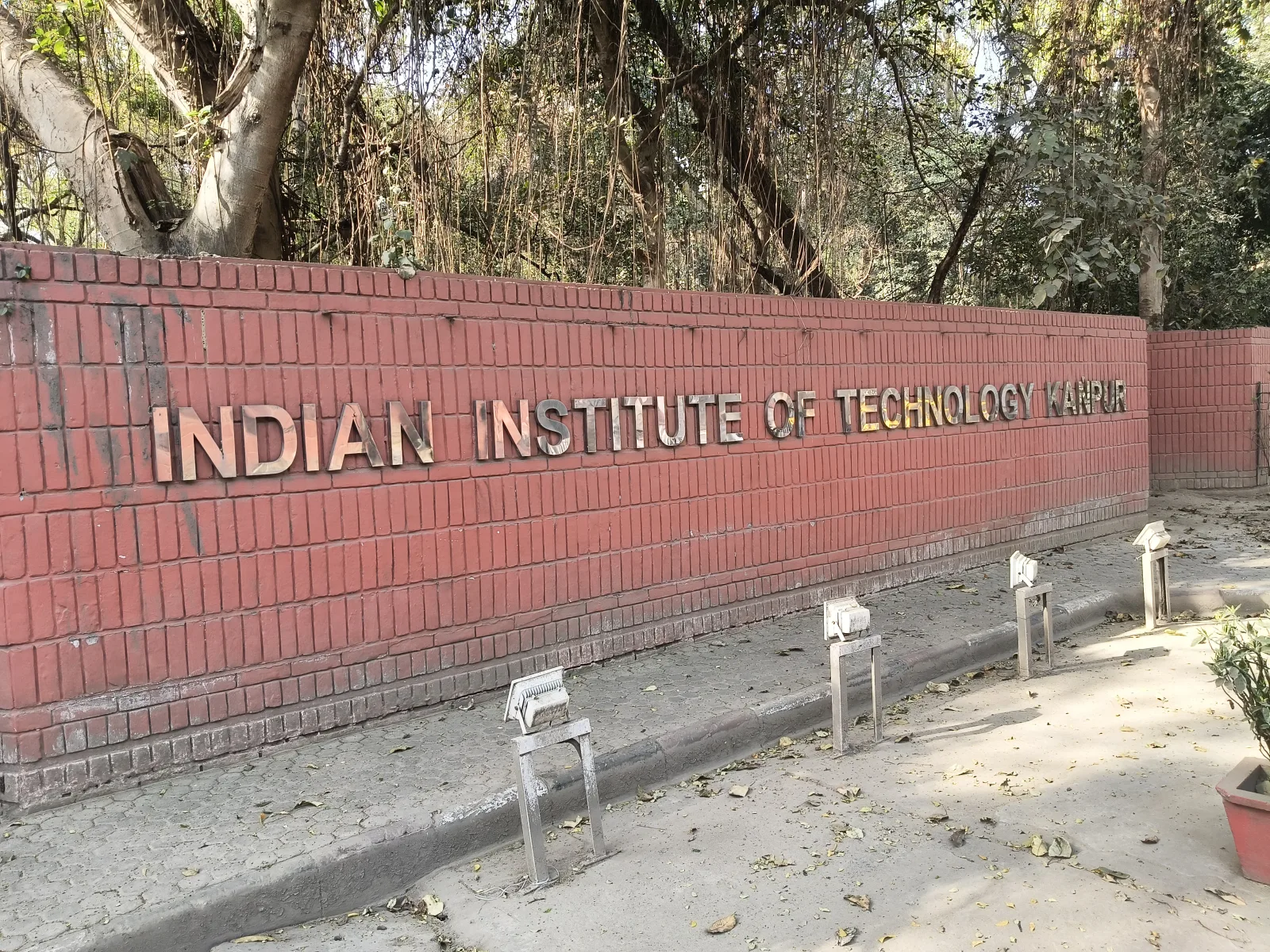
Most institutions that want to teach medicine start with an MBBS. IIT Kanpur, in an India Today interview with the new dean of its Gangwal School of Medical Sciences and Technology, Prof Anil K. Lalwani, formerly of Columbia, set out the reverse order: super-speciality DM and MCh degrees first, with the undergraduate degree "three to four years" away. The reason is the hospital. "The Yadupati Singhania Super-speciality Hospital, a 500-bed structure rising beside the Gangwal School, will be inaugurated by the end of this year and will receive its first patient by March 2027," the piece reports, adding that the institute "has secured initial approval to bring on 60 new faculty members" and plans a 50-bed cancer care and research centre. It is a single-source exclusive, so treat the dates as the dean's intent rather than a commitment — but it is the first on-record roadmap for an IIT granting a medical degree.
It was not the only medical story. Two days earlier IIT Kanpur inaugurated the Wadhwani Innovation Centre for Life Sciences and Medical Technologies with "a contribution of $5 million over five years"; the same foundation announced an AI venture studio at IIT Madras the same week, with applications opening 3 October. On Friday IIT Kharagpur signed an MoU with TCG Crest for a cancer research centre of excellence in Kolkata: "A 25-bed facility, OPD and day care facilities will be developed at the superspeciality hospital." And IIT Madras, in an India Today interview on 15 September, described what its Bharat Cancer Genome Atlas has found in more than 10,000 tumour samples — "a higher frequency of mutations in genes like RECQL," Prof S. Mahalingam said, "particularly in Indian breast cancer patients," while the well-known BRCA mutation "appears in roughly 4 per cent of Indian patients, lower than figures reported elsewhere." Director V. Kamakoti's framing: "All cancer drugs are developed abroad, so they don't have exposure to that genomic sequence."
Why it matters. The IIT Act was written for engineering. Four IITs spent one week building hospital beds, sequencing tumours and funding medtech spin-outs, and one of them now has a dean who says he will award clinical degrees. The reader who noticed that the same campus that will train super-specialists was, on r/IITK, being asked "what about improving their current engineering and general science programs?" is asking the right question. The answer, in the medium term, is that "IIT" is becoming a brand for a research university rather than a description of what it teaches.
Careers Watch: the five-year placement data landed the week IIT Kharagpur hired a dean to fix it
TL;DR: One IIT-founded round in a week when Indian startup funding fell 82%; four board seats; and an ET Education analysis showing placement rates fell at four of nine IITs between 2019-20 and 2023-24, with real median salaries down at six of ten institutes.
Start with the number that will be quoted at every counselling session this winter. ET Education put five years of NIRF disclosures side by side and found that "IIT Kharagpur recorded the steepest decline, falling 20.6 percentage points from its 2019-20 placement rate. IIT Roorkee recorded the second-largest decline, at 13.7 percentage points." Three institutes improved. The piece's own conclusion is the honest one: "The numbers therefore do not support a single 'IIT placement' narrative."
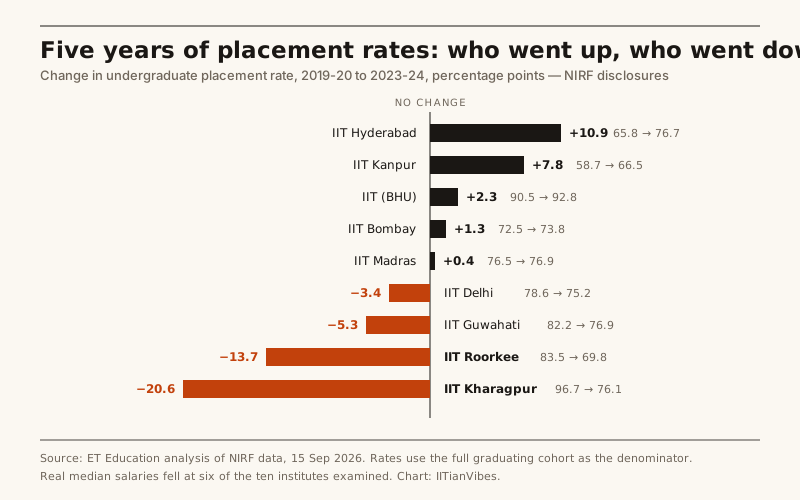
Two caveats the chart cannot carry. First, the data is NIRF 2019-20 to 2023-24 — it says nothing about the 2025-26 season now under way. Second, the denominator: "IIT Roorkee and IIT Kanpur told ETEducation that their internal placement figures are calculated using students who register with their placement offices, rather than the full graduating cohort used in the NIRF disclosures." That is the same denominator argument every IIT makes, and it cuts both ways: a falling NIRF rate can mean fewer offers, or more students opting out for higher studies and start-ups. On pay, though, there is no denominator to hide behind: "Median pay has risen in nominal terms at almost every institution examined. After inflation, however, six of the ten have seen the real value of median salaries decline."
Which makes the timing of Friday's announcement from Kharagpur hard to read as coincidence. The institute created a Dean of Career Development — Prof Sanjay Gupta, until now the placement-centre chairperson — becoming "the second IIT to appoint a dean of career development" after IIT (ISM) Dhanbad, with four associate deans and new departmental placement committees "to help improve placement opportunities for students in specialised fields and for PG courses." Director Suman Chakraborty's line was that "Career development doesn't merely mean getting a job or an internship." TOI did not link the two stories. We are.
The money side was thin, and the thinness is the story. Entrackr counted "17 Indian startups raised $61.8 million" in the week against "about $356.8 million in the previous week"; Inc42's count was 14 deals and an 82% drop. We read the source articles for every disclosed round. Exactly one names an IIT founder.
| Company | Round | IIT link | Lead | Sector |
|---|---|---|---|---|
| Slayd | ₹1.5 Cr pre-seed at ~₹16.66 Cr post-money | Founded 2025 by IIT Roorkee alumni Sparsh Jain, Harsh Porwal and Kumar Prasang | ajvc (Aviral Bhatnagar) | Consumer — fashion discovery |
The rest of the IIT-linked capital news was about stage, not rounds. IIT Madras-incubated chip designer Mindgrove told Mint it "expects to start generating revenue this fiscal year, backed by 'about half a dozen' clients" — five years after founding. Kuku FM, founded in 2018 by three IIT graduates, got SEBI's nod to proceed with an IPO reported at ₹2,500–3,500 crore. A drone built by an IIT (ISM) Dhanbad alumnus's start-up, incubated on campus, flew for 1 hour 18 minutes at 14,000 feet in Army trials against a 45-minute target — procurement validation is this month.
Four alumni took board or leadership seats: Ravi Reddi (IIT Kanpur) as JP Morgan's head of M&A for India; Amit Jain (IIT Delhi, CarDekho) to Bluestone's board from 14 September; IAS officer Prakash Rajpurohit (IIT Delhi) to Bharat Dynamics from 17 September; and OpenAI India MD Prabhjeet Singh (IIT Kharagpur) to JSW One Platforms. Three of the four are finance or listed-company governance roles, not operating ones — the pattern of an alumni network that has aged into boardrooms.
On campus, the season's mood is best read from Reddit, with the caveat that none of it is verified. A thread claiming "only 4 ppl all over india got janestreet ppo" — split, by the poster, one Delhi, two Madras, one Kharagpur — drew 234 comments, the most-upvoted of which was that the sub gets a "how can I join Jane Street" post every day. On a second thread about the Kharagpur student in question, the line that stuck: "Quant has finally become the newest fad that Indian grindjeets chase. It's the new FAANG." Meanwhile a post about Accenture taking 56 two-month interns from IIT BHU at ₹1.25 lakh a month got the reply "72 from iitj, 56 from iitbhu what are they upto?" — a Jodhpur number we could not confirm. The honest summary: a handful of firms are hiring in visible bulk, one is hiring four people in the whole country, and the five-year data says the middle is where the pressure is.
The calendar: NIRF is 16 days late, and JAM 2027 quietly moved its deadline
TL;DR: No NIRF, no JAB answer, no Supreme Court movement — but JEE Main 2027 has dates, GATE 2027 fixed its DigiLocker problem, and IIT Kharagpur's JAM site now says 19 October where the brochure says 12.
NIRF 2026. Last week the 2026 rankings URLs returned a 404. This week they return a page that says "Website Under Maintenance." The 2025 pages load normally, so it is not an outage; the maintenance placeholder itself carries a June timestamp. Last year's edition was released on 4 September. As of Sunday, 20 September, there is no date, no ministry statement, and — per every SEO outlet running an "out soon" page — nothing to say. The one substantive thing published on the subject this week was an op-ed in The Hindu by Prof Rajeev Sangal, the first regular director of IIT (BHU), arguing the exercise is worthless anyway: rankings "are bad for institutions because it ignores the core criteria regarding education: it does not assess teaching and the holistic development of students."
JAM 2027. Here is one nobody else has reported. Every outlet on 11–12 September, and the Information Brochure itself, said registration closes on 12 October. IIT Kharagpur's official JAM notifications page — last modified Saturday 19 September — now lists the "Registration Closing Date. October 19, 2026", and the homepage ticker reads "19 OCT 2026 LAST DATE TO APPLY." There is no notice explaining the change, and the brochure PDF still says 12 October. Whether this is a formal extension or a silent correction, the practical advice is unchanged: apply by 12 October and treat the extra week as a cushion, not a plan. Exam 14 February 2027, results 18 March.
JEE. The JAB still has not answered the 12,000-signature petition for a third JEE Advanced attempt; the newest coverage is 2 September. But the clock has started: the NTA's tentative calendar, released 17 September, puts JEE Main 2027 Session 1 on "January 22-24 and January 28-30, 2027, with January 31 as a buffer date" — with the usual caveat that dates "are tentative and may undergo changes." And the Nilekani exam-reform task force closed public suggestions on 13 September; TOI reports that "multiple attempts at high-stakes entrance tests" tops the wish-list and that the panel meets next after the BRICS summit. IIT Madras director V. Kamakoti, who India Today says sits on that task force, spent the week telling anyone who would listen that "IIT education should not be restricted to those who clear JEE Advanced" — and, to a Jammu and Kashmir press delegation, that the institute "will keep a target that in the next admission, at least 5 per cent students must come from Jammu and Kashmir."
GATE 2027. Regular registration closes Sunday 27 September; the late-fee window runs to 5 October. IIT Madras, which is organising, clarified on 18 September that "applications submitted using unverified DigiLocker accounts will not be rejected during the registration process solely on that basis." That is not an extension, whatever the headlines said. Thirty papers this year, including the new Robotics and Automation paper. GAIL has already said it will recruit executive trainees on GATE 2027 scores, applications 17 February to 18 March 2027.
Why it matters. Last week's theme was that the announcement and the delivery run on different clocks. This week added a third clock: the one nobody announces at all. A deadline moved on an official website with no notice is worse than a delay, because a delay at least tells you to wait. If you want the version of this we keep current rather than weekly, the Deadline Desk has every open date, and if your campus needs cheering up, the IIT collection is where we keep the merch.
IIT Roorkee gave out 2,701 degrees, its most ever, and the NSA told the graduates they were the luckiest generation in a thousand years
TL;DR: The 25th convocation ran Saturday and Sunday; day one 1,277 undergraduates, day two 1,424 postgraduates and PhDs; the first BS-MS dual degrees; Ajit Doval and the Chief of Defence Staff as guests.
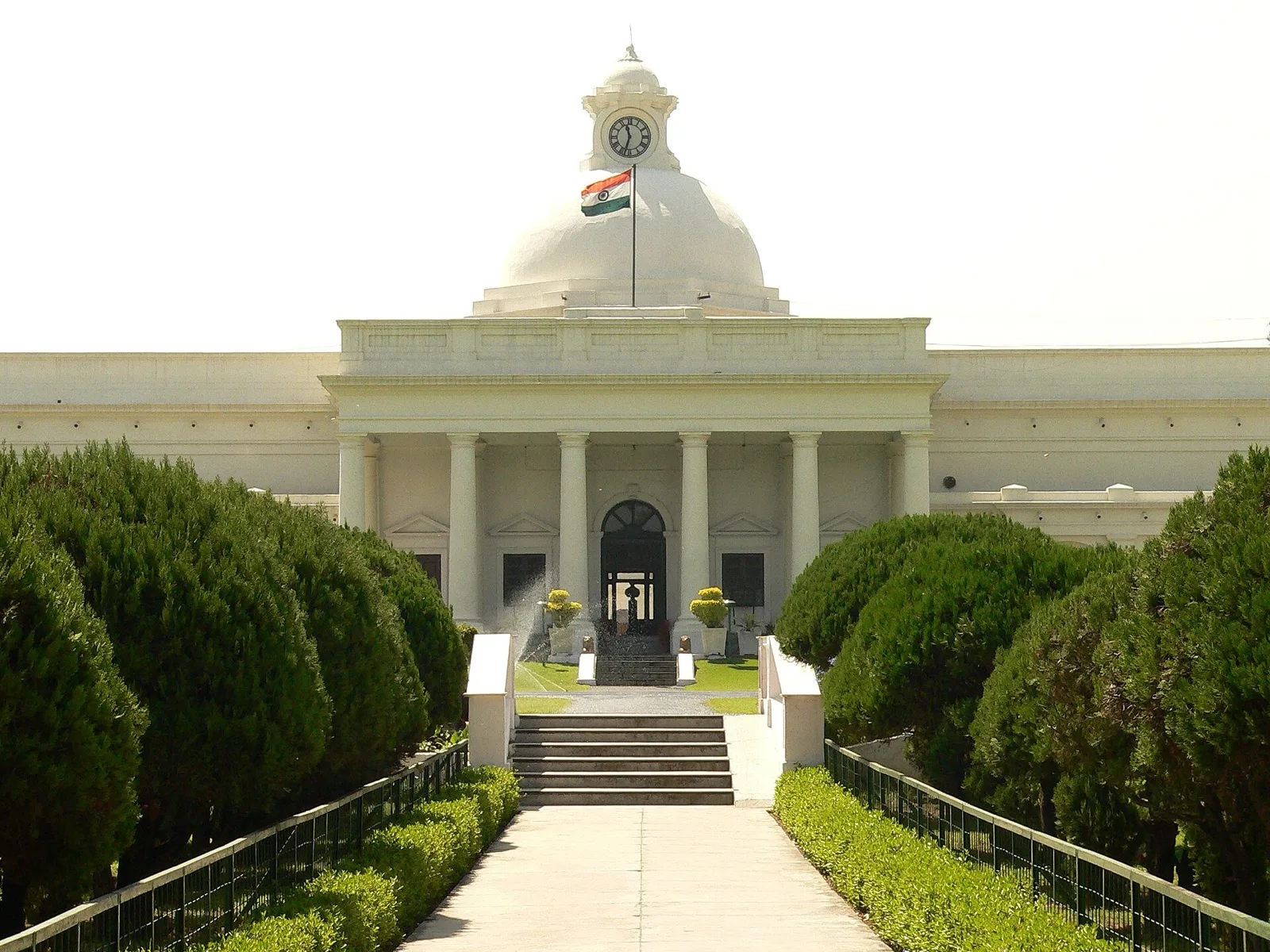
The numbers first. "Of the 1,277 degree recipients, 1,001 were male, and 276 were female students," the Indian Express reported from day one — a 21.6% female share among undergraduates. Day two, per Hindusthan Samachar, added "518 PhD scholars, three research scholars and 903 MTech students." The President's Gold Medal went to Srivaradan Balaji of the first BS-MS Chemical Sciences cohort; Harish Salve, the Board chairman, presided.
Then the speeches, which were more about the country than the graduates. Ajit Doval told them "in the last 1,000 years, you are the luckiest generation, which is going to have so many opportunities" and, per The New Indian Express, that India's GDP "will rise from the current $4.015 trillion to $38 trillion over the next 20 years." The Chief of Defence Staff, Gen N S Raja Subramani, gave them an acronym, "'DHARA,' denoting Disruptive, Hyperconnectedness, Asymmetry, Realignment and Autonomy," and a line: "Bharat is not a geography. It is a responsibility."
Why it matters. Read the Roorkee numbers against the ET Education chart above. This is the campus whose NIRF placement rate fell 13.7 points over five years, graduating its largest-ever class into a September that Reddit describes as dead. The convocation speeches were about a $38 trillion economy in 2046. The graduates' question is about the next six months.
The research week: a hydrogel that lifts 250 times its weight, a bacterium that eats blue dye, and a mass spectrometer at 3,450 metres
TL;DR: Six research stories with a number attached, from six campuses including two of the newest — the lab output behind the student wins above.
IIT (ISM) Dhanbad, beyond the chip handover above, was granted an Indian patent for an electrochemical reactor that pulls copper out of mine wastewater, and signed an MoU with IIT Bhubaneswar on semiconductors and basic sciences.
IIT Bhilai — one of the six newest IITs — published a 4D-printable shape-memory hydrogel in Small Methods. Per the PIB release: "The material achieved approximately 94 per cent shape fixity and 85 per cent shape recovery, returning to its programmed shape in around 25 seconds. ... In one demonstration, just 1 gram of dried hydrogel repeatedly lifted a 250-gram metal load." It also pulls methylene blue, rhodamine B, eosin B and lead ions out of water. Dr Sanjib Banerjee's group.
IIT Gandhinagar modelled 1,183 sites on a sheet of monolayer amorphous carbon and found "about 15% of the sites recorded values below +0.25 eV, indicating potentially favourable catalytic behaviour" for hydrogen evolution — the case for a metal-free green-hydrogen catalyst, with the authors' own caveat that the results "require experimental validation." npj 2D Materials and Applications, first author Sreehari M S.
IIT Guwahati and IIT (BHU) isolated a bacterium, Brevundimonas sp. AJZ05, that "degrade[s] 98.50 per cent of Direct Blue-6 (DB-6), a widely used synthetic dye, while producing degradation products that were found to be non-toxic." Environmental Geochemistry and Health; next step, per Prof Selvaraju Narayanasamy, is a continuous treatment system.
IIT Palakkad — another of the newest six — built one-step fluorescent sensors that read heparin in blood by a "bright yellow-green signal that becomes weaker when heparin is present," replacing clotting-time assays; The Hindu notes further testing is needed before clinical use.
IIT Madras put a Proton Transfer Reaction Mass Spectrometer at 3,450 metres in Khaltse, Ladakh, with Sindhu Central University, to measure volatile organic compounds "even at concentrations of parts per trillion" — among the highest and northernmost atmospheric-composition sites in India. Also this week: the Central Warehousing Corporation's MD said a 650-metre IIT Madras hyperloop will be installed at Mumbai Port for cargo at around ₹20 crore — a single-source announcement with no timeline.
One trap for the week's aggregators: the widely syndicated story about "IIT's new sustainable treatment for shaping wood" is the Istituto Italiano di Tecnologia in Genoa. Not one of ours.
The trend: who holds an IIT to account
Line up the week's stories and the answer is: rarely the IIT. The Bombay case went to the Crime Branch because the family sat in a hospital for seven hours. The Kharagpur case is in a High Court because a family in Assam has refused for four years to accept the first post-mortem. The Ropar scholar is back in her lab because she argued her own case and won. The Gandhinagar interview is under notice because a candidate who scored 72.5 filed a petition. The Delhi inquiry — the one internal process on the list — asked for more time and got it. The Mandi inquiry reported, found no intent, and the story stopped.
That is not an argument that internal committees are useless; it is an observation about where the pressure actually comes from, which is students and families using courts and police, not students and families using the institute's own channels. The IIT Bombay charter's demand for "student representation in examination and academic committees" is an attempt to change that from the inside. The Supreme Court's task force, due 31 October, is an attempt to change it from above. Neither has produced anything yet. The Crime Branch, meanwhile, has a file.
And NIRF — the one exercise that is supposed to hold the whole system to account, on a published date, with published numbers — is the thing that did not show up.
The other half of the week is the half the rankings will never measure either. Nothing in NIRF's formula would register a boat in a Norwegian harbour, four freshers in Taipei, a scholar from Dhanbad on a stage with the Prime Minister, or a Patna undergraduate on a podium in Germany. Those happened anyway. If the system is going to be judged this week, it should be judged on both columns.
Across the 23 IITs this week
Stories that did not earn a full section but round out the 23-IIT picture. Every campus checked against its own press pages, Google News and regional coverage.
Older IITs (Bombay–Kharagpur cohort)
- IIT Bombay: The deep dive above. Also: with ICMR's women's-health institute, a microfluidic sperm-sorting chip for IVF that selects by chemotaxis rather than motility — provisional patent filed, still pre-clinical.
- IIT Delhi: The Gupta committee extension (above). TechnoSport will invest ₹4.5 crore over three years in a sports-textile research centre at the Sonipat campus. A Letter of Intent signed 18 September with Arunachal's Keyi Panyor district for a "Biohappy District" centre of excellence. And on Reddit, the biggest IIT thread of the week anywhere — 2,231 upvotes — was a photo of a wall rack that fell onto a fresher's bed while he was in the washroom; no press report, no institute response found.
- IIT Madras: The Njord win, the cancer genome atlas, the Ladakh observatory, the hyperloop and the AI venture studio (all above). Also released Coastal Vulnerability Index maps for Chennai, Ennore and Karaikal from its DST-funded centre — 15 co-PIs, 73 journal papers, one patent so far.
- IIT Kanpur: The medical roadmap and the Wadhwani centre (above). A free six-week cybersecurity course for CISF, 40 personnel a batch. A 125-sensor network to trace Kanpur's pollution spikes to their source goes live for municipal action in October. And 900 secondary-school teachers from all 75 UP districts to be trained in AI and computational thinking.
- IIT Kharagpur: The Faizan Ahmed hearing, the new dean and the TCG Crest cancer centre (above). Plus an R&D MoU with Damodar Valley Corporation on predictive maintenance.
Second-generation IITs
- IIT Roorkee: The convocation (above). An IIT Roorkee–DGRE study found the February 2025 Mana avalanche that killed eight BRO workers was preceded by a sharp three-day rise in snowfall and temperature. Mumbai's BMC will ask its Standing Committee on 23 September to pay the institute ₹22 lakh to review designs for a new Malabar Hill reservoir — two years after IIT Roorkee said the old one could be repaired. And a PhD from the institute's ionosphere group, Dipjyoti Patgiri of Assam, joins NASA Goddard as a postdoc.
- IIT Guwahati: The dye-eating bacterium (above). Its Department of Design hosts the first International Conference on Design and Innovation Studies, 28–30 September. Otherwise quiet.
- IIT (BHU) Varanasi: An EV research MoU with the University of Michigan — signed 8 September at Michigan's Electric Vehicle Center, announced Thursday. Prof Vikash Kumar Dubey was elected a Fellow of the National Academy of Medical Sciences, the only IIT-BHU faculty member to hold it. And the Param Shivay supercomputer has been closed to new jobs since 5 September for what the centre calls maintenance and modernisation — Dainik Bhaskar's "shuts down" headline overstated it.
- IIT Hyderabad: A two-year MoU with Kaynes Semicon signed at SEMICON India on Friday. And the TECO award in Taiwan (above) — the week's best story from a campus that is not yet twenty years old.
- IIT Indore: Its Water, Climate and Sustainability Lab's HydroVerse AI, which forecasts floods, droughts and heat across every Madhya Pradesh district to 2040, made the top 11 of NABARD's National Climate Stack Innovation Challenge from 150-plus proposals. Twelve JRF and research-associate posts close 27 September. Its own website did not resolve when we checked.
- IIT Bhubaneswar: Signed the MoU with IIT (ISM) Dhanbad on Wednesday — directors Shreepad Karmalkar and Sukumar Mishra — with reciprocal PhD supervision and adjunct positions. Otherwise quiet.
- IIT Gandhinagar: The High Court notice and the green-hydrogen paper (above). A strategic MoU with the Gujarat Anti-Terrorism Squad signed Thursday. And a two-week ITEC faculty development programme for teachers from 20 countries, Algeria to Zimbabwe, running 14–25 September.
- IIT Ropar: The reinstatement (above). Also a state MoU with Haryana's technical education department for lab modernisation and curriculum work, and an MoA with the Army Air Defence College, Gopalpur, under which officers on the Long Air Defence Course receive an MTech in Defence Technology — both first reported just before the window.
- IIT Jodhpur: Thin week. Its ₹80,000-a-month post-doctoral fellowship closes 30 September. Amar Ujala profiled Dr Divya Saxena's CSE group building small multimodal AI assistants that run locally without continuous internet, for hospitals, factories and rural areas — research in progress, no paper yet.
- IIT Mandi: A dynamic 100-metre landslide-susceptibility model with the University of Idaho that adds satellite soil moisture to rainfall, trained on 491 catalogued Himalayan landslides (Scientific Reports; the paper is from April, the press push this week). A 2018–2020 uranium-in-groundwater study resurfaced in local media as if new; it is not. The caste-poster inquiry that reported last Saturday produced no further development, and the director search — Prof Laxmidhar Behera's term ends in December — had none either.
- IIT Patna: Deepak Nagar's bronze at the mental-calculation worlds (above). The BioNEST biotech incubator that opened on campus earlier this month was still generating coverage.
- IIT (ISM) Dhanbad: The chip handed over by the PM, the patent and the Bhubaneswar MoU (above). Also a new two-year MTech in Mining of Critical Minerals, 20 seats, run jointly by four departments; Jharkhand's drinking-water department naming it a knowledge partner; and the Governor on campus Sunday. The busiest of the second-generation campuses this week.
Newest IITs
- IIT Bhilai: The 4D-printable hydrogel (above) — a tier-1 PIB release and a Small Methods paper from a campus that is nine years old. BIOSPAN-2026 runs 24–26 September.
- IIT Dharwad: Institute-reported only, no external coverage. Marked Engineers' Day on 15 September with NIT Warangal's director as chief guest, and Director Venkappayya Desai asked the campus to adopt Kelgeri Lake in Dharwad and Unkal Lake in Hubballi as a tribute to Visvesvaraya. It also hosted the third International Conference on Bharatiya Traditional Knowledge Systems, 15–16 September.
- IIT Jammu: Co-ran a five-day national bootcamp on mobile forensics and malware analysis with SMVDU Katra from 17 September, with MeitY support; its faculty gave the keynote. Also at the launch of the Jammu Smart City Hackathon, registrations open to 25 September.
- IIT Palakkad: The heparin sensor (above). Named alongside SCTIMST, RGCB and NIT Calicut as an institutional partner in Kerala's new medical-device roadmap to 2031. Its electrical department watched the SEMICON India opening by video link.
- IIT Goa: Quiet week — checked its own "in the news" page (last item 22 August), Google News, Bing News, Herald Goa, Navhind Times and Gomantak Times. The only mention was a PIB line on the 20th Rozgar Mela in Panaji, where IIT Goa was among the institutions handing out appointment letters. No development on the Farmagudi permanent campus since the July land handover.
- IIT Tirupati: Quiet week on its own news — checked its site, Google News, Bing News, The Hindu, Deccan Chronicle and Hans India. It ran a four-day industrial-control-systems training programme at CEMS Visakhapatnam, 15–18 September. The state-level story is the PanIIT Andhra Pradesh Summit, 2–3 October in Vijayawada, now billed at 800-plus delegates including "50+ corporate CEOs and senior CXOs, 100+ unicorn founders and startup leaders, and 50+ investors" — none of the six previews we read mentions IIT Tirupati by name.
Coming next
- 23 September: BMC Standing Committee considers the ₹22 lakh IIT Roorkee design-review contract for the Malabar Hill reservoir.
- 24–26 September: BIOSPAN-2026 at IIT Bhilai.
- 27 September: GATE 2027 regular registration closes; late-fee window to 5 October. Same day: IIT Indore JRF/RA applications close.
- 28–30 September: INDIS 2026, IIT Guwahati's first design-studies conference.
- 29 September: Calcutta High Court hears the West Bengal government's request for a medical board in the Faizan Ahmed case.
- 30 September: Extended deadline for the Justice Mukta Gupta committee's report at IIT Delhi. Same day: IIT Jodhpur post-doctoral fellowship applications close (₹80,000/month).
- 2–3 October: PanIIT Andhra Pradesh Summit, Vijayawada — CM's dinner on the 2nd, summit on the 3rd.
- 3 October: Applications open for the first cohort of IIT Madras's WSAI AI Venture Studio.
- 8 October: Responses due in the Gujarat High Court on the IIT Gandhinagar interview petition.
- 12 October: JAM 2027 closing date per the brochure. The official site now says 19 October; apply by the 12th regardless. Exam 14 February 2027.
- 21 October: IIT (ISM) Dhanbad's Vishnu Teja at the SPE international student paper finals, Houston.
- 31 October: Applications close for the IIT Delhi, IIT Mandi and IIT Indore directorships. Same date: the Supreme Court's deadline for the National Task Force report on student suicides.
- Any week now: NIRF 2026, now 16 days past last year's release date and answering with a maintenance page.
- Unscheduled: the Mumbai Crime Branch's first filing in the IIT Bombay case; the anticipatory-bail hearing the family has said it will oppose; the JAB's answer on a third JEE Advanced attempt.
FAQ
What happened at IIT Bombay this week?
A second-year B.Tech student in Energy Science and Engineering died by suicide in his Hostel 4 room on Friday 18 September 2026, hours after being found with a mobile phone during a mid-semester exam. The institute says he was counselled and no disciplinary action was initiated; students and the family say he was threatened with a year's suspension. More than 400 students protested that night and mid-semester exams were postponed. On Saturday, on the father's complaint, Mumbai Police registered an FIR naming the invigilating professor under BNS Section 108 and the SC/ST (Prevention of Atrocities) Act, and the case was transferred to the Crime Branch.
Has the IIT Bombay professor been arrested?
No arrest had been reported as of Sunday 20 September. An FIR names him and unnamed "other senior officials"; the Crime Branch is investigating under an ACP-rank officer, and the family's lawyer has said they will oppose anticipatory bail. Being named in an FIR is not a finding of guilt.
Did the IIT Bombay director resign?
Not as far as anyone can confirm. A video of Director Shireesh Kedare addressing students in the early hours of 19 September circulated with the claim that he had offered to resign. Outlook reported there was no official confirmation from IIT Bombay, the Ministry of Education or the director, and the institute's website continued to list him as director. Treat it as an unverified clip.
When does JAM 2027 registration close?
The Information Brochure and all national coverage say 12 October 2026. IIT Kharagpur's official JAM notifications page, last modified 19 September, now lists 19 October, and the site's ticker says the same. No notice explains the change. Apply by 12 October to be safe. The exam is on 14 February 2027 and results on 18 March 2027.
Did the NIRF 2026 rankings come out this week?
No. As of 20 September 2026 the Ministry of Education has not released them or announced a date. The 2026 rankings pages on nirfindia.org, which returned a 404 last week, now show a "Website Under Maintenance" message while the 2025 pages load normally. Last year's edition was released on 4 September.
Will IIT Kanpur offer an MBBS?
Eventually, according to the new dean of its Gangwal School of Medical Sciences and Technology, but not first. The plan reported by India Today on 17 September is to begin with super-speciality DM and MCh degrees, with an MBBS three to four years away, once the 500-bed Yadupati Singhania Super-speciality Hospital is operating. The hospital is to be inaugurated by the end of 2026 and receive its first patient by March 2027. This is a single-source interview and no regulatory approvals for the degrees were described.
Which IIT student teams won international competitions this week?
Two. IIT Madras's Team Aritra, from the Department of Ocean Engineering, won the 2026 Njord Challenge for autonomous surface vessels at NTNU in Trondheim, Norway, with 90.42 points against 22 other teams from nine countries (the event ran 10–14 August; the institute announced the result on 18 September). And four first-year B.Tech students from IIT Hyderabad won the Excellence Award at the TECO International Contest 2026 in Taiwan for perovskite solar thin films made at 70°C in high humidity — the only Indian team among 20 finalists chosen from 267 applications. Separately, an IIT Patna student took bronze at the Junior Mental Calculation World Championship in Germany.
Which IITs had news this week?
We checked all 23 individually. Twenty-one had in-window news: Bombay, Delhi, Madras, Kanpur, Kharagpur, Roorkee, Guwahati, BHU, Hyderabad, Indore, Bhubaneswar, Gandhinagar, Ropar, Jodhpur, Mandi, Patna, Dhanbad, Bhilai, Dharwad, Jammu and Palakkad. Two — Goa and Tirupati — had quiet weeks on their own news, each checked against its own pages and regional coverage before we said so.
Support: Tele MANAS, the national mental health helpline, is free and available 24/7 on 14416.