
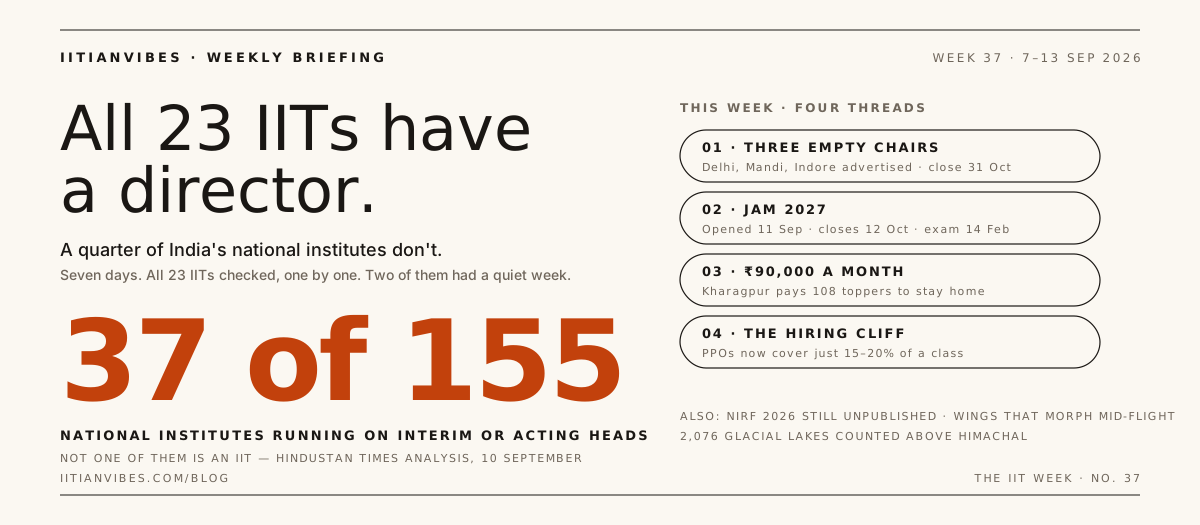
The IIT Week · 7–13 September 2026 · Week 37 · All 23 IITs checked
Four things were supposed to happen this week and none of them did. The NIRF 2026 rankings did not appear. The external committee examining a student's death at IIT Delhi did not report. The Joint Admission Board did not answer the 12,000 aspirants asking for a third JEE Advanced attempt. The Supreme Court's task force on student suicides did not move. What happened instead was quieter and, in the long run, probably more consequential: the machinery. Postgraduate admissions opened across all 23 campuses. IIT Kharagpur committed crores to keeping 108 of the country's top rankers at home. The education ministry went looking for three IIT directors at once. And a Hindustan Times analysis published on Wednesday put a number on something nobody had counted before — how much of Indian higher education is currently being run by someone who is only temporarily in charge.
The deep dive: 37 of India's 155 national institutes have no permanent head. Not one of them is an IIT.
TL;DR: Nearly a quarter of India's Institutions of National Importance are being run by interim, acting or additional-charge heads. Central universities are worst at 41.7%. The IITs are the only category at zero — and this was the week you could watch them working to stay there.
On 10 September, Hindustan Times published its own count of who actually runs India's centrally funded higher education. The finding: "37 of 155 Institutions of National Importance (INIs), or 23.9%, currently functioning with interim, in-charge, or acting vice-chancellors (VCs) or directors, or those with additional-charge or on extensions." The analysis covered every central university, IIT, NIT, IIIT, IIM and IISER under the education ministry.
The breakdown is where it gets interesting, because it is not evenly spread.
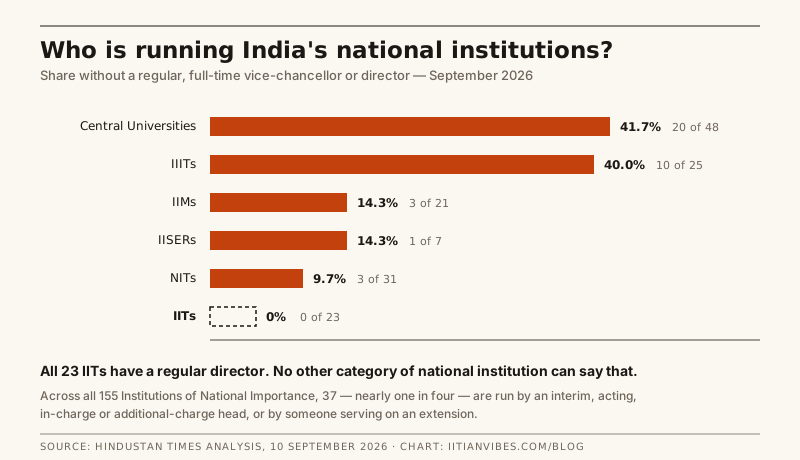
Twenty of the 48 central universities — 41.7% — are running on interim heads or VCs on extensions. Eleven of those have no functioning regular vice-chancellor at all. Ten of the 25 IIITs have no full-time regular director. Three of 21 IIMs, three of 31 NITs, one of seven IISERs. And then the line that should be the headline: "All 23 IITs currently have regular directors."
This is worth sitting with, because it cuts directly against the week's other big education story. The same seven days produced India Today's "IITs have a mental health problem" and a Times of India feature on the "IIT pressure cooker." Both are fair. Neither is the whole picture. On the specific, measurable question of whether these institutions have someone permanently accountable at the top, the IITs are the functioning part of the system and the rest of it is not.
You can see that conceded in an unlikely place. When Congress general secretary Jairam Ramesh attacked the government over the HT numbers the same day — "This is indeed an unacceptable state of affairs — 37 out of 155 Institutions of National Importance do not have a regular, full-time head," he wrote, signing off with "Higher education in India is paying the price for being Modified" — his own enumeration listed central universities, IIITs, IIMs and NITs. He left the IITs out. He had to. There was nothing to put in the column.
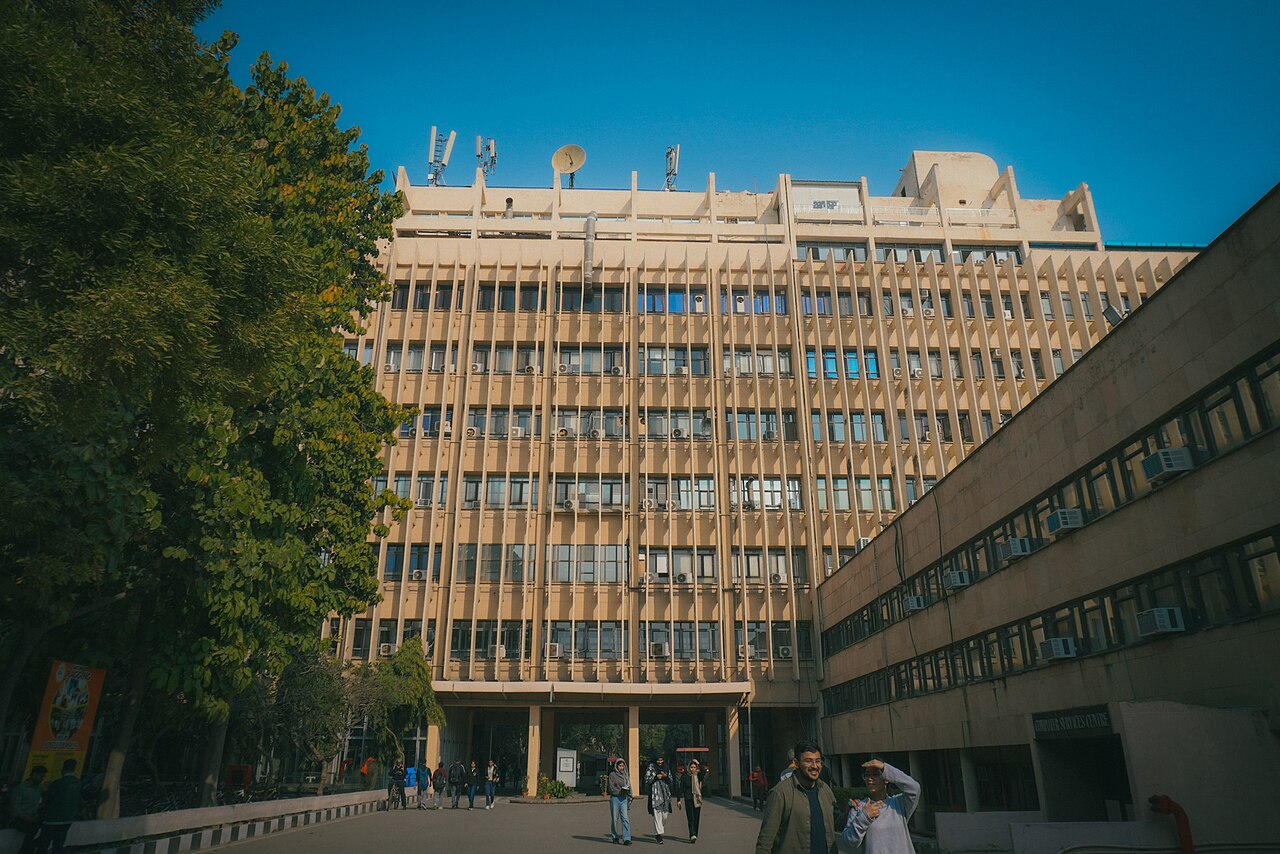
So what were the IITs doing this week? Recruiting. The Ministry of Education issued separate advertisements for the director posts at IIT Delhi, IIT Mandi and IIT Indore, with applications closing 31 October. The terms: "a fixed pay of Rs 2.25 lakh per month, along with allowances as per rules," a five-year contract or until the age of 70, whichever comes first, and a bar of ten years as a professor plus five years of administrative experience. At IIT Mandi, the post falls vacant in December when Prof Laxmidhar Behera's term ends — which means the ministry advertised roughly three months ahead of the vacancy rather than after it.
One caveat the Indian Express flagged and we will repeat, because the timing invites a wrong conclusion: "Notably, the notification for the new Director predates the current poster controversy." The IIT Mandi advertisement has nothing to do with the caste-poster row covered further down this page.
But the machine is creaking at the edges, and the clearest example landed inside this window. At IIT Patna, director Prof T. N. Singh completed his five-year tenure on 9 September. The post had been advertised on 20 November 2025 — nearly ten months in advance. No successor had been announced. HT reports he is "likely to get an extension till the appointment of a new director or one year." Ten months of notice was not enough.
There is a softer version of the same problem already inside the IIT system. HT names IIT Kharagpur and IIT Hyderabad among institutions whose directors are "simultaneously holding additional charge elsewhere." IIIT-Delhi's founding director, Emeritus Professor Pankaj Jalote, put the objection plainly: "Leading or managing one institution is hard enough; leading two is just probably impossible. You will end up not doing justice to one of them."
Why this matters, and what to watch: a former IIT director told HT that prolonged interim leadership puts an institution into "standby mode" — delaying faculty recruitment, new academic programmes, infrastructure projects, international collaborations and long-term financial commitments, and argued searches should begin at least six months before a tenure ends. The process itself explains the lag: a search-cum-selection panel recommends three names, the minister picks one, and the President as Visitor appoints. A former central university VC told HT the files are "approved by the PMO" first. The PMO and the education ministry did not respond to HT's queries.
The IITs' zero is not luck, and it is not guaranteed to survive contact with a system this slow — IIT Patna is what the first crack looks like. If you are tracking the openings themselves, we keep a running list in the IIT Recruitment Tracker.
JAM 2027 opened on 11 September — and most of the coverage got the date wrong
TL;DR: IIT Kharagpur opened the postgraduate science entrance on 11 September, not the 12th. Applications close 12 October, the exam is 14 February 2027. GATE 2027's 27 September deadline did not move.
The Joint Admission Test for Masters is the least glamorous of the IIT entrance exams and the one that touches all 23 campuses at once. IIT Kharagpur is the organising institute for 2027, and its portal at jam.iitkgp.ac.in now carries the full calendar: registration from 11 September 2026, last date to apply 12 October, examination 14 February 2027, results 18 March 2027. Seven test papers, computer-based, and — worth noting if you are applying from abroad — "There are no international centres for JAM 2027 examination."
A small correction, offered in the spirit of getting it right rather than scoring points. Indian Express, NDTV, India Today and Careers360 all reported registration opening on 12 September; Free Press Journal had the 11th. The organising institute's own site says 11 September, twice: in the announcement block and in the page source, which reads "Application portal for JAM 2027 is launched on September 11, 2026." Indian Express's own dates table said the 11th while its prose said the 12th. If you are counting days against the 12 October deadline, count from the 11th.
On the other exam: GATE 2027 did not budge. We checked the IIT Madras portal directly rather than the listicles. Regular registration still closes 27 September without a late fee, and the extended window closes 5 October with one — that second date is the late-fee window, not an extension, and some coverage this week blurred the two. The DigiLocker mandate is still live and still shouty: "GATE 2027 Registration through DigiLocker is mandatory for all Indian nationals. Please create/update your VERIFIED DigiLocker account NOW!" The new Robotics and Automation paper takes the exam to 30 papers, all syllabi have been revised, and the exam runs across three February weekends with results on 19 March. Both of these, and every other date we are tracking, sit on the Deadline Desk.
IIT Kharagpur is now paying 108 toppers to stay in India
TL;DR: The Platinum Jubilee fellowships pay GATE top-50 PhD entrants up to ₹90,000 a month, and the institute says innovation support for the best undergraduate ideas can exceed ₹1 crore. Four other IITs are running competing schemes.
India's oldest IIT turned 75 last month. Its anniversary gesture is not a plaque. IIT Kharagpur has awarded Platinum Jubilee fellowships to 108 of the country's top JEE (Advanced), JAM and GATE performers, and says that for undergraduate ideas that progress through its innovation stages, "the potential innovation ecosystem support could exceed Rs 1 crore."
The PhD terms are the ones that will move behaviour. Per Education Times: "Candidates who score in the top 50 of GATE 2026 and join a PhD programme at the institute will receive Rs 80,000 per month for the first two years, which will rise to Rs 90,000 per month for the following three years." There is no separate application; it runs through the institute's rolling PhD admissions, and the same top-50 logic extends to JAM 2026 rankers joining master's programmes.
Read across the system and it is clearly an arms race, not a one-off. IIT Kanpur's Bright Minds Scholarship pays ₹3 lakh a year to JEE Advanced top-100 entrants holding a CPI of 8.0. IIT Roorkee's James Thomason scheme pays ₹25,000 a month to anyone with an All India Rank of 250 or better. IIT Delhi runs the Amit and Deepali Sinha Foundation Scholarship for 15 students from families earning under ₹9 lakh, alongside a ₹10-crore alumnus endowment funding full rides for the top five JEE Advanced rankers — one of them reserved for the top-ranked woman candidate.
And at the other end of the academic ladder, IIT Jodhpur opened its 2026-27 Post-Doctoral Fellowships this week at ₹80,000 a month plus a ₹50,000 annual contingency grant, closing 30 September.
What to watch: the honest question is what these fellowships are competing against. A GATE top-50 scholar choosing between ₹90,000 a month at Kharagpur and a funded PhD abroad is exactly the decision the scheme is designed to catch, and the institute is now bidding at a number that makes the comparison real rather than symbolic. Whether it works is a 2031 question, not a 2026 one.
Careers Watch: deeptech is where the capital went. It is not where the jobs are.
One IIT-linked round closed this week, and its shape is more interesting than its size.
| Company | Round | Stage | IIT link | Lead | Sector |
|---|---|---|---|---|---|
| QNu Labs | ₹200 Cr (~$21 Mn) | Series A1 | Incubated at IIT Madras (2016); IIT Madras hub is also an investor | National Quantum Mission + Speciale Invest | Quantum-safe cybersecurity |
Two things to get right about it. First, the number: several outlets headlined ₹350 crore. That is QNu's cumulative capital raised. The round is ₹200 crore. Second, the IIT connection is not the usual one. QNu's two lead founders are not IIT alumni — Sunil Gupta came through IIM Calcutta, Srinivasa Rao Aluri through Osmania and Yale. The tie is institutional: the company "was incubated at IIT Madras before the company eventually moved its headquarters to Bengaluru," co-founder Anil Prabhakar is an IIT Madras academic, and — the genuinely new part — "The National Quantum Mission's participation comes through IITM C-DOT Samgnya Technologies Foundation, the National Hub for Quantum Communication." An IIT-housed vehicle helped lead a ₹200 crore round. That is a different mechanism from an alumnus raising money, and it is the one worth tracking.
Zoom out and the week's funding data says the same thing louder. Indian startups raised "a combined $321.9 Mn across 20 deals" between 7 and 11 September, up 82.4% on the previous week. The top sector was advanced hardware and technology at $121 million from just two deals — Pixxel's $100 million spacetech round and QNu's $21 million. Two hardware cheques out-raised six ecommerce deals and four AI deals combined. There was no B2B SaaS round of any size at all.
Now put that next to the hiring data, because they do not point the same way.
Deloitte's Campus Workforce Trends 2026, out on 10 September, found that the internship has replaced the interview as the way in. Partner Neelesh Gupta: "Our Campus Workforce Trends 2026 study shows a roughly 6% increase in PPO conversions and growing organisational investment in apprenticeship and internship programmes." The catch is in the next line — "Since PPO conversions range between 15-20% of the class, the majority part of the placement happens outside the internship route." And the route outside it is narrowing: TeamLease Digital's Neeti Sharma noted that "Fresher hiring intent in IT has softened from 81% to 76%."
A News18 analysis the following day was blunter, reporting that the model in which big tech firms hired thousands off a campus at once "has effectively ended," with entry-level fresher hiring down from a 600,000 peak in FY22 and an estimated 25,000 to 35,000 Indian IT jobs lost in 2026.
The IIT-specific consolation is real but narrow: the top-10-institute internship stipend band still runs ₹90,000 to ₹1.2 lakh a month, and that is where the IITs sit. (One figure doing the rounds this week — that 84% of undergraduates remain unplaced — is an all-India number from a third-party survey, not an IIT number. Do not read it as one.)
The pattern, stated plainly: money is flowing into quantum, space and hardware, and those companies hire in tens. QNu employs roughly 160 people after a decade. The employer that used to absorb the rest of the class has gone, and the employer replacing it hires on demonstrated skill rather than campus tier. Deeptech is where the capital is. It is not yet where the jobs are, and a roundup that reports the funding without the hiring is telling you half of a story that has two halves.
One more datapoint on the founder pipeline: PitchBook's 2026 global ranking of universities by venture-backed founders put IIT Bombay 22nd and IIT Delhi 27th, with Madras 48th, Kharagpur 49th and Kanpur 50th. IIT Delhi alumni have raised $55.7 billion, the highest of any Indian institution. Worth saying out loud, though: exactly five IITs made the top 100. The other eighteen did not appear.
Two campuses spent the week arguing about what seniors can make juniors do
TL;DR: IIT Madras students went public over Saarang's freshers' ticket sales; IIT Kharagpur students went public over coerced Diwali illumination work. Different campuses, same underlying question.
At IIT Madras, the fest is selling artist-night passes to first-years at ₹2,200–2,500, and students spent the week arguing that the sales pitch rests on a falsehood. A post titled "Do not fall for Saarang freshi scam" put it directly: "Every year the Saarang people shamelessly spread the rumour that if you don't spend your ikollege money than it will go to waste. That rumour is completely false. If you have extra money left over than you will get it back when you are about to graduate out." That is a student claim about the institute's own credit system, not an institute confirmation — but nobody in the thread contradicted it. A second thread asked why the price had not moved while the line-up thinned; a third alleged Saarang-critical posts were being removed.
The detail that turns this from a gripe into a story is what happened when the subreddit's moderators finally opened an official megathread. It sits at zero upvotes. Its top comment, at 24, tells the moderators exactly what students think of the framing. The second, at 19, asks the question the fest has not answered: "I was forced to buy tickets as a freshie. Yet if you're friends with Cores/Supercoords, you can apparently get these passes for free. So why are freshies pressured to buy tickets while the same passes are distributed as freebies?" In a companion thread, one commenter proposed filing an RTI on the grounds that Saarang is student-funded at a publicly funded institution.
Thirteen hundred kilometres to the north-east, IIT Kharagpur was having a harder version of the same argument. Ahead of Diwali, second-years went public about being pressed into hall illumination work — "illu" — with a post from Azad Hall describing juniors being made to work, abused when they refused, and threatened. A fifth-year replied with the only institutional suggestion in the thread: "Ek petition likho director aur senate ko sabki sign karwake, I am a fifth year I do not support this."
The most useful comment explained why it persists, and it connects straight back to the section above: "Bhai, ye juniors bhi thode coward ho gaye hain. Unhe darr hai ki seniors se connection kharab ho gaya toh internship ke time shayad unki help na mile." Juniors do not refuse because they believe refusing costs them an internship referral later. In a year when the campus recruitment funnel is visibly narrowing, that leverage gets stronger, not weaker. These are student accounts on a public forum, not findings — no institute has commented on either. But two unrelated campuses producing the same complaint in the same week is a pattern worth naming.
IIT Mandi's caste-poster inquiry reported on Saturday: no intent found, counselling recommended
TL;DR: The committee examining a Janmashtami poster that rendered caste hierarchy as scripture found no intention to insult, ruled the SC/ST Act inapplicable, and recommended counselling rather than discipline. It also found the institute has no procedure for approving campus events.
The poster went up outside an IIT Mandi auditorium on 4 September, during a student-organised Janmashtami programme, under the title "Bhagavad Gita — The Timeless Wisdom". It described Shudras as serving the higher classes. The institute confiscated it, formed a fact-finding committee, and — per the Indian Express on 8 September — decided to refer the matter to police.
On 12 September the committee submitted its report, and the posture had shifted. It found "no evidence of any intention to target, insult or hurt any individual or community" and concluded that "the case does not attract provisions of the Scheduled Castes and Scheduled Tribes (Prevention of Atrocities) Act, 1989." On consequences: "The committee recommended that the students concerned be counselled and sensitised, rather than subjected to disciplinary proceedings."
The institute's distancing is precise and, read carefully, is the most revealing part: "the event was not organised by the institute, and no officially recognised student body was involved in it. No institute funds were used… The poster was not reviewed, approved or endorsed by any authority of the institute. Its content reflects an individual student's own interpretation and does not represent the position or views of the institute."
The finding underneath the finding. The committee also flagged "the absence of a clearly defined procedure for organising such events on the campus, as an institutional gap requiring priority attention" — and the institute says it will now frame rules for campus events and build a mechanism to oversee them. That is the actual news here. An event ran inside an IIT, on institute premises, with no approval pathway that anyone was obliged to use. The poster is what made it visible; the governance vacuum is what allowed it. IIT Mandi has said it will regret the hurt caused and fix the process. Whether "counselling, not discipline" reads as proportionate or as a retreat from the 8 September police referral is a judgement readers will make for themselves — and one the institute has not been asked to explain.
The research week: wings that change shape, a bandage that powers itself, and 2,076 lakes
A strong week for output, and unusually well spread.
IIT Madras closed the week with the most striking result. On Sunday, researchers announced a bird-inspired "morphing skin" that reshapes a wing in real time to prevent aerodynamic stall, using embedded Macro Fibre Composite strips that both sense and actuate. Dr Rinku Mukherjee's framing: "Our research taps into a universal curiosity in that birds rarely 'stall,' yet aircraft, despite being inspired by them, still do." The work is published in the Elsevier journal European Journal of Mechanics – B/Fluids and patented. One honest note: the paper itself carries a 2025 DOI — the news is the institute's announcement, not a fresh publication.
IIT Roorkee, with INST Mohali, built 3D-MIDAS — a battery-free electronic wound dressing powered by the wearer's own movement. In animal studies, "wounds treated with 3D-MIDAS recorded nearly 90% to 95% closure within 13 to 15 days," with roughly three times the cell proliferation of controls. The caveat belongs in the same breath, and the researchers put it there themselves: the technology "remains at the preclinical stage and will require further safety studies and human clinical trials before it can be considered for routine medical use." Rats, not people, for now.
IIT Madras also patented a chemical-free antibacterial surface that kills bacteria physically rather than chemically — nanoscale structures that rupture cell walls, achieving "more than 68 per cent biofilm inhibition across the tested bacterial strains" while keeping up to 91% of mammalian cells viable. Published in ACS Applied Biomaterials, and aimed squarely at antimicrobial resistance, where the entire point is not adding another chemical for bacteria to evolve around.
IIT Kanpur presented Phase 1 of "Family Score" to the Andhra Pradesh government — an AI system that scores household socio-economic need from data the state already holds, no new survey required. It currently covers "around 1.35 crore households out of an estimated 1.72 crore households in Andhra Pradesh," about 75%. The institute's claim is that the ensemble outperforms conventional surveys; no accuracy figure has been published, so treat that as a claim rather than a result.
IIT Mandi published the number that should worry Himachal most: "2,076 glacial lakes located above 3,500 metres in Himachal Pradesh in 2025, 710 more than those recorded in 2015," with cumulative lake area up 28.45% in a decade. The study flags around nine potentially critical lakes against the four the National Disaster Management Authority lists. Worth carrying the methodological honesty: the count depends on the ranking algorithm used, and the study's own alternatives give 9, 5, or more than 72% of all mapped lakes depending on method.
Elsewhere: IIT Guwahati presented a brain-inspired spiking AI model at ICML 2026, benchmarked across 17 datasets at substantially lower estimated energy than comparable sequence models. IIT Indore showed that AI models predicting chaotic systems learn the underlying physics rather than memorising patterns — a real step toward explainable AI, though the article names no journal, so we are not calling it published. IIT Delhi's transport injury centre found Delhi's cycling injury rate runs at 28.6 per million kilometres, 60 to 200 times higher than Denmark, Germany or the Netherlands, and that only 2.8% of bicycle crashes ever reach a police record.
And IIT Madras-incubated Bodhan AI, with AI4Bharat and NVIDIA, released four families of open-weight Indic-language models covering speech recognition, text-to-speech, translation and OCR.
Two honours worth pairing: six IIT Bombay faculty and five IIT Kanpur scientists were elected Fellows of the Indian National Science Academy in the same week.
The trend: four things that were supposed to happen, and didn't
Weekly roundups are biased toward things that occurred. This week the more honest story is the calendar that slipped, because every one of these has someone waiting on it.
NIRF 2026 did not appear. The official site's rankings menu still ends at 2025, and nirfindia.org/Rankings/2026/ returns a 404. The data cycle is closed — the site's own notice says publications and patent data are loaded for India Rankings 2026 — and every outlet writing about it this week said "soon" without a date. Last year's edition landed on 4 September. We are past that.
The IIT Delhi external committee did not report. The panel headed by Justice Mukta Gupta was constituted on 27 August with a roughly two-week timeline to examine the death of a 31-year-old MSc Physics student. Two weeks came and went. Nothing was published in the window, and the student protest — paused, not ended, pending that report — has not resumed. We looked hard for this one and found genuinely nothing; that absence is the finding.
The Joint Admission Board did not answer. The petition to allow a third JEE Advanced attempt crossed 12,000 signatures a fortnight ago and sits formally with the education ministry, the IIT Council and JAB. No response, no statement, no new signature milestone, no coverage after 2 September. The JEE Advanced 2027 brochure is the deadline that matters, and it is not far off.
The Supreme Court's task force did not move. Its final report on student suicides is due 31 October. No hearing, no order, no directive this week.
None of these is a scandal on its own. Together they describe a system where the announcement and the delivery are managed by different clocks — which is the same observation the deep dive above makes about director appointments, arriving from a different direction. If you want the version of this we keep updated rather than weekly, it lives on the Deadline Desk. And if your campus had a better week than its calendar did, the IIT collection is where we keep the merch.
Across the 23 IITs this week
Stories that didn't earn a full section but round out the 23-IIT picture. Every campus below was checked individually — its own press pages, LinkedIn and regional coverage — before we called anything quiet.
Older IITs (Bombay–Kharagpur cohort)
- IIT Bombay: Launched a strategic partnership with Imperial College London, initially prioritising clean technology and medical technology. Six faculty were elected INSA Fellows. And the Bombay High Court ruled against the institute in a 13-year patent dispute, with Justice Somasekhar Sundaresan writing that the scientist "is a protected patentee in the USA, but the home country's statutory framework to grant the same protection has been mired in tragic circumstances."
- IIT Delhi: One of three directorships advertised (see the deep dive), plus an unusually heavy week of executive-education launches — a seven-month Executive Programme for Chief of Staff among them — and the cycling-injury study above. Ranked 27th globally in PitchBook's founder league table.
- IIT Madras: The busiest campus of the week — morphing skin, the antibacterial patent, the Bodhan AI model release, a technology licence to Spark Minda Foundation for its "Kadam" prosthetic knee, and ZEISS opening an innovation hub at the Research Park. It also ran a parents' mental-health session, PREM, on 9 September as part of a week-long World Suicide Prevention Day observance.
- IIT Kanpur: The Family Score system above; five scientists elected INSA Fellows; Prof Shantanu Bhattacharya elected a Fellow of the National Academy of Sciences, India. Its Takneek inter-hall championship ended in a disputed result after a problem-statement leak.
- IIT Kharagpur: Organising institute for JAM 2027, and the 108 Platinum Jubilee fellowships above. Also the illumination row.
- IIT Guwahati: Hosted the 49th All IITs Placement Committee Meet on 4–5 September with placement representatives from all 23 IITs — and, for the first time, industry professionals in the room. There was also a dedicated session for student grievances raised across the IITs, which given the rest of this page is not a small detail.
Second-generation IITs
- IIT Roorkee: The self-powered wound dressing above; two tripartite MoUs with the UP agriculture directorate on farm carbon credits; and an announced — not yet opened — Avathon Physical AI Lab in its CSE department.
- IIT Hyderabad: Its TiHAN autonomous-navigation hub signed an MoU with the Andhra Pradesh Drones Corporation toward a drone city at Kurnool, and it launched a four-week Applied AI certification. Prof Kirti Chandra Sahu received a National Award to Teachers 2026.
- IIT (BHU) Varanasi: Opened a Hindi Month exhibition of roughly 400 Hindi titles headlined by the 12-volume complete works of Madan Mohan Malaviya, and held its Global Alumni Meet in Chicago.
- IIT Indore: Directorship advertised alongside Delhi and Mandi; and the explainable-AI chaos result above.
- IIT Bhubaneswar: Dr Srikant Gollapudi of the School of Minerals, Metallurgical and Materials Engineering received the National Teachers' Award 2026 from President Droupadi Murmu — one of 21 higher-education and polytechnic teachers selected, and the same honours list that recognised IIT Hyderabad's Prof Sahu.
- IIT Gandhinagar: Its Centre for Creative Learning launched a hands-on climate-education programme on 11 September that will reach 1,000 Gujarat schools. Separately, Oreejoy Medtech — founded by IITGN faculty member Prof Uttama Lahiri — won the Boeing BUILD national finals and a ₹10 lakh grant for a gait-analysing wearable insole.
- IIT Ropar: The week's most consequential MoU on a second-gen campus — an agreement with the Army Air Defence College, Gopalpur, to award MTech degrees in Defence Technology to serving Army officers. It also signed with the Haryana technical education department and ran HACKCORE 2026 with Syngenta and Annam.ai.
- IIT Jodhpur: Post-doctoral fellowships opened at ₹80,000 a month, closing 30 September. Prof Mitali Mukerji, whose Ayurgenomics work was once publicly derided as "woo-omics", was profiled for her AI-enabled integrative precision-health research.
- IIT Mandi: The poster inquiry above, the directorship advertisement, the glacial-lakes study — and a student pushback over an email threatening disciplinary action for skipping a mandatory colloquium, where the sharpest reply noted the auditorium seats 800 and the student body is about 2,500.
- IIT Patna: Inaugurated the Sir M Visvesvaraya Hostel on 7 September, built entirely from the institute's own funds and finished ahead of schedule, taking it to six operational hostels. Its incubation centre opened a BIRAC-funded BioNEST facility and signed MoUs with NIPER Hajipur and ICMR. Its director's five-year term also ended on 9 September with no successor named.
- IIT (ISM) Dhanbad: M.Tech petroleum engineering student P. Vishnu Teja won the Master's Division of the SPE South Asia Regional Student Paper Contest and goes to the international finals in Houston on 21 October. Dr Shalu Rani joined the editorial board of Elsevier's Chemical Engineering Journal. And a 1988-batch alumnus gave ₹65.5 lakh to the centenary endowment.
Newest IITs
- IIT Bhilai: Held a Hindi Month poetry recitation on 11 September, with staff and students reading their own compositions (PIB).
- IIT Dharwad: Hosted the third international conference on Bharatiya Traditional Knowledge Systems on 5–6 September, with its Centre of Excellence for Indian Knowledge Systems, Central Sanskrit University and the education ministry's IKS division.
- IIT Jammu: Its MeitY AI Centre of Excellence ran a one-day AI use-case workshop on 12 September, inaugurated by J&K Chief Secretary Atal Dulloo, at which more than 20 organisations presented over 30 AI solutions for possible government pilots.
- IIT Palakkad: The busiest of the newest cohort — named a finalist for the Autodesk Design & Make Award 2026 for turning its own greenfield campus construction into a live teaching lab; Director Prof A. Seshadri Sekhar was conferred an "Eminent Engineering Personality" award; and a patent was granted for a modified carbon-cloth electrode for sensing midazolam.
- IIT Goa: Quiet week — checked its own news page, its WordPress feed (which has published nothing since 2021), Google News and Goa regional coverage. Nothing dated in the window.
- IIT Tirupati: Quiet week — checked the institute's own Latest News and Announcements blocks (newest item is from July), plus Andhra regional coverage. Nothing in the window.
Coming next
- 27 September: GATE 2027 regular registration closes. Late-fee window to 5 October; correction window 14–21 October.
- 30 September: IIT Jodhpur post-doctoral fellowship applications close (₹80,000/month).
- 3 October: PanIIT Andhra Pradesh DeepTech Summit, Vijayawada.
- 12 October: JAM 2027 applications close. Exam 14 February 2027; results 18 March.
- 21 October: IIT (ISM) Dhanbad's Vishnu Teja competes at the SPE international student paper finals in Houston.
- 31 October: Applications close for the IIT Delhi, IIT Mandi and IIT Indore directorships. Same date: the Supreme Court's deadline for the National Task Force report on student suicides.
- Any week now: NIRF 2026. The data cycle is closed and the rankings are unpublished; last year's landed on 4 September.
- Overdue: the Justice Mukta Gupta committee report at IIT Delhi, constituted 27 August with a roughly two-week timeline.
FAQ
Which IITs are recruiting new directors?
Three — IIT Delhi, IIT Mandi and IIT Indore. The Ministry of Education issued separate advertisements in the week of 7 September 2026, with applications closing 31 October. The post pays a fixed ₹2.25 lakh per month and runs for five years or until the appointee turns 70, whichever comes first. Candidates need at least ten years as a professor and five years of administrative experience. At IIT Mandi the vacancy arises in December 2026, when Prof Laxmidhar Behera's term ends.
When does JAM 2027 registration close?
12 October 2026. Registration opened on 11 September 2026 — note that several national outlets reported the 12th; the organising institute IIT Kharagpur's own portal says the 11th. The exam is on 14 February 2027 across seven papers, results on 18 March 2027, and there are no international centres.
Did the NIRF 2026 rankings come out this week?
No. As of 13 September 2026 the Ministry of Education has not released them or announced a date. The official NIRF site's rankings menu still ends at 2025 and the 2026 rankings URL returns a 404, though the data-capture cycle has closed. Last year's edition was released on 4 September.
Do all the IITs have permanent directors?
Yes. A Hindustan Times analysis published on 10 September 2026 found that 37 of India's 155 Institutions of National Importance — 23.9% — are running with interim, acting, in-charge or additional-charge heads, or heads serving on extensions. All 23 IITs have regular directors, the only category of national institution with a full complement. Central universities are worst affected at 20 of 48, followed by the IIITs at 10 of 25.
Which IITs had news this week?
We checked all 23 individually. Twenty-one had in-window news: Bombay, Delhi, Madras, Kanpur, Kharagpur, Guwahati, Roorkee, Hyderabad, BHU, Indore, Bhubaneswar, Gandhinagar, Ropar, Jodhpur, Mandi, Patna, Dhanbad, Bhilai, Dharwad, Jammu and Palakkad. Two had genuinely quiet weeks — Goa and Tirupati — each checked against its own press pages and regional coverage before we said so.
Support: Tele MANAS, the national mental health helpline, is free and available 24/7 on 14416.