

Founder Stories · IIT Kanpur · Published 18 October 2026
On the morning of 14 July 2026, IBM's chairman and chief executive published a letter to his investors that most CEOs never write. "These conditions require our teams to execute perfectly, and this quarter we faltered," Arvind Krishna wrote in the letter on IBM's newsroom. "We did not adapt and move quickly enough, and numerous large deals failed to close on the timelines we expected." IBM's shares fell about 25% that day, which Mint reported was the company's biggest one-day fall since at least January 1968. India Today, relaying Reuters, put the loss at around $70 billion of market value.
The man who signed that letter is a 63-year-old electrical engineer. IIT Kanpur's alumni office lists him as "Dr. Arvind Krishna (BT/EE/1985)". He joined IBM's research lab in 1990 as a networking researcher, not a manager, and spent 30 years inside one company before its board handed him the top job in April 2020. He is not a founder. He is the other kind of IIT story, the engineer who rises through one large, 115-year-old company until he runs it.
On Wednesday, 21 October, IBM reports its third-quarter results, the first full quarter since that letter. This is how a Kanpur EE graduate got to the chair, what he bet IBM on, and what an IIT student can take from a career built on depth rather than a startup.
An Army childhood and IIT Kanpur electrical engineering
Krishna grew up moving. "My father was a reasonably senior officer in the Indian Army. Consequently, we grew up all over the country, moving every couple of years," he told The New York Times in 2022. His father, he said, "was always very, very focused on what is the outcome of what you're doing."
The schools followed the postings. The Economic Times reported in 2020 that he went from Mount St. Mary's School in Delhi to Stanes Higher Secondary School in Coonoor, and The Times of India that he finished school at St Joseph's Academy in Dehradun. Reports disagree on where he was born: ET says Dehradun, while India Today says Andhra Pradesh. Neither IBM nor Krishna has settled it in print, so we leave it open.
The choice of engineering, in his telling, came from curiosity more than a coaching plan. "In school I actually enjoyed history. I enjoyed math, enjoyed physics, enjoyed a lot of things. But somewhere along the way, I really became interested in figuring out how things work," he said in the same interview. "How do you make a career at the intersection of physics, math and the real world? And that's engineering."
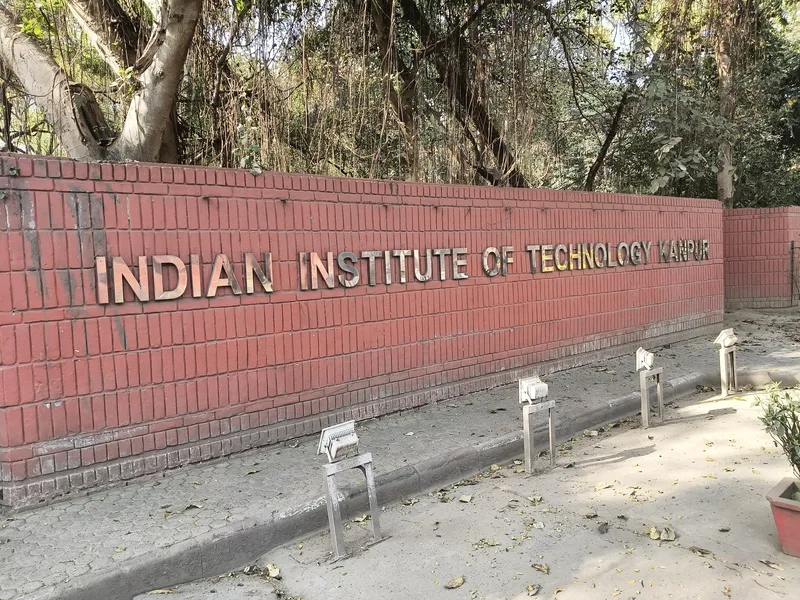

He took electrical engineering at IIT Kanpur and graduated in 1985. The institute he studied at had an unusual tie to the company he would run. ThePrint's 2020 column on the appointment recalled that IIT Kanpur's first computer was an IBM 1620, flown in on a chartered plane to a military base in Kanpur in July 1963. The same column notes that the late Stanford computer scientist Rajeev Motwani was "a contemporary of Arvind Krishna in the BTech programme at IIT Kanpur."
We could not find Krishna describing his own hostel or professors in any interview. His batchmates filled in a little when he was named CEO. Rajat Moona, then director of IIT Bhilai, told ET that Krishna was creative and organised, and added: "We never thought that we will be so close to the top of the world's best hardware and software industry. Proud of him and feel fortunate to know him."
IIT Kanpur gave him its Distinguished Alumnus Award in 2019, the year before he became CEO, so the institute marked him while he was still a divisional executive, not after the headline.
Illinois, Bruce Hajek, and a 1990 job at IBM Research
From Kanpur he went to the University of Illinois Urbana-Champaign. Its engineering college lists his degrees as an M.S. in electrical engineering in 1987 and a Ph.D. in 1991. IBM's own filings say he joined IBM in 1990, so he was already at the company when the doctorate was formally awarded.
The person he credits from those years is his adviser. "When I finished my graduate work, I got to work with an amazing professor, Bruce Hajek of the University of Illinois, who really encouraged me to find my way. I will never be as engineering smart as he was," he told the Times, and added: "He taught me humility." The man who hired him into IBM Research, Inder Gopal, told ET that Krishna came recommended by Hajek, and gave the kind of reference a junior engineer would want from a boss: "Everything he does has a well-articulated technical or business basis. I may not always have agreed, but I respected his judgement and he was usually right."
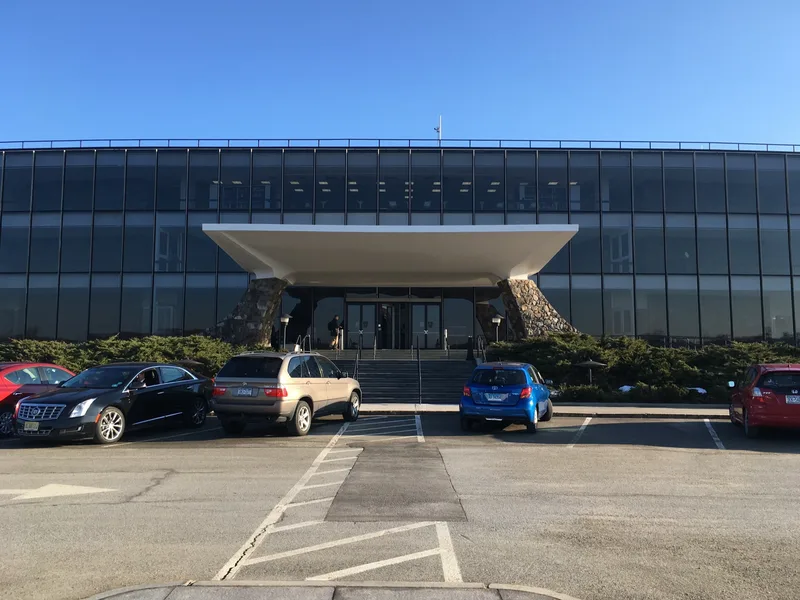

The research record is the part of his career most CEO profiles skip. IBM's official biography says he made contributions in "wireless networking, security, systems, and databases," and that he "founded IBM's security software business and helped create the world's first commercial wireless system," which is IBM's own claim. Illinois adds that he is "the co-author of 15 patents" and was an editor of IEEE and ACM journals, and that its electrical and computer engineering department gave him a Distinguished Alumni Award in 2007. In 2016, IBM's bio notes, Wired named him "one of 25 geniuses who are creating the future of business" for his work on blockchain.
From the lab to the ledger: data software, chips and Red Hat
The move that made Krishna a CEO candidate was leaving the lab to run things that had revenue. Illinois's profile of him, which carries an older IBM bio, says he was Vice President of Strategy for IBM Software, "where he identified more than 10 companies to acquire," and then general manager of IBM Information Management from 2009 to 2012, the database and data-integration business, which he "helped grow" by roughly 50 percent in revenue.
Next came hardware. As general manager of development and manufacturing in IBM's Systems and Technology Group, his team shipped the Power8 processor and launched the OpenPOWER chip alliance, according to the same profile. In January 2015 he went back to research as its boss: he was named Senior Vice President and Director of IBM Research, "only the 11th person to hold this position in the seven decade history of IBM Research," running about 3,000 scientists across 12 labs.
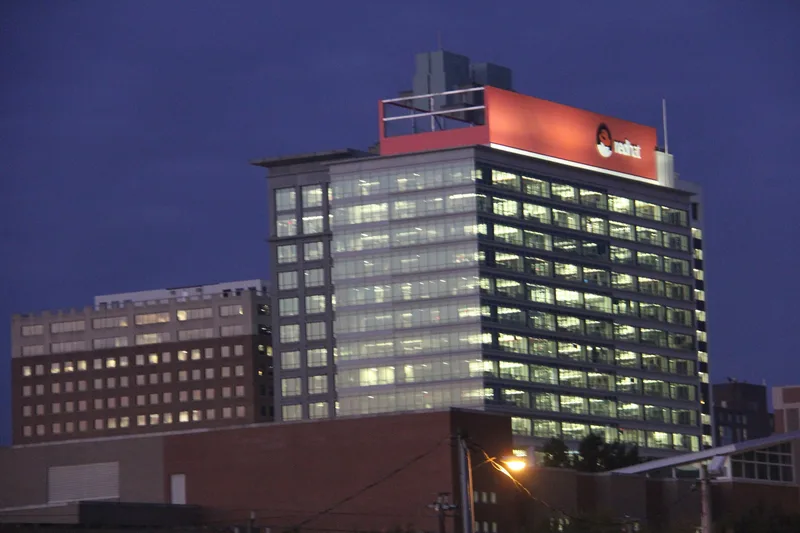
Then the deal. On 28 October 2018, IBM agreed to buy Red Hat, the open-source Linux company, for $190 a share in cash, about $34 billion in enterprise value. Krishna, then Senior Vice President for hybrid cloud, was quoted in the announcement: "IBM is committed to being an authentic multi-cloud provider, and we will prioritize the use of Red Hat technology across multiple clouds." The deal closed on 9 July 2019. When IBM's board picked him as CEO six months later, its announcement described him as "a principal architect of the company's acquisition of Red Hat."

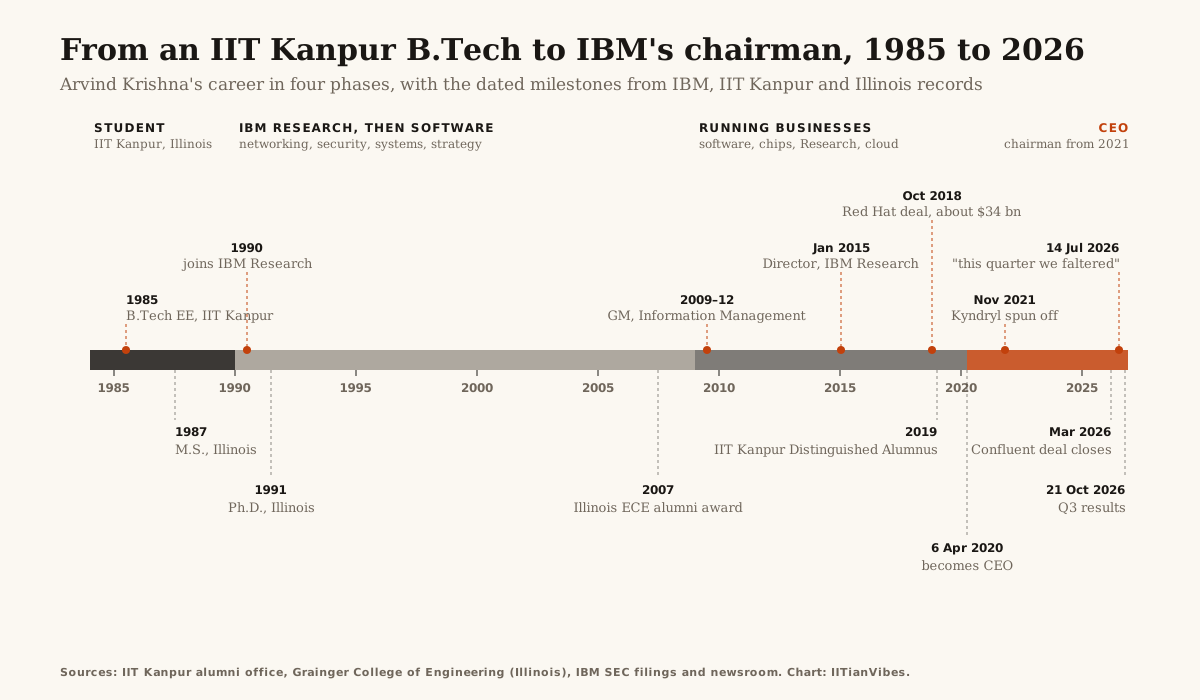
Here is the career in one table, each row tied to the document it comes from.
| When | What | Source |
|---|---|---|
| 1985 | B.Tech, Electrical Engineering, IIT Kanpur | IIT Kanpur alumni office |
| 1987, 1991 | M.S. and Ph.D., Electrical Engineering, University of Illinois | Grainger College of Engineering |
| 1990 | Joins IBM (Research) | IBM 8-K, Jan 2020 |
| 2009–2012 | General manager, IBM Information Management | Illinois alumni profile |
| Jan 2015 | Senior VP and Director, IBM Research | Illinois alumni profile |
| 28 Oct 2018 | Red Hat deal announced, about $34 billion | IBM 8-K, Oct 2018 |
| 2019 | IIT Kanpur Distinguished Alumnus Award | IIT Kanpur DA Award list |
| 6 Apr 2020 | Becomes IBM's CEO (elected 30 Jan 2020) | IBM 8-K, Jan 2020 |
| 1 Jan 2021 | Becomes chairman of the board | IBM 8-K, Dec 2020 |
| 3 Nov 2021 | Kyndryl spun off as a separate listed company | IBM 8-K, Nov 2021 |
| 17 Mar 2026 | Confluent acquisition closes, about $11 billion | IBM newsroom |
| 14 Jul 2026 | Investor letter: "this quarter we faltered" | IBM newsroom |
| 21 Oct 2026 | Q3 2026 results due | IBM newsroom |
CEO in a pandemic: the fourth platform, Kyndryl and AI
IBM's board announced its choice on 30 January 2020, effective 6 April. His predecessor, Ginni Rometty, put her endorsement in the board's release:
"Arvind is the right CEO for the next era at IBM. He is a brilliant technologist who has played a significant role in developing our key technologies such as artificial intelligence, cloud, quantum computing and blockchain."
Ginni Rometty, then IBM's chairman and CEO, 30 January 2020
He started the job as offices around the world closed for Covid. His first-day letter to employees, which he published on LinkedIn on 6 April 2020, set out the plan in one paragraph: "IBM has already built enduring platforms in mainframe, services, and middleware. All three continue to serve our clients. I believe now is the time to build a fourth platform in hybrid cloud." He also told IBMers how he wanted it done: "This is about being nimble, pragmatic and aiming for speed over elegance."
The biggest move of his first two years was making IBM smaller. In October 2020 he announced that IBM would split off its managed infrastructure services unit. "IBM is laser-focused on the $1 trillion hybrid cloud opportunity," he said in the announcement. "Now is the right time to create two market-leading companies focused on what they do best." The unit became Kyndryl, an independent listed company, on 3 November 2021. By then he was chairman as well, from 1 January 2021.
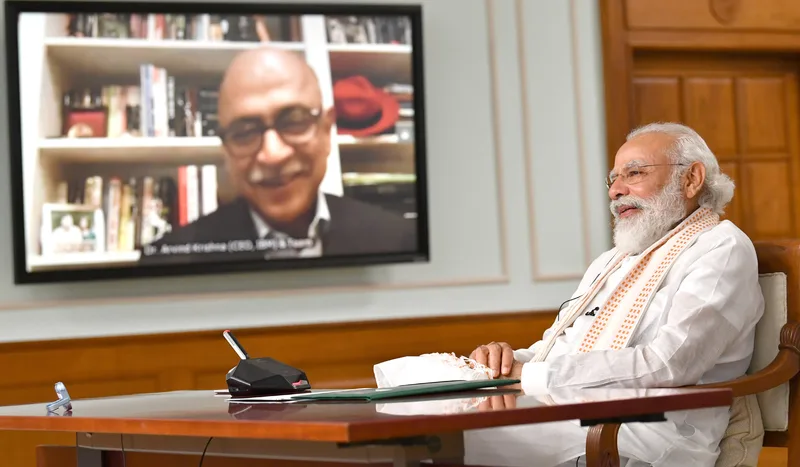
Then came the AI years, and some of his sharpest public lines. In May 2023 he told Bloomberg that IBM would slow hiring for back-office roles. "I could easily see 30% of that getting replaced by AI and automation over a five-year period," he said, as Axios relayed, a figure Bloomberg put at around 7,800 jobs. IBM kept buying software: HashiCorp, then Confluent for about $11 billion, a deal that closed in March 2026.
For a while, the numbers backed him. IBM's 2025 revenue was $67.5 billion, up 8%, and Krishna said in January's results that "Our generative AI book of business now stands at more than $12.5 billion." He was also, unusually for a big-tech CEO, willing to say where he thought the AI boom would hurt. Asked on The Verge's Decoder podcast in December 2025 whether we are in an AI bubble, he said "No", then argued that the biggest data-centre plans could not pay back: "$8 trillion of CapEx means you need roughly $800 billion of profit just to pay for the interest."
July 2026: "this quarter we faltered"
The test of a technologist running a public company is not the good quarter. It is the one that misses. IBM's second quarter of 2026 missed badly enough that Krishna released preliminary numbers early, with revenue of $17.2 billion, up 1%, and the letter that opens this story. "These are not excuses, but they are realities," he wrote of the market conditions in the same letter. When the full results came out on 22 July, IBM Z, the mainframe business, was down 42 percent, while Red Hat grew 11 percent, and IBM cut its full-year forecast to revenue growth of four to five percent at constant currency.
The market had already reacted. The 25% drop on 14 July was part of a slide that left the stock 36% below its all-time high of $332 by 20 July, Mint reported, even though the same report noted shares had risen 144% from their 2020 low. TIME, naming him to its TIME100 AI list in August 2026, gave the balanced version: "Though IBM's shares have nearly doubled since Krishna took the reins, they tumbled 25% in one day in July as customers shifted spending from mainframes to AI infrastructure and have yet to recover to their highs."
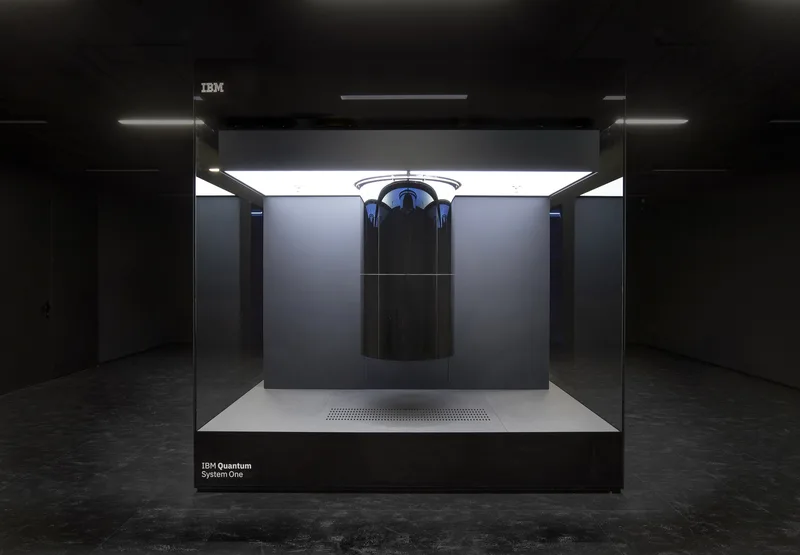
He did not respond by retreating. In the same TIME profile he said: "I actually think that trying to muddle along without taking risk is the riskiest path," adding, "It leads to eventual falling off a cliff." His bet is that AI models become interchangeable, "you can use any one of them, because they're close enough," and that the value goes to companies like IBM that build on top. The longer bet is quantum. His July letter said IBM plans to invest more than $10 billion in quantum over the next five years, and: "We remain on track to deliver the first large-scale fault-tolerant quantum computer by 2029."
.jpg)
What IBM employees and investors say on Reddit
Reddit is less polite than the proxy statement. On the r/IBM thread for the July letter, the top reply was about timing, not strategy: "Not even 12 hours after the RSU vesting processes completed, he needs to publish this to tank the stock. He could have waited a day. Or at least until the markets opened." (u/ErhartJamin, r/IBM, 245 upvotes, 14 July 2026)
Investors on r/stocks read the same day as a verdict on the business. In a thread titled "IBM dropped 24% today on a green day", the most upvoted reply argued that "Its CEO is bashing AI nonstop recently" and that "Its legacy mainframe customers are finally breaking free" (u/InquisitorCOC, r/stocks, 566 upvotes, 14 July 2026).
The argument about him inside IBM is older than July. When a March 2025 thread on r/IBM covered his pay rise to $25 million, one employee defended him in plain terms: "Whether you like him or not he doubled the share price in the last couple of years. That's the job he is paid to do and rewarded for." (u/l0r3n20, r/IBM, 20 upvotes, 15 March 2025). The reply with five times the upvotes disagreed: "Share price does not mean a healthy or profitable company. He's Sam Palmisano for the 2020's. He's a cutter not an innovator." (u/MichaelAndKitt, r/IBM, 107 upvotes, 15 March 2025)
The Indian reaction in 2020 was more pointed about what kind of success this is. Under a Firstpost piece on r/india asking why talent leaves the country, one reply made the distinction this profile keeps returning to: "Indians seem to be good as people and business managers in already established big companies - Nadella, Pichai, Nooyi, Krishna, Nokia's Suri (a rare European success) - but I don't see many Indians founding such companies, even in US." (u/plshelpthedog, r/india, 48 upvotes, 3 February 2020). It is a fair challenge, and also the point: running a 115-year-old company through an AI shift is its own kind of hard.
Where he is now, and five things an IIT student can take from it
Today Krishna is IBM's chairman, president and chief executive. IBM's 2026 proxy statement lists him as 63 and puts his total 2025 compensation at $37,989,685, and the ratio of his pay to the median IBM employee's at 765:1. The same filing lists his outside roles: director of the Federal Reserve Bank of New York since 2022, director of Northrop Grumman, a board member of the U.S.-India Strategic Partnership Forum and a Vice Chair of The Economic Club of New York. His IBM board biography still notes the "undergraduate degree from the Indian Institute of Technology, Kanpur."
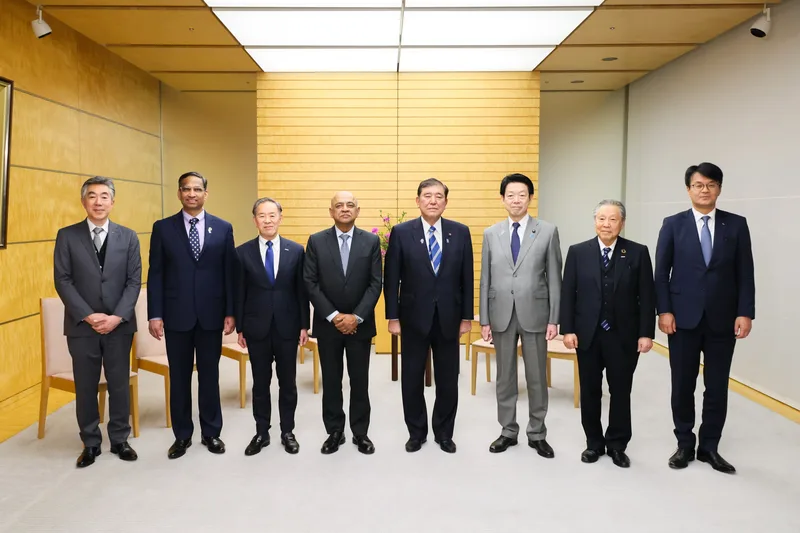

India keeps coming up. Commerce minister Piyush Goyal met him during a visit to the US in early October and, as Mint reported on 6 October, posted that they discussed collaboration across "AI, cloud infrastructure, quantum computing and other frontier technologies."
On 14 October, YourStory reported that IBM plans to deploy "what it describes as India's largest quantum computer" at the Quantum Valley Tech Park in Amaravati in early 2027, with TCS and the Andhra Pradesh government. The timeline came from IBM India's managing director, Sandip Patel, not from Krishna. In February he was in Lucknow when Chief Minister Yogi Adityanath inaugurated an IBM AI centre there, with IIT Kanpur's director, Manindra Agrawal, also present, as Hindustan Times reported.
The next test is Wednesday's results. Whatever they show, there are five things in this career worth more to an IIT student than the CEO title:
- Depth is a career path too. Krishna spent 30 years at one company before he ran it. Not every IIT story is a startup; the engineers who rise inside large institutions shape how millions of people use technology.
- Pick an adviser, not just a university. The person he still names from his twenties is Bruce Hajek, who "taught me humility," and whose recommendation got him hired. Choose your PhD or first job by who you will work for.
- Move from the lab to the revenue line when you are ready. He went from patents and papers to running a software business that grew roughly 50 percent. Technical depth plus a P&L is what boards look for.
- Make one big bet and own it. Red Hat cost about $34 billion, and he was named as its principal architect. Six years later it is still the business growing when others shrink.
- Say the bad quarter out loud. Few CEOs would put "this quarter we faltered" in a letter to investors. Writing it plainly, with the numbers, is how you keep credibility for the next bet, which for him is quantum by 2029.
If Kanpur is your campus, the IIT Kanpur hoodies are where we keep the merch, for the campus whose first computer came from the company one of its EE graduates now runs. For more on the institute, read our IIT Kanpur campus guide, the IIT Kanpur placements 2026 guide and the Antaragni 2026 guide. Last week's founder story was Harshil Mathur of Razorpay.
FAQ
What is Arvind Krishna's educational qualification?
He has a B.Tech in Electrical Engineering from IIT Kanpur (1985), and an M.S. (1987) and Ph.D. (1991) in electrical engineering from the University of Illinois Urbana-Champaign. IIT Kanpur gave him its Distinguished Alumnus Award in 2019, and Illinois's ECE department gave him its Distinguished Alumni Award in 2007.
How old is Arvind Krishna and what is his salary?
IBM's 2026 proxy statement lists him as 63. It reports his total 2025 compensation as $37,989,685, including salary, stock awards, options and incentive pay, and a CEO-to-median-employee pay ratio of 765:1. IBM does not publish a net worth figure, and estimates online vary.
When did Arvind Krishna become IBM's CEO?
IBM's board elected him CEO on 30 January 2020, effective 6 April 2020, succeeding Ginni Rometty. He became chairman on 1 January 2021. Before that he led IBM's Cloud and Cognitive Software unit and IBM Research, and was a principal architect of the roughly $34 billion Red Hat acquisition.
What is happening at IBM under Arvind Krishna in 2026?
In July 2026 IBM released weak second-quarter results early; Krishna wrote "this quarter we faltered" and the stock fell about 25% in one day. IBM plans to invest more than $10 billion in quantum over five years and reports third-quarter results on 21 October 2026.
Hero photo: Arvind Krishna at SXSW 2025, cropped from "Jon Fortt and Arvind Krishna at SXSW 2025" by Bea Phi, CC BY-SA 4.0, via Wikimedia Commons. Card design: IITianVibes.

By Arun Raghav S · Co-founder, IITian Vibes · B.Tech, IIT Jodhpur. Last updated: 18 October 2026. Corrections to hello@iitianvibes.com.