

Founder Stories · IIT (BHU) Varanasi · Published 25 October 2026
On 9 December 2022, the chairman and chief executive of Palo Alto Networks walked into his old hostel at IIT (BHU) Varanasi, 33 years after he left it. The IIT (BHU) Foundation's account of the day says Nikesh Arora went back to "his hostel and department after 33 long years", stopped at the local tea spots, attended aarti on the ghats, and was then received as chief guest at Banaras Hindu University's 102nd convocation. A year earlier he had arranged a $2 million gift for IIT (BHU) scholarships, half from forgoing his own salary and half from Palo Alto Networks, and asked that the fund not carry his name.
Four years on, Arora is still running the company. Palo Alto Networks booked $11.48 billion of revenue in the year to 31 July 2026, five times the $2.27 billion it reported in the year he joined. This month he has been telling AI labs to stop frightening customers. TheStreet reported on 19 October, after a CNBC interview on 15 October, that he said businesses will adopt AI only "at the pace enterprises feel comfortable that it can be trusted", and warned that AI-driven attackers can get "in and out of our infrastructure under 12 minutes".
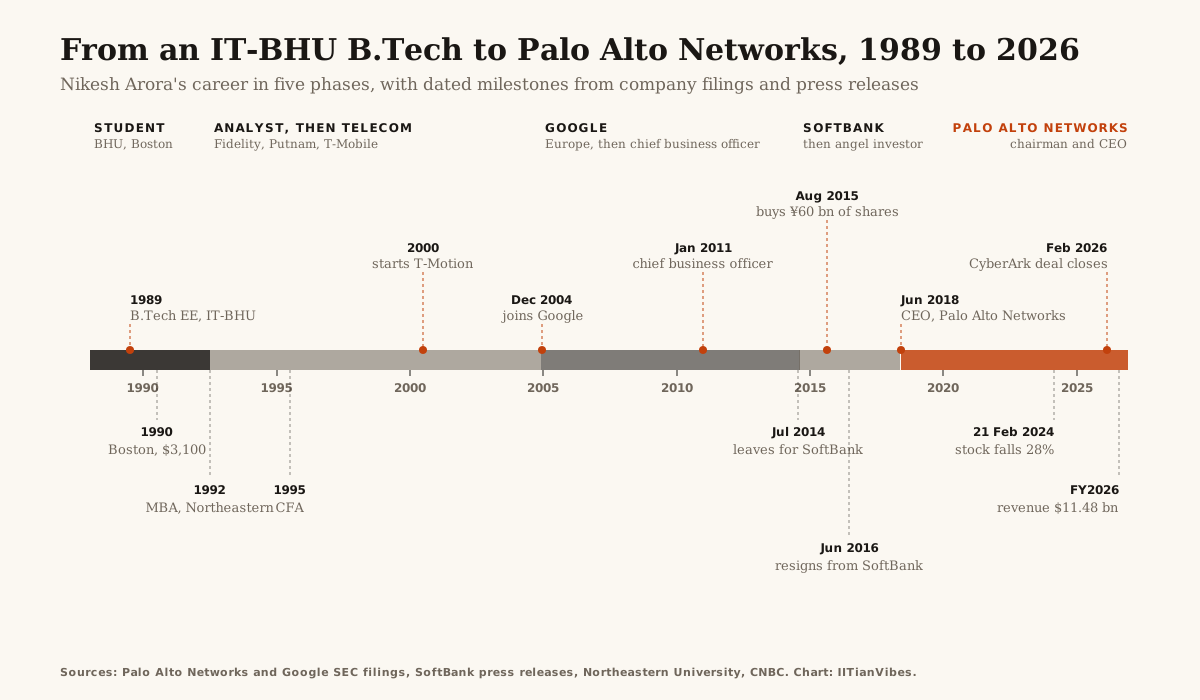
His is not a straight-line founder story. He sold computers for Wipro after graduating, arrived in Boston with his father's savings, collected hundreds of rejection letters, became Google's top business executive, and then lost one of the most public succession races in Japanese business. He took over Palo Alto Networks in 2018, at 50, according to its filing. This is how an IT-BHU electrical engineer built that second act, and what an IIT student can take from it.
An Air Force childhood and electrical engineering at IT-BHU
Arora was born in Ghaziabad. His father, Air Vice Marshal Jagdish Kumar Arora, was an Indian Air Force officer (as The Economic Times noted when he died in 2016), so the family moved with the postings. Business Standard reported in 2014 that he "had been to different Kendriya Vidyalayas around the country" before finishing school at The Air Force School, Subroto Park, in Delhi. The Carnegie Corporation, which named him one of its 2026 Great Immigrants, quotes him on what that did to him: "Growing up, we kind of moved around every few years. That brings a degree of adaptability to your life."
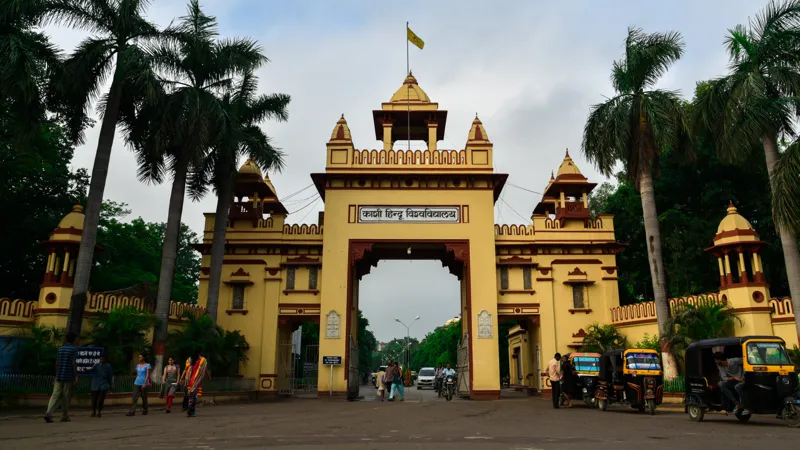
He studied electrical engineering at what was then the Institute of Technology, Banaras Hindu University, and graduated in 1989. Palo Alto Networks' latest proxy statement lists "a B.Tech in electrical engineering from the Institute of Technology at Banaras Hindu University", and Google's old management page gave the year: "In 1989, Nikesh graduated from the Institute of Technology in Varanasi, India with a bachelor's degree in electrical engineering." The institute has since become IIT (BHU), but Arora still uses the old name. When a user on X said in 2024 that he was not a trained engineer, he replied, as The Times of India reported: "Lol and he actually happens to be a trained engineer from IT-BHU (IIT-Varanasi)."
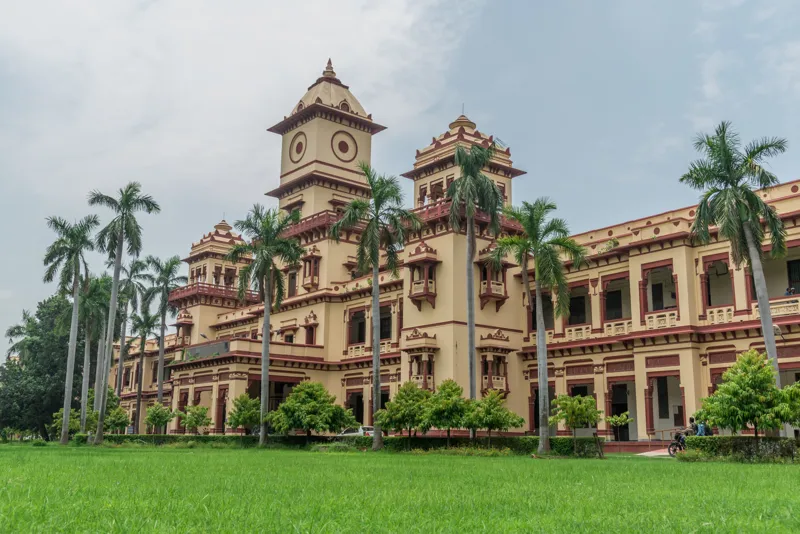

He has said very little on the record about hostel life, his professors or his JEE rank, and we found no interview where he explains why he picked electrical engineering. What is documented is what came next. The IIT (BHU) Foundation's profile says he "took up a job with Wipro following his graduation from IIT (BHU) but quit it soon in order to pursue his higher education in the United States." Business Standard describes it as "a brief stint with Wipro selling computers."
The first job out of an IIT is rarely the one that defines you. For Arora it was a sales job at an Indian IT company, and he left it soon after.
$3,100, 400 rejections, and an analyst who wanted to do things
He told the story himself in 2013, when Northeastern University gave him an honorary doctorate and asked him to speak at its graduate commencement. The university's transcript of the speech has it:
"When I came here, all I had was my suitcase and $100. Well actually, I had $3,100. I borrowed $3,000 from my father. These were his life savings and he had given them to me."
His goals, he said, were simple: get through two years, not run out of money, do well, and pay his father back. "Failure was not an option. I had to find a way. The way I found was here. Northeastern was my Ellis Island, my new home." He finished the MBA in 1992.
The jobs did not come easily. Financial Express, quoting his conversation with Humans of Bombay, has him saying: "I sent 400-plus applications and got rejected 400-plus times. I saved all the rejection letters. They're my motivation." The same report quotes him on the 20VC podcast listing the work he did to pay for his studies: security guard, taking notes for the disabled, and flipping burgers at Burger King.
He got in through finance. He joined Fidelity Investments as an analyst after the MBA, and studied for a master's in finance at Boston College at night. Business Standard reports that he finished the CFA in 1995, then moved to Putnam Investments to cover telecom stocks.
He did not stay an analyst. "His heart was not in stock analysis," Business Standard wrote, citing his own remark to Mint that he felt he wasn't "doing things". He joined Deutsche Telekom, and in June 2000 started a company inside it, T-Motion, to build services for the new 3G networks. Within two years it was folded into T-Mobile, where he became chief marketing officer of its European business and a member of its board.
That is the first pattern worth noticing. Arora spent the 1990s analysing companies, and by his early thirties he was running part of one. The CFA and the finance degree did not make him a fund manager. They gave him the vocabulary to sell to, and later run, large businesses.
Google, 2004 to 2014: the British Museum interview
In September 2004, according to Business Standard, Arora was planning another start-up, a mobile virtual network company, when a friend at lunch passed on an offer he did not want. A California company that had listed only that August was looking for someone to run its European business. The first interview was in a small rented office, which did not impress him. The second was with Larry Page and Sergey Brin at the British Museum.
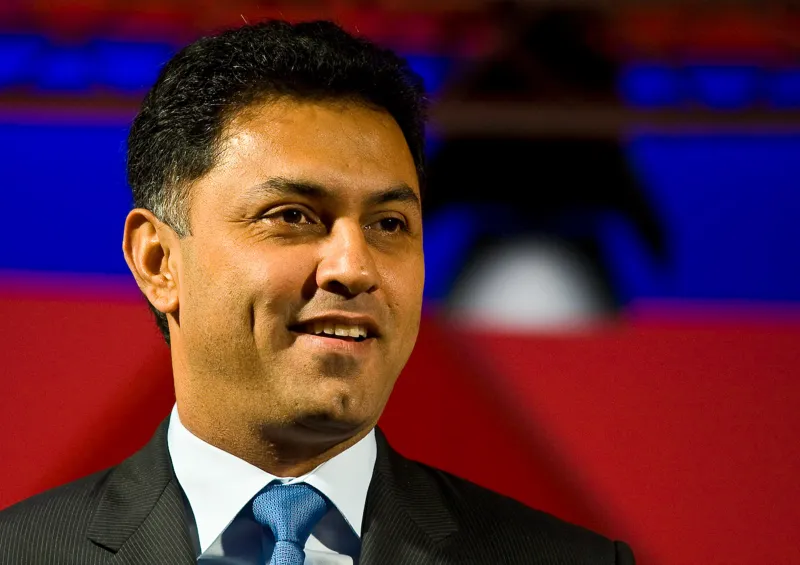
He joined Google in December 2004. Google's 2014 proxy statement sets out the climb: President, International Operations; then President, Global Sales Operations and Business Development from April 2009 to December 2010; then Senior Vice President and Chief Business Officer from January 2011. At SoftBank's announcement in 2014, Google's business side was described as "all partnerships, marketing, sales and customer activities", and all of it had been his.
How much did that business grow? Palo Alto Networks, announcing his appointment in 2018, said he "was instrumental in growing Google's search business from $2 billion in revenues to over $60 billion in revenues, led more than 20,000 employees". That is the hiring company's description of its new CEO, not an audited number, so read it as such. What is independent is how he was paid. CNBC reported that in 2012 Google made him its highest-paid executive, at more than $51 million, and that analysts called him effectively "the acting CEO".
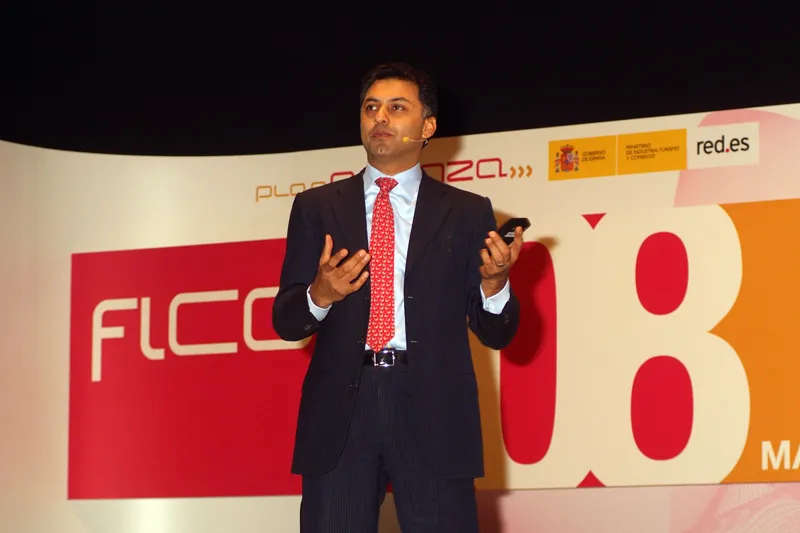
He was not one of Google's founders or engineers. He was the person who turned its products into revenue across countries, and that is a job IIT graduates rarely plan for. On 17 July 2014 Google told the SEC that he was leaving to join SoftBank, with Omid Kordestani taking over the business organisation from 1 August.
SoftBank, 2014 to 2016: the heir who did not inherit
Masayoshi Son, SoftBank's founder, did not hide what he wanted. "He brings a rare set of skills: amazing financial and strategic acumen; a decade of executive experience at one of the fastest growing companies in history," Son said in the July 2014 announcement. Arora joined as vice chairman of SoftBank Corp. and chief executive of SoftBank Internet and Media. He was paid accordingly. Bloomberg reported that he earned about 16.6 billion yen ($135 million) between joining in September 2014 and the end of March 2015, a Japanese record. It covered about seven months, not a full year, and SoftBank said it included a signing bonus.
In 2015 the board appointed him Representative Director and President. That August he put his own money in, buying about 60 billion yen of SoftBank shares. "This is a large transaction for me, and involves taking an enormous risk in my life once again," he said in SoftBank's release. Son, in the same release, wrote: "I expect him to succeed me at the appropriate time."
Then came the letters. In early 2016 a US law firm, writing for unnamed SoftBank and Sprint shareholders, sought an investigation and possibly his removal, citing conflicts of interest, poor investments and excessive pay. Business Insider quoted the investors saying his strategy "appears to be nothing more than throwing a dart at a dartboard". Son stood by him in public. "I have complete trust in Nikesh and one thousand per cent confidence in him," he said, in a statement carried by PTI.
On 20 June 2016 a committee of SoftBank's independent directors concluded that the claims about his conduct "are without merit". The next day he resigned. SoftBank's formal filing gave the reason plainly: Son wanted to keep leading for the time being, while Arora wanted to take over in a few years, and "the difference of expected timelines between the two leads to Arora's resignation". Son's own statement was the most candid line of the episode.
"Nikesh is a unique leader with unparalleled skills around strategy and execution. He should be CEO of a global business, and I had hoped to hand over the reins of SoftBank to him on my 60th birthday - but I feel my work is not done."
Masayoshi Son, SoftBank Group, 21 June 2016
In the same statement Son said he would need to stay CEO "for at least another five to ten years". At the shareholders' meeting the next day, The Japan Times reported, Son said he had planned to announce the handover at his 60th birthday party. Over the two years, Bloomberg tallied SoftBank's bill for him at 31.5 billion yen ($300 million) in pay and related costs.
This was the pivot. At 48 he had been SoftBank's named successor, cleared by his own board, and still out. Palo Alto Networks' 2018 proxy records what he did next: "from 2016 through 2018 Mr. Arora was an angel investor and from June 2016 through December 2017, Mr. Arora served as an advisor to SoftBank". He did not rush into the next big title.
Palo Alto Networks, 2018 to 2026: buying, bundling and a 28% day
On 30 May 2018 the board of Palo Alto Networks, a Santa Clara firewall company, appointed him chief executive and chairman, effective 6 June. The filing gives his age as 50. It also shows how he was to be paid. Beyond a $1 million salary, the largest piece was a stock option worth about $66 million at grant that would vest only if the share price rose by 150% to 300% over four to seven years. A further $20 million of restricted stock depended on his buying $20 million of shares with his own money. He was, once again, betting his own cash on the company.
The company he took over was smaller than people remember. Its annual report for the year to July 2018 shows revenue of $2.27 billion, 5,348 employees and an operating loss. His plan was to turn a firewall seller into a company that sold most of what a security team buys, largely by acquisition. The prices below are what the company's own annual reports record as the purchase consideration, which often differs from the headline figure in the press.
| Company bought | What it does | Price recorded | Closed | Source |
|---|---|---|---|---|
| Demisto | Security automation | $474.2 million | 2019 | FY2019 10-K |
| Twistlock | Cloud and container security | $378.1 million | 2019 | FY2019 10-K |
| Expanse | Attack surface management | $797.2 million | Dec 2020 | FY2021 10-K |
| Talon | Enterprise browser | $458.6 million | Dec 2023 | FY2024 10-K |
| IBM QRadar SaaS assets | Security operations | $1.1 billion | Aug 2024 | FY2025 10-K |
| Protect AI | AI model security | $634.5 million | Jul 2025 | FY2025 10-K |
| Chronosphere | Observability | $3.0 billion (announced at $3.35 billion) | Jan 2026 | FY2026 10-K; announcement |
| CyberArk | Identity security | $21.1 billion (announced at about $25 billion) | Feb 2026 | FY2026 10-K |
| Console | AI agents for enterprise operations | $500 million cash agreed (not yet booked) | Sep 2026 | FY2026 10-K |
The strategy had a cost, and it showed on one day. In February 2024 he told investors that Palo Alto Networks would give customers its products free for a while to move them onto one platform, a push the company calls "platformization". "We expect a typical customer entering into a platformization transaction will not pay us for our technology for a period of time," he said. The company cut its revenue forecast, and on 21 February 2024 the shares fell 28%, CNBC reported, the worst day since its 2012 listing.
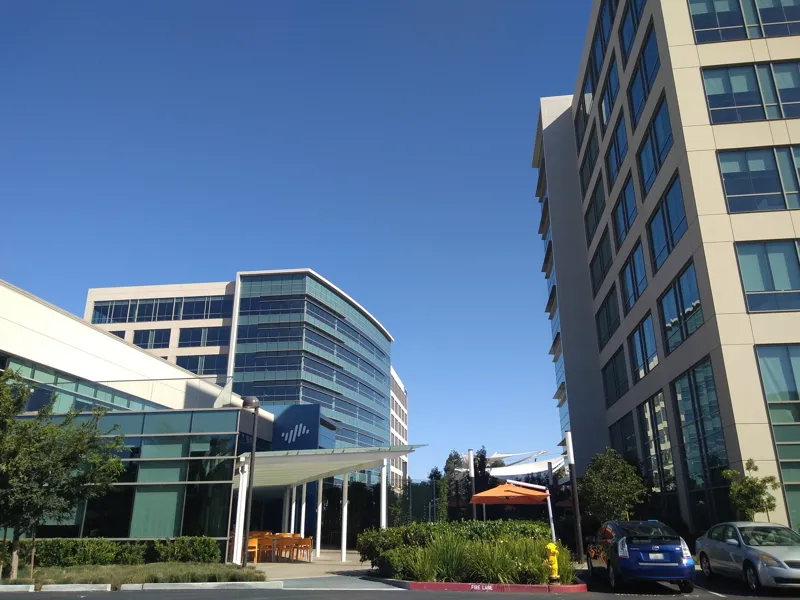

He did not back off. In July 2025 he agreed Palo Alto Networks' largest acquisition, for the identity-security company CyberArk, at an equity value of approximately $25 billion. It closed on 11 February 2026. The 2026 annual report shows the result: headcount up from 16,068 to 21,921 in a year, about 4,223 of them from CyberArk. Revenue for fiscal 2026 was $11.48 billion, against $9.22 billion the year before, and the company has guided for $14.10 to $14.20 billion in fiscal 2027.
Where he is now, and five things an IIT student can take from it
Palo Alto Networks' November 2025 proxy gave his age as 57, and he is still chairman and CEO. The 2025 proxy puts his total compensation for fiscal 2025 at $99.7 million, almost all of it in stock awards, and his pay at about 442 times the median employee's. Forbes' real-time list put his net worth at $1.7 billion on 23 October 2026, and the Hurun India Rich List 2026, as reported by Financial Express, ranks him third among professional managers at ₹13,700 crore.
On 12 October 2026 he signed a forward contract on up to 500,000 of his shares, taking about $147.3 million upfront, according to his Form 4 filing. An exhibit to the filing says his equity-related tax bills over the next three years "are expected to be more than $100 million". It is not an outright sale.
The IIT link has become money, not just a line in a biography. In November 2021 he gave $2 million to start the IIT (BHU) Foundation Access Fund. The Foundation's release says he forwent his salary to give $1 million, with Palo Alto Networks adding $1 million. "IIT (BHU) provides a springboard for careers in technology, and it's an honor to help deserving students gain access to these educational opportunities," he said. The Foundation's president added that it was Arora's wish that the fund not be named for him. In May 2022 the first awards covered full four-year tuition and medical insurance for 21 students, seven of them women, according to Hindustan Times.

What Palo Alto Networks engineers and customers say on Reddit
The filings tell one story. The people who use and support the products tell a harsher one. We found no Reddit thread at all about Arora's IIT (BHU) years; the voices are on r/paloaltonetworks, and most of the upvoted ones are critical. In an August 2025 thread started by a support engineer, one commenter went straight at the strategy: "The day that I saw Nikesh installed as CEO I knew Palo Alto's glory days were numbered." The same comment added: "No innovation only acquisition. Buggy as hell." (u/shipwreck1934, r/paloaltonetworks, 12 upvotes, 8 August 2025)
Another reply in that thread put the acquisition table above in one line: "Stop acquiring companies like Pokémon and focus on the core products first." (u/hitman133295, r/paloaltonetworks, 8 upvotes, 8 August 2025). A self-described long-time employee, in a thread titled "PANW losing it’s mojo", described the internal push: "New CEO (N) is focused on AI automating everything." (u/MrMcPicklez, r/paloaltonetworks, 13 upvotes, 12 August 2025)
The sharpest comment for Indian readers came in a December 2025 thread about support quality, from someone who said they had worked in Palo Alto Networks' technical support: "I worked in TAC for 3 years, I can tell most of the engineers are from India, the problem is cost per ticket model Palo Alto implemented, focusing on closure instead of good customer experience and faster ticket resolution" (u/Prettypervert26, r/paloaltonetworks, 23 upvotes, 24 December 2025). A reply in the same thread read the decline as a choice, describing it as "prioritizing short-term shareholder profits and cost-savings over long-term product and service delivery" (u/FishPasteGuy, r/paloaltonetworks, 14 upvotes, 24 December 2025).
These are individual users, not audited facts, and every one of them predates the CyberArk deal closing. They are also the counterweight to a five-fold revenue line. The question his critics ask is whether a company built by buying can keep its products and support as good as the ones that made its name. His answer, so far, has been the numbers.
Five things worth taking from his career, if you are at an IIT now:
- Your first job is a starting point, not a verdict. He sold computers for Wipro, then quit to study abroad. Nobody at IT-BHU in 1989 would have picked that path as the road to Google.
- Keep the rejection letters. 400-plus rejections did not stop him getting into Fidelity. He kept them, and he still talks about them.
- Learn the business side, not just the engineering. An EE degree plus an MBA and a CFA let him move from analysing telecom companies to running Google's revenue. For an engineer, reading a balance sheet is a skill worth learning early.
- Put your own money where your words are. He bought about 60 billion yen of SoftBank shares in 2015, and $20 million of Palo Alto Networks stock was part of his 2018 deal. Boards notice.
- A public setback is survivable. He left SoftBank in 2016 as the successor who was told to wait. Two years later he took over a $2.27 billion company and grew its revenue five-fold.
If Varanasi is your campus, the IIT BHU hoodies are where we keep the merch. For more on the institute, read our IIT BHU placements 2025-26 guide, and our earlier profile of another BHU alumnus, Anil Chakravarthy of Adobe. Last week's founder story was Arvind Krishna of IBM, another IIT engineer who rose to run a large US technology company.
FAQ
What is Nikesh Arora's educational qualification?
He has a B.Tech in electrical engineering from the Institute of Technology, Banaras Hindu University (now IIT BHU), 1989; an MBA from Northeastern University, 1992; and a master's in finance from Boston College. He is also a CFA charterholder. Northeastern gave him an honorary doctorate in 2013.
What is Nikesh Arora's salary and net worth?
Palo Alto Networks' 2025 proxy puts his fiscal 2025 total compensation at $99.7 million, mostly stock awards, about 442 times the median employee's pay. Forbes estimated his net worth at $1.7 billion on 23 October 2026. Hurun's India Rich List 2026 puts him at ₹13,700 crore.
Why did Nikesh Arora leave SoftBank?
He resigned as president in June 2016. SoftBank said Masayoshi Son wanted to stay CEO for at least five to ten more years, while Arora wanted to take over within a few years. A day earlier, a board committee had found shareholder complaints about his conduct "without merit".
What has Nikesh Arora done for IIT BHU?
In November 2021 he gave $2 million, half from forgoing his salary and half from Palo Alto Networks, to start the IIT (BHU) Foundation Access Fund for students who cannot afford fees. The first awards in May 2022 covered full tuition for 21 students. He revisited the campus in December 2022.
Hero photo: Nikesh Arora at Google Zeitgeist, May 2009, cropped from "Nikesh Arora" by Loic Le Meur, CC BY 2.0, via Wikimedia Commons. We could not find a freely licensed photo of him from his years at Palo Alto Networks. Card design: IITianVibes.

By Arun Raghav S · Co-founder, IITian Vibes · B.Tech, IIT Jodhpur. Last updated: 25 October 2026. Corrections to hello@iitianvibes.com.