

Founder Stories · IIT Madras · Published 22 November 2026
On 13 November 2026, a day after Nvidia announced that Jensen Huang had resigned, The Economic Times ran a headline about three Indian-origin executives in the race to replace him, and its headline described one of them as an IIT dropout. That was Thomas Kurian, who joined IIT Madras in 1985, left after about six months for Princeton (BA in electrical engineering, summa cum laude) and Stanford (MBA 1994), ran product development at Oracle, and has been chief executive of Google Cloud since early 2019.
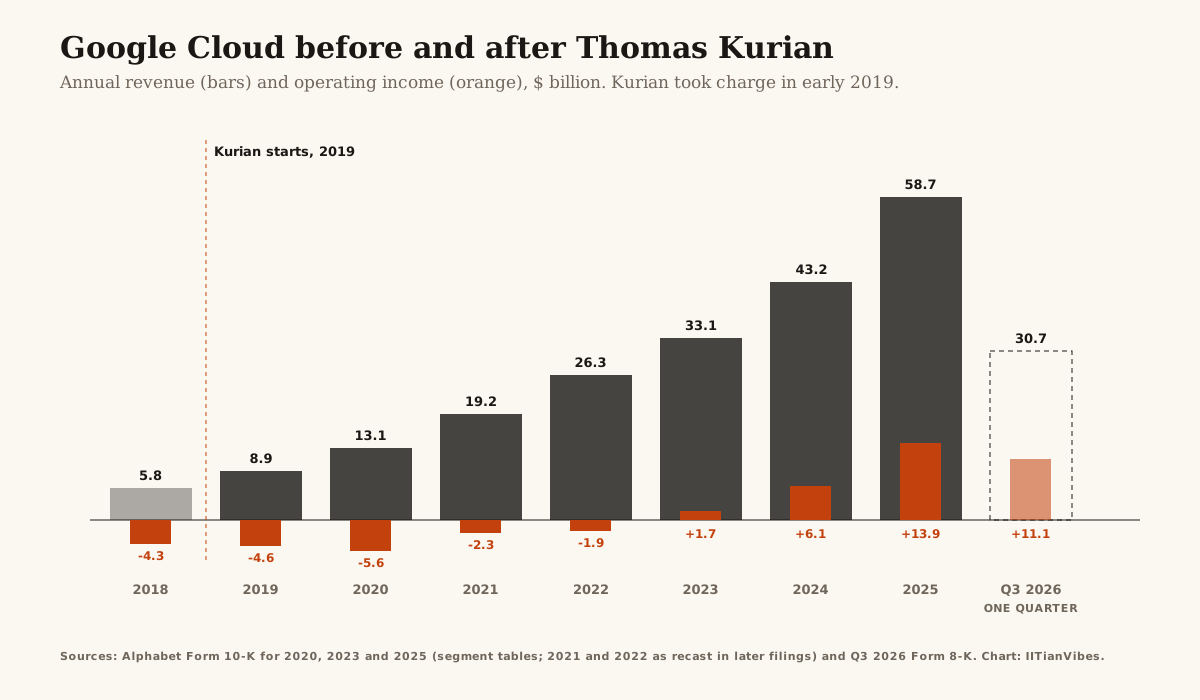
The same ET piece is careful about it: "As per reports, he got into IIT-Madras after school but left after six months." Those six months are the least documented part of his career. No source we found names his branch. The numbers from the rest of it are public, because they sit in Alphabet's filings. Google Cloud earned $5.8 billion in all of 2018, the year before he took over, and lost $4.3 billion doing it (Alphabet 10-K). In the three months to 30 September 2026 it earned $30.7 billion, with $11.1 billion of operating income.
Part of that growth comes from selling Google's own AI chips, TPUs, in competition with Nvidia's. Earlier this year Huang mocked the demand for those chips and Kurian answered him in public (Times of India, citing the Financial Times). Now Kurian's name is on the lists of people who might run Nvidia. This profile follows him from the IIT Madras gate to that list, and is plain about which parts are on record and which are speculation.
Thomas Kurian: key facts and dates
| When | What | Source |
|---|---|---|
| 1966 | Born; family from Pampady, Kottayam, Kerala; identical twin of NetApp CEO George Kurian | Mathrubhumi |
| 1985 to 1986 | Joins IIT Madras after St Joseph's Boys' High School, Bengaluru; leaves after about six months for Princeton | The Hindu, The Register |
| Princeton | BA, electrical engineering, summa cum laude | Oracle bio |
| 1994 | MBA, Stanford Graduate School of Business; earlier a McKinsey consultant | Stanford GSB |
| 1996 | Joins Oracle | Oracle 10-K |
| January 2015 | President, Product Development, Oracle | Oracle 10-K |
| 28 September 2018 | Resigns from Oracle | CNBC |
| 26 November 2018 | Joins Google Cloud; takes charge in early 2019 | CNBC |
| Q1 2023 | Google Cloud's first operating profit, $191 million | Alphabet |
| Q3 2026 | Google Cloud revenue $30.7 billion (up 103%), operating income $11.1 billion | Alphabet |
| 30 September 2026 | Google Cloud backlog $560.8 billion | Alphabet 10-Q |
| 12 to 16 November 2026 | Named in media lists of possible Nvidia CEOs after Jensen Huang resigns | Axios |
Six months at IIT Madras, then Princeton on a partial scholarship
Kurian is one of identical twins. His brother George has been chief executive of the storage company NetApp since June 2015 (The Register). The twins were the youngest of four brothers in a Christian family from Pampady in Kottayam district, Kerala. Mathrubhumi wrote last week: "Born in 1966 in Pullolickal, Pampady, Thomas Kurian is the son of the late P C Kurian and the late Molly Kurian, a retired lecturer at Women's Christian College in Chennai." Oracle's annual report for 2018 gave his age as 51, which fits (Oracle 10-K).
Where he grew up is less tidy. Kerala papers claim him as Pampady's son. An uncle, the cardiologist George Jacob, told The Hindu in 2015 that the boys were raised in Karnataka: "They were four brothers, born and brought up in Bengaluru, where my elder brother P.C. Kurian, a chemical engineer, was with Graphite India." The Register, profiling George in 2016, names the birthplace as a village called Kothala near Pampady. Both can be true: born in Kerala, raised in Bengaluru, where the twins boarded at St Joseph's Boys' High School.
The IIT chapter comes from the same two sources. The uncle again, in The Hindu: "Thomas and his twin brother George, after passing out from St Joseph's Boys High School, Bengaluru, had joined IIT Madras. However, six months into their programme, they both went to Princeton University to pursue their studies."
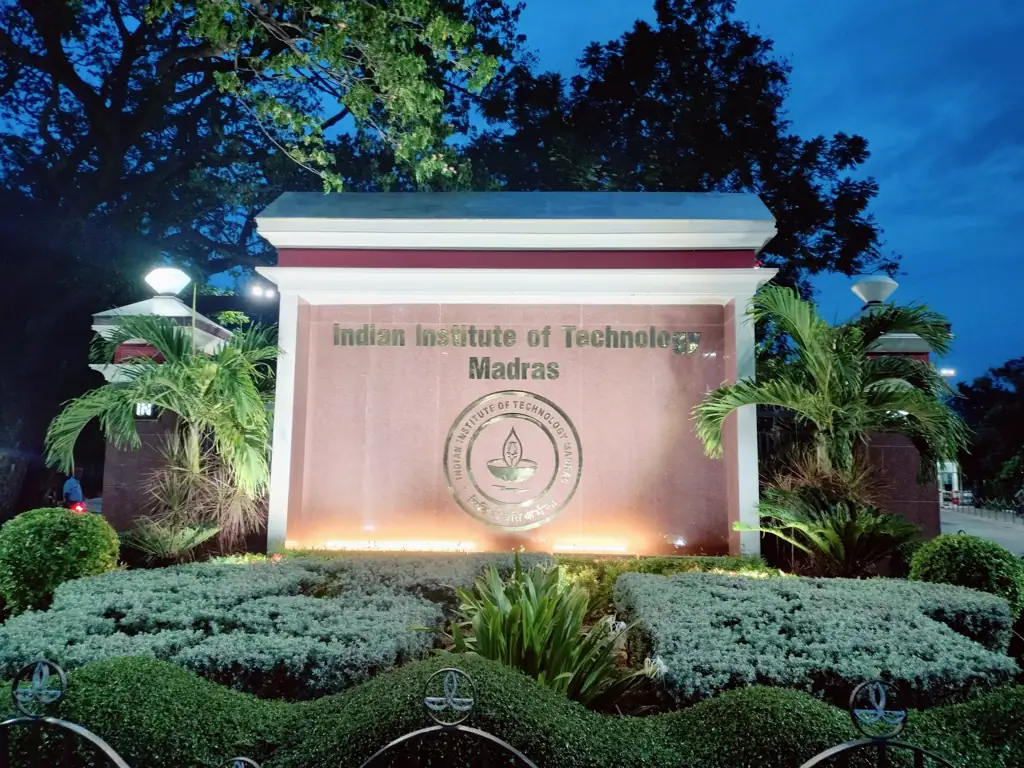

The Register fills in how. At IIT Madras, it says, "There they both took SAT tests and sent the results to various colleges, including Princeton University, which liked them so much that both were offered partial scholarship places. Their family decided to cover the costs of this and in 1986, six months after entering IIT and aged 17, they left India and went to Princeton in New Jersey, America." Its timeline lists "1985, Indian Institute of Technology Madras, India, for 6 months". The "aged 17" does not sit easily with a 1966 birth year; we report both as published.
So "IIT dropout" is accurate in the narrow sense. He was admitted, he enrolled, and he left before finishing a first year. What it leaves out is why: the twins were applying abroad from inside the IIT, and Princeton's offer came with money. Mathrubhumi tells it as a choice between two admissions: "Although he secured admission to the Indian Institute of Technology (IIT) Madras, his outstanding performance in the SAT examination earned him a scholarship to pursue higher studies at Princeton University in the United States."
No source we found gives his IIT Madras branch, his hostel or his entrance rank, and neither Oracle's executive biography nor Stanford's alumni page mentions IIT at all. If you see a branch or a JEE rank attached to his name online, ask where it came from.
At Princeton both twins studied electrical engineering, and Thomas graduated with the top honour. "George gained a BSc, Thomas a BA with the highest, summa cum laude, distinction," the Register wrote. He has said the money pressure of an American college pushed him into software. "I came to college in the United States and I didn't realise that things were so expensive, so I was looking for the highest paid per hour job that I could get as a student. And that's when I decided, hey, in programming you get paid a lot of money," he said in a 2016 interview quoted by The Economic Times.


McKinsey, a Stanford MBA and 22 years at Oracle
After Princeton, Thomas went to McKinsey and George went to Oracle. The twins then took Stanford MBAs one after the other, "Thomas first, and then George, with each helping to defray the other's expenses" (Register). Stanford's alumni page lists him as "Thomas Kurian MBA '94" (Stanford GSB, archived). Oracle's own biography says he had worked "in London, Brussels, and San Francisco as a consultant with McKinsey and Company" and was an Arjay Miller Scholar at Stanford (Oracle executive bio, archived). Bloomberg put his McKinsey stint at four years (via Mint).
He joined Oracle in 1996. Oracle's 2018 annual report gives the climb in one paragraph: "He served as our Executive Vice President, Product Development from July 2009 until January 2015. He served as our Senior Vice President of Development from February 2001 until July 2009. Mr. Kurian worked in Oracle Server Technologies as Vice President of Development from March 1999 until February 2001." From January 2015 he was President, Product Development, reporting to Larry Ellison (Oracle 10-K, June 2018).
The 2009 step up was the big one. When the head of development, Charles Rozwat, took a year's leave, "his responsibilities will be assumed by Thomas Kurian, currently senior vice president of Fusion middleware" (PCWorld, archived). By the end he ran most of what Oracle built, and he was paid like it: CNBC reported $35.7 million in total compensation for the year to May 2017.

The cloud argument he lost at Oracle in 2018
In early September 2018 Oracle said Kurian was taking time off. Within a week Bloomberg reported why. "Sources told Bloomberg that Kurian was pushing Ellison to allow more of Oracle's software to run on clouds that compete with Oracle, particularly market leaders Amazon and Microsoft," Business Insider summarised. On 28 September Oracle announced his resignation, saying "Mr. Kurian's duties and responsibilities have been reassigned to other senior executives in Oracle's development organization" (CNBC).
Bloomberg later summed it up: "Kurian and Ellison clashed over the company's cloud strategy, with Kurian arguing the database maker should collaborate more with rivals to boost its presence while Ellison preferred to go it alone." Asked about it, Kurian said only that it was time to do something new (Bloomberg via Mint, 2021). The detail matters for what came next. The argument he lost at Oracle, that a cloud business grows faster by working with rivals and partners than by going it alone, is close to the playbook he ran at Google.
Seven weeks after leaving Oracle he had the Google job. Diane Greene, then Google Cloud's chief, announced it on 16 November 2018: "Thomas Kurian, a respected technologist and executive, will be joining Google Cloud on November 26th and transitioning into the Google Cloud leadership role in early 2019." She added that "Sundar, Urs and I all interviewed Thomas" (CNBC). The Sundar was Sundar Pichai, an IIT Kharagpur graduate and Google's chief executive, who helped interview Kurian for the job.
Rebuilding Google Cloud as a sales company (2019 to 2023)
Google had the engineering. It did not have the people who sell to banks, retailers and governments. In April 2019, three months into the job, Kurian told The Wall Street Journal how far behind the company was. "Google's cloud sales team is around one-tenth to one-fifteenth the size of the sales forces at AWS and Microsoft Azure," CNBC reported, and he expected it to be about half their size within two years.
By August, Business Insider reported that "Google Cloud planned to triple it salesforce over the next few years. Google has already hired 2,000 salespeople, one person told us." The pay plan changed to look like Oracle's and SAP's: lower base salaries, bigger bonuses for hitting targets. According to one person who spoke to Business Insider, Kurian told Google Cloud employees they had a five-year window to become "at least the number 2 cloud." Inside Google this was a culture change, and he has described adjusting himself to it. "You have to adapt to the style of the place that you're working in and the people you're working with," he told Bloomberg in 2021. "And so I worked quite differently here than I did before" (via Mint).
The losses kept coming for a while. Google Cloud lost $4.6 billion in 2019 and $5.6 billion in 2020 at the operating level (Alphabet 10-K for 2020). The turn came in the first quarter of 2023, when the unit reported operating income of $191 million against a $706 million loss a year earlier (Alphabet Q1 2023 results). It has been profitable every year since, ending 2025 with $58.7 billion of revenue and $13.9 billion of operating income (Alphabet 10-K for 2025).
TPUs, Anthropic and a public spat with Jensen Huang (2025 to 2026)
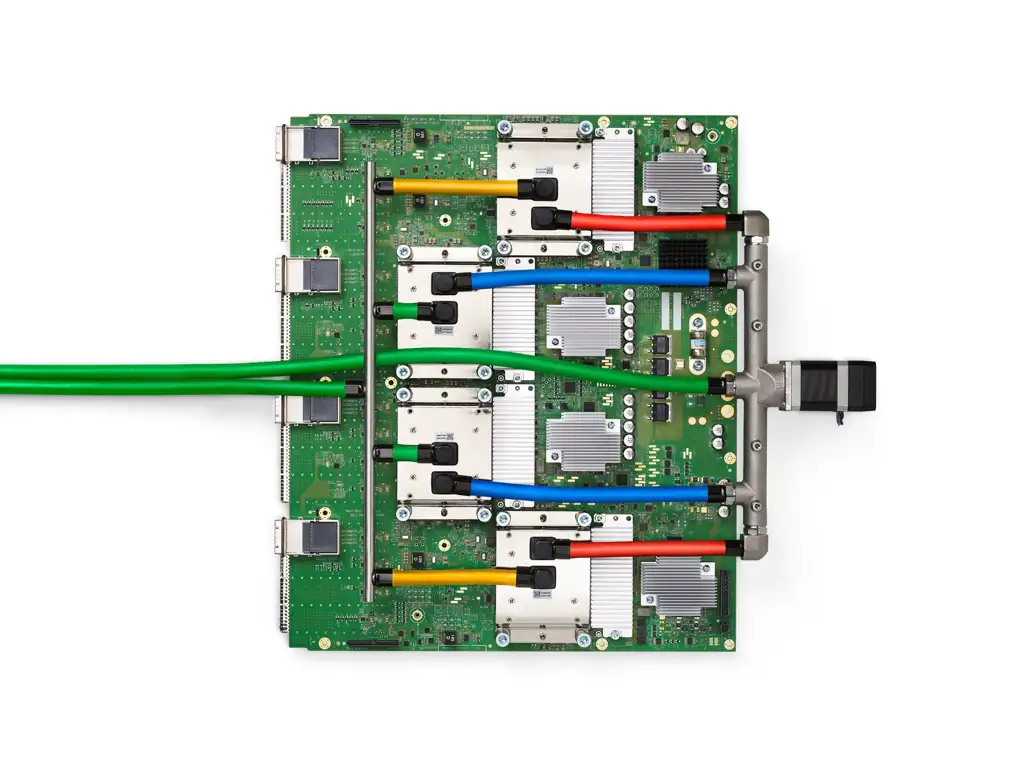
The second half of Kurian's time at Google is about AI computing, and that is where he runs into Nvidia. Google designs its own AI accelerators, Tensor Processing Units, and rents them out through Google Cloud. In October 2025 Anthropic agreed to expand its use of them in a deal CNBC said was "worth tens of billions of dollars". Kurian's line in the release: "Anthropic's choice to significantly expand its usage of TPUs reflects the strong price-performance and efficiency its teams have seen with TPUs for several years."

Huang, the Times of India reported, had "mocked Google's chips, claiming that demand for them only exists because of Google's partnership with the startup Anthropic." Kurian's reply, in an interview with the Financial Times, was that nine of the top ten AI labs use TPUs, and he put Google's pitch this way (Times of India, 2 May 2026):
"We're not just a hyperscaler reselling other people's technology. Our differentiation comes down to the fact that we own the IP, the model and the chips are ours. For every dollar of revenue, we're not shipping 80% of it to either a model or chip provider, which allows us to invest more"
Thomas Kurian, to the Financial Times, 2026
India is part of the plan. In October 2025 Google announced a $15 billion AI hub in Visakhapatnam over five years, its biggest investment outside the United States. At Cloud Next in Las Vegas this April, Kurian told Moneycontrol: "In India, we are looking at it from four points of view. The first one is to make sure we build long-term infrastructure in the country." He also pointed to Google's "large engineering presence in India, where our R&D teams are building software".
The latest numbers are the largest yet. In the quarter to September 2026, Google Cloud revenue rose 103% to $30.7 billion, and Alphabet said "TPU systems sales were also a meaningful contributor to revenue growth" (Alphabet Q3 2026 results). Its order book is bigger still: "As of September 30, 2026, we had $ 567.7 billion of remaining performance obligations ("revenue backlog"), of which $ 560.8 billion related to Google Cloud" (Alphabet 10-Q).
The same filing records the purchase of the security company Wiz, closed on 11 March 2026 for $29.5 billion. On market share Google is still third. Synergy Research puts the split for the quarter at 26% for Amazon, 19% for Microsoft and 16% for Google (Synergy Research).
Where he is now: Google Cloud's CEO, and a name on Nvidia's lists
Here is what is on record about Nvidia. Its filing says that on 11 November 2026 "the Board of Directors, or the Board, of NVIDIA Corporation accepted the resignation of Jen-Hsun Huang, as NVIDIA's President, Chief Executive Officer and member of the Board, effective immediately," and that chief financial officer Colette Kress is interim CEO "while the Board conducts a search for a new Chief Executive Officer" (Nvidia 8-K). The filing gives no reason; CBS News reported that the decision came amid an investigation by US authorities.
Nvidia's announcement says it "will consider internal and external candidates" (Nvidia press release). On 13 November the board said: "We have not formally engaged any potential candidates" (CNBC). On 17 November its chair said Heidrick & Struggles was running the search (Staffing Industry Analysts, relaying Bloomberg and WSJ).
And here is where Kurian comes in. Axios put him on a list of 11 names to watch. A longtime Nvidia shareholder told the Financial Times that "Arora and Kurian would be his top two choices if the company decides to appoint someone from outside the organisation" (ET, relaying the FT). Fortune argued he "brings intimate knowledge of the hyperscalers and whose enormous AI investments underpin Nvidia's growth" (Fortune). Indian outlets, including India Today, picked up those lists. The other Indian-origin names were Micron's Sanjay Mehrotra and Palo Alto Networks' Nikesh Arora, whom we profiled last month.
None of that is a report that Nvidia has approached him. The one approach reported so far was to Arm's chief executive, Rene Haas: "Heidrick has already reached out to Arm Holdings CEO Rene Haas for the role, Bloomberg reported" (Staffing Industry Analysts). We found no statement from Google or Kurian on the speculation. As of this week he runs a business whose latest quarter works out to more than $120 billion a year. That is why investors name him, and also why leaving it would cost him a lot.

What Google Cloud's own users say about him on Reddit
We found no Reddit thread about his IIT Madras months or about the Nvidia talk. The people who discuss Kurian by name are Google Cloud's customers and engineers, mostly on r/googlecloud, and from his first year they argued about one thing: whether bringing Oracle's habits to Google was the cure or the disease.
In October 2019, under a post about Google's Kubernetes products, one user gave him credit for exactly one change: "The only thing Kurian has brought in is a focus on sales, which will only get them so far." (u/jeff98028, r/googlecloud, 3 upvotes, 2 October 2019). When Google started charging a management fee for its Kubernetes service in March 2020, another was blunter: "So they made it free for a year and now they are charging again. Kurian is ruining GCP." (u/BBHoss, r/googlecloud, 4 upvotes, 4 March 2020).
Some of the criticism came with a shrug. "Indeed they are an indication of Kurian's inclination - they hired a number of ex-Oracle product folks. There have been tons of decisions that indicate that they want to operate like Oracle. Can't say it is wrong, since GCP needs to make money to continue getting funded by Google." (u/YogiAtheist, r/googlecloud, 2 upvotes, 13 July 2020). A year later, in a thread comparing Google's support with Amazon's, a customer who had just complained about slow engineers and unannounced product changes put Kurian on their side: "Kurian is looking to change this culture but I am sure there will be some hard push back against that. They must mature a little and have some customer centricity." (u/Musterquark, r/googlecloud, 5 upvotes, 3 August 2021).
And when Google sold its domains business to Squarespace in June 2023, the frustration went straight to the top: "This is the final nail in the coffin for me with GCP, especially the way it has been communicated. Where is Kurian? Why hasn't he made a statement about this?" (u/gogolang, r/googlecloud, 2 upvotes, 17 June 2023). These are small threads with a handful of votes each. They show something the revenue chart does not: the sales-first, enterprise-first turn that made Google Cloud profitable also annoyed some of the developers who liked it before.
Five things IIT students can take from Thomas Kurian's career
- An IIT seat is a strong option, not an obligation. The Kurian twins took the SAT from inside IIT Madras and left when Princeton offered money. If you are weighing a foreign offer against a seat you already hold, it has been done, and it worked. It also cost their family money, which they chose to spend.
- Check the label before you repeat it. "IIT dropout" is true and incomplete. His branch, hostel and rank are not on record anywhere we could find. Treat confident claims about them with the same care.
- Technical depth plus a business degree is a real path. Electrical engineering, then McKinsey, then a Stanford MBA, then 22 years building software at Oracle. He did not found a company. He ran big ones.
- An argument you lose can become your playbook. He left Oracle after reportedly arguing it should work with rival clouds. At Google, partnering and selling became the plan.
- Losses can be a phase. Google Cloud lost money every year from 2018 to 2022 under the numbers Alphabet published, then made $13.9 billion of operating income in 2025. Alphabet's other businesses carried those losses; most startups have nobody to do that for them.
More from Founder Stories: Sundar Pichai, IIT Kharagpur to Google CEO, Nikesh Arora, IIT (BHU) to Palo Alto Networks and Krishna Bharat, the IIT Madras graduate who built Google News. Visiting the campus he left? Read our IIT Madras campus guide.
From IIT Madras, or headed to Chennai? Wear it: IIT Madras hoodies, tees and varsity jackets, shipped across India.
Frequently asked questions
Did Thomas Kurian graduate from IIT Madras?
No. He and his twin brother George joined IIT Madras in 1985 after school in Bengaluru and left about six months later, in 1986, for Princeton University on partial scholarships, according to The Hindu and The Register. No source we found names his IIT branch.
What is Thomas Kurian's education?
About six months at IIT Madras (1985 to 1986), then a BA in electrical engineering from Princeton University, summa cum laude, and an MBA from Stanford Graduate School of Business in 1994, where he was an Arjay Miller Scholar. He worked at McKinsey before joining Oracle in 1996.
Is Thomas Kurian going to be Nvidia's next CEO?
Nothing says so yet. Nvidia accepted Jensen Huang's resignation on 11 November 2026 and is searching for internal and external candidates. Axios, Fortune and an investor quoted by the Financial Times named Kurian as a possible pick, but no report says Nvidia has approached him, and Google and Kurian have not commented.
How big is Google Cloud under Thomas Kurian?
Google Cloud had $5.8 billion of revenue in 2018, the year before he took charge, and $58.7 billion in 2025. In the quarter to September 2026 it earned $30.7 billion in revenue and $11.1 billion in operating income, with a $560.8 billion backlog, per Alphabet's filings.
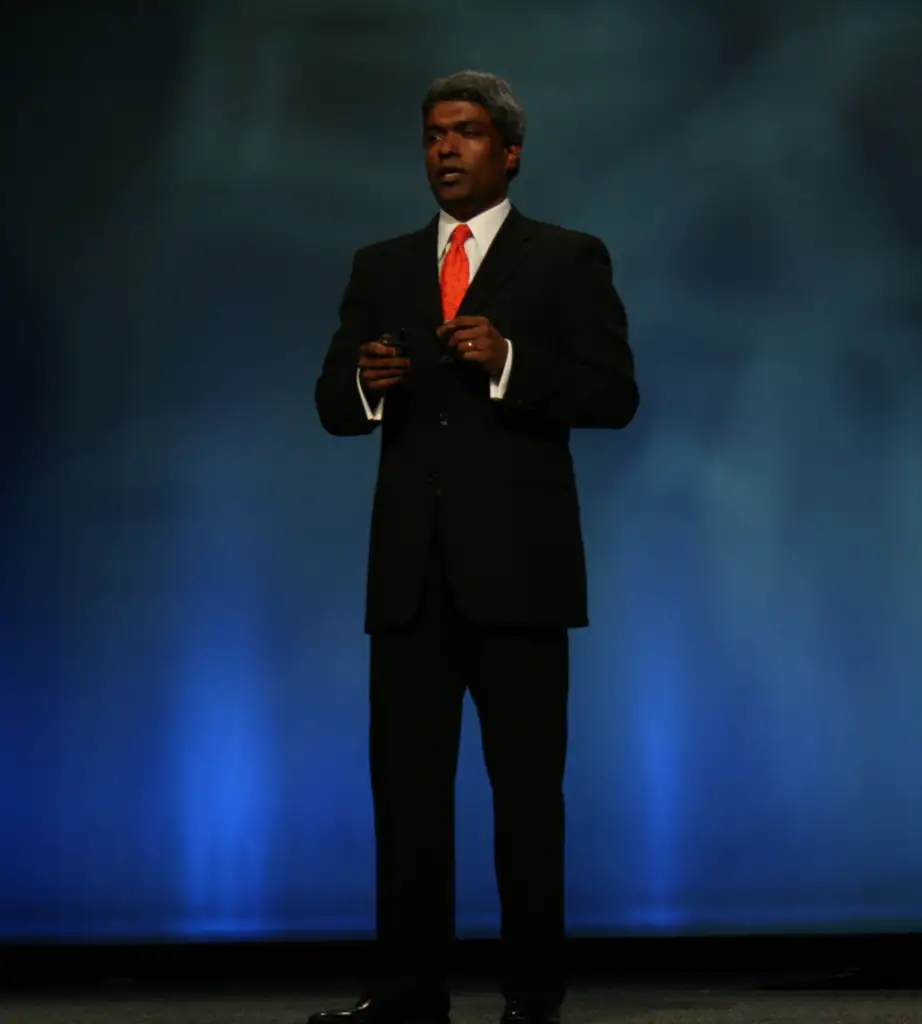
Hero photo: Thomas Kurian at the Air, Space and Cyber Conference, National Harbor, Maryland, September 2022, cropped from a U.S. Air Force photo by Eric Dietrich (DVIDS), public domain. Card design: IITianVibes.

By Arun Raghav S · Co-founder, IITian Vibes · B.Tech, IIT Jodhpur. Last updated: 22 November 2026. Corrections to hello@iitianvibes.com.