

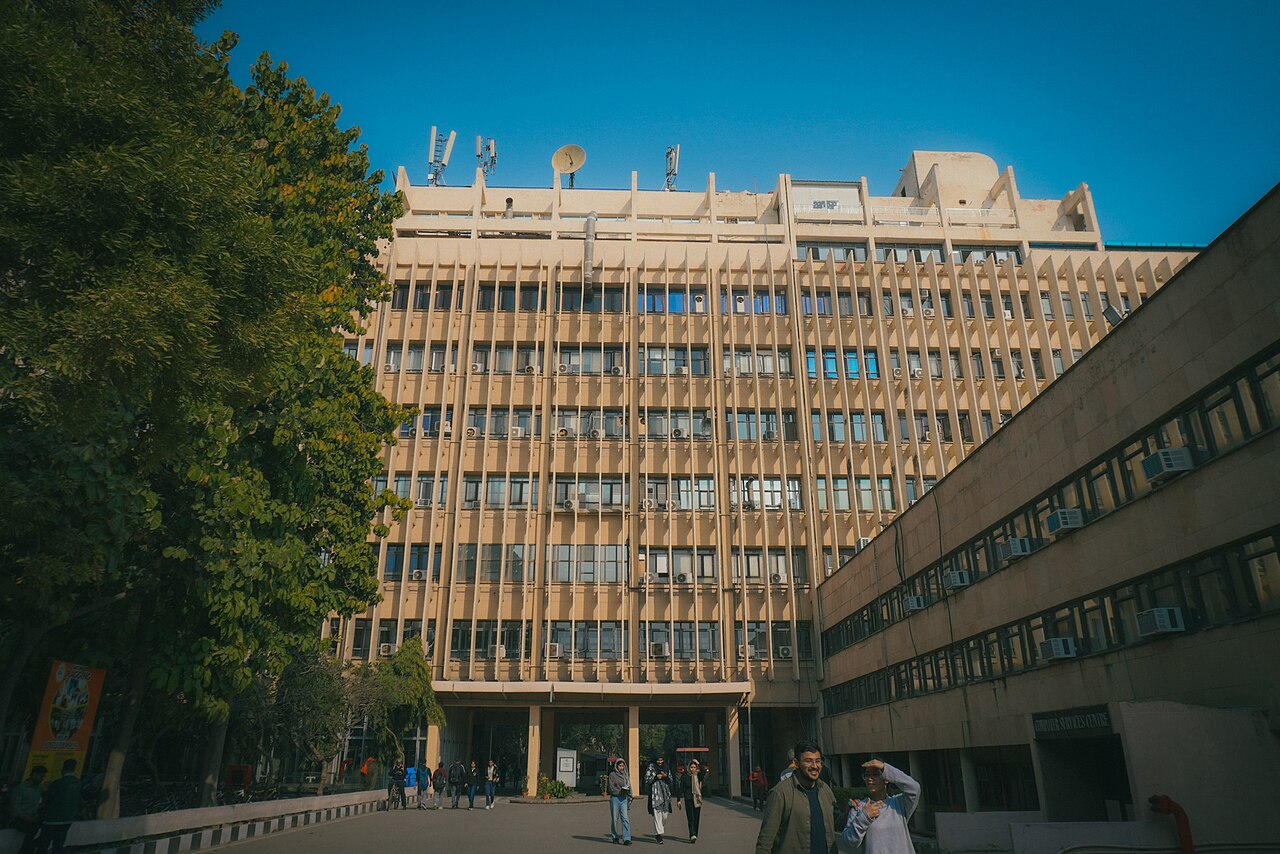
QS released World University Rankings 2027 on 18 June 2026 with 13 IITs ranked globally. IIT Delhi reclaimed India's #1 at world rank 118 — but the more honest story is the subject-level data: IIT Delhi sits at world rank 36 in QS Engineering & Technology (top 50 globally), and five IITs are in the global Engineering top 100. This is also the year QS rankings got a peer-reviewed critique alongside the Chirikov pay-to-play allegations — context every reader deserves. Here's the full 5-year trajectory per IIT, the subject-by-subject breakdown, the methodology critique, and the honest "what these rankings mean and don't mean" guide.
Wait — why is it called "QS 2027" if it released in 2026?
This trips up everyone the first time. QS names each edition by the academic year it's designed to inform, not the year of release. QS World Rankings 2027 was released 18 June 2026 and feeds the 2026-27 admissions cycle. So:
- QS 2027 World Rankings = released June 2026 (current overall edition)
- QS 2026 Subject Rankings = released March 2026 (current subject edition — see below)
- QS 2027 Subject Rankings = expected March 2027
- QS 2026 World Rankings = released June 2025; QS 2025 = June 2024; QS 2024 = June 2023
Times Higher Education and US News use the same forward-naming convention. NIRF (India's Ministry of Education ranking) does it the opposite way — NIRF 2025 was released September 2024 and uses release-year naming. That's why QS 2027 and NIRF 2025 are each the latest from their respective system, released only ~9 months apart in real time.
QS World Rankings 2027 — every Indian IIT in the global table
The 2027 edition covers 1,500+ universities across 106 systems with methodology unchanged from 2026 — same nine indicators (Academic Reputation 30%, Citations per Faculty 20%, Employer Reputation 15%, Faculty-Student ratio 10%, plus Employment Outcomes, International Faculty, International Students, International Research Network and Sustainability at 5% each).
QS World 2027 — IIT rankings (top 10 by overall rank)
| Institute | QS 2027 | QS 2026 | Δ | India |
|---|---|---|---|---|
| IIT Delhi | 118 | 123 | +5 | #1 |
| IIT Bombay | 134 | 129 | −5 | #2 |
| IIT Madras | 170 | 180 | +10 | #3 |
| IIT Kharagpur | 205 | 215 | +10 | #4 |
| IIT Kanpur | 221 | 222 | +1 | tied IISc |
| IIT Roorkee | 335 | ~339 | up | — |
| IIT Guwahati | 349 | ~333 | −16 | biggest drop |
| IIT (BHU) Varanasi | 510 | 566 | +56 | 2nd-biggest gain |
| IIT Indore | 546 | ~565 | up | — |
| IIT Hyderabad | 588 | 664 | +76 | biggest gain |
India had 13 IITs total in the QS 2027 ranked range (three more sit in the 600+ bracket). 12 IITs feature inside India's top 20 institutions. Sources: QS / TopUniversities official release, Deccan Herald (13 IITs confirmed), India.com.
The 5-year IIT QS trajectory — who was #1 in India, when
The Bombay-Delhi rivalry at the top has flipped multiple times in the last five cycles. From the raw numbers:
| Institute | QS 2023 | QS 2024 | QS 2025 | QS 2026 | QS 2027 |
|---|---|---|---|---|---|
| IIT Delhi | 174 | 197 | 150 | 123 | 118 |
| IIT Bombay | 172 | 149 🇮🇳#1 | 118 🇮🇳#1 | 129 | 134 |
| IIT Madras | ~250 | 285 | 227 | 180 | 170 |
| IIT Kanpur | ~264 | 278 | 263 | 222 | 221 |
| IIT Kharagpur | 270 | 271 | 222 | 215 | 205 |
The story in one paragraph: IIT Bombay led India in QS 2024 (rank 149) and held the lead through QS 2025 (rank 118 — its best-ever placement, which IIT Delhi has now matched). In QS 2026, Bombay slipped 11 places to 129 while Delhi vaulted 27 places (150 → 123) to take India #1. QS 2027 consolidated the flip: Delhi up to 118, Bombay drifted further to 134. IIT Madras has the steepest improvement curve — a +115-place climb from 285 to 170 across four cycles (the biggest top-5 IIT trajectory in the dataset). All five top IITs improved year-on-year in 2027 except IIT Bombay.
Sources: Careers360 (QS 2024), Careers360 (QS 2025), Careers360 (QS 2026), IIT Delhi press release (QS 2023).
The QS Subject Rankings tell the better story
The overall world rank lumps engineering institutes together with full-spectrum universities, which structurally penalises the IITs (no medical schools, no humanities at scale, lower international student/faculty share than US R1s). The QS Subject Rankings 2026 (released 25 March 2026) show the IITs much closer to where their actual research output sits.
IIT Delhi — QS Subject Rankings 2026 (per-subject world rank)
| Subject | World rank | Top-50 globally? | YoY (vs 2025) |
|---|---|---|---|
| Electrical & Electronic Engineering | 36 | ✅ | up from 47 |
| Engineering & Technology (broad) | 36 | ✅ | slipped from 26 |
| Mechanical Engineering | 44 | ✅ | up from 61 |
| Computer Science & Information Systems | 45 | ✅ | up from 64 |
| Chemical Engineering | 48 | ✅ | up from 93 |
| Civil & Structural Engineering | 50 | ✅ | up from 51–100 band |
| Materials Science | 64 | — | up from top-100 band |
| Business & Management | 71 | — | up from top-100 band |
| Environmental Sciences | 78 | — | up from top-100 band |
| Mathematics | 86 | — | new entry to top 100 |
IIT Delhi has 6 subjects in the global top 50, including 5 engineering specialisms. Source: IIT Delhi official press release on QS Subject 2026.
IIT Bombay — QS Subject Rankings 2026 (per-subject)
| Subject | 2026 rank | Top-50? |
|---|---|---|
| Civil & Structural Engineering | 42 | ✅ |
| Computer Science & IS | 44 | ✅ |
| Electrical & Electronic | 44 | ✅ |
| Chemical Engineering | 49 | ✅ |
IIT Bombay has 4 engineering specialisms in the global top 50. Source: IIT Bombay institutional press release.
QS 2026 Engineering & Technology — Indian institutions, top 20
| India rank | Institute | World rank (Eng & Tech) | Top-100? |
|---|---|---|---|
| 1 | IIT Delhi | 36 | ✅ |
| 2 | IIT Bombay | 42 | ✅ |
| 3 | IIT Madras | 62 | ✅ |
| 4 | IIT Kharagpur | 64 | ✅ |
| 5 | IIT Kanpur | 86 | ✅ |
| 6 | VIT Vellore | 119 | — |
| 7 | IISc Bengaluru | 129 | — |
| 8 | IIT Roorkee | 141 | — |
| 9 | IIT Guwahati | 166 | — |
| 10 | BITS Pilani | 249 | — |
| 15 | IIT (BHU) Varanasi | 332 | — |
| 16 | IIT Hyderabad | 395 | — |
Five IITs in the global Engineering & Technology top 100, plus IIT Roorkee and Guwahati in the top 200. This is the figure to quote when comparing IITs globally — overall world rank conflates engineering quality with humanities and medical schools the IITs simply don't operate.
Source: QS World Rankings by Subject 2026, with Indian-institution breakdown verified via r/Btechtards community compilation.
Who moved up, who moved down — and why
IIT Delhi reclaimed India #1 from IIT Bombay. Delhi (123 → 118) edged ahead of Bombay (129 → 134). This is Delhi's third lead in five cycles and matches Bombay's best-ever Indian-institute placement of 118 from QS 2025. Notable: IIT Delhi's Employer Reputation rank climbed 11 places to 39 globally, a measurable signal of stronger employer-survey response. IIT Bombay still leads India on Employer Reputation at rank 32 — even though it dropped on overall.
IIT Hyderabad: biggest gain (+76). 664 → 588 is the largest absolute climb among IITs and follows three consecutive cycles of improvement on Citations per Faculty. IITH has aggressively recruited US-trained faculty since 2020; the citation impact is now compounding.
IIT (BHU) Varanasi crossed below world rank 600 with a +56 jump (566 → 510). For a converted-IIT (formerly IT-BHU), this is the strongest signal yet that the rebranding and resource alignment with the IIT system is producing measurable gains.
IIT Guwahati: the unexpected −16 drop. Guwahati slipped 16 places (333 → 349) — the largest year-on-year fall among older IITs. The drop is surprising given NIRF 2025 places Guwahati at #8 in Engineering. Most likely driver: regression on Citations per Faculty or International Research Network — both heavily weighted in QS — rather than any teaching or placement weakness. r/Btechtards noted the drop explicitly as "unexpected".
The newer IITs (Bhubaneswar, Gandhinagar, Mandi, Patna, Jodhpur, Tirupati, Palakkad, Bhilai, Goa, Jammu, Dharwad, Dhanbad) sit below QS's ~1,500-institution global cutoff. Their NIRF placements are typically much stronger — see our QS + NIRF combined breakdown.
The honest critique: how reliable IS QS, really?
This is the part most aggregator sites skip. QS rankings have been the subject of significant peer-reviewed criticism — worth knowing before you make a college decision based on a 5-place swing.
The 45%-on-perception problem
QS allocates 30% to Academic Reputation surveys + 15% to Employer Reputation surveys = 45% of total score on opinion. By comparison, Times Higher Education uses 33% reputation; Shanghai Ranking (ARWU) uses 0% reputation. QS is structurally the most opinion-weighted of the major global ranking publishers.
The peer-reviewed critique (Frontiers in Education, 2025): survey respondents tend to name universities they've already heard of, which creates a Matthew effect entrenching established Western institutions. The same analysis flagged "systemic biases favouring larger, research-intensive institutions, potentially disadvantaging smaller or specialised universities" — which, applied to India, structurally caps where the IITs can climb in the overall ranking.
The Chirikov pay-to-play allegations (2021)
Igor Chirikov (UC Berkeley Center for Studies in Higher Education) published peer-reviewed evidence in Inside Higher Ed (April 2021) that 22 of 28 Russian universities studied paid QS $2,857,880 in consulting/advertising over 8 years, and universities with frequent QS contracts rose ~140 positions more than non-paying peers. Faculty-student ratio scores improved 0.9 standard deviations more at paying institutions.
QS denied wrongdoing, stating its consulting contracts "have no direct relation to inclusion or improvement in any international rankings." But Chirikov's framing stuck: this was "the first empirical evidence to date that rankers' conflicts of interest may [affect] ranking outcomes." Subsequent peer-reviewed work in Higher Education (Springer, 2022) confirmed conflict-of-interest concerns extend across multiple ranking publishers, not just QS.
What this means in practice
QS is still the most widely-recognised global ranking — US, UK and European admissions committees lean on it, and that's the operating reality. But treat the differences within the top 200 as noise rather than signal: a 5-place swing between QS 2026 and QS 2027 is well within the standard error of a survey-weighted ranking system. The order of magnitude matters (top 100 vs 500); the within-tier order (IIT Delhi 118 vs IIT Bombay 134) should not be load-bearing for a JEE-rank student's JoSAA decision.
What Reddit students are saying about QS 2027
The community consensus across r/Btechtards threads in the 24 hours since release is more skeptical than the news coverage. From the subject-rankings analysis thread (June 2026), the OP captures the popular position:
"I don't think QS ranking should be used as a valid metric to compare Indian universities and colleges to foreign ones (at least for those outside the top 100)."
The skepticism is grounded in specific examples: ranking VIT Vellore (#119) ahead of IISc Bengaluru (#129) in Engineering, or Chandigarh University (#269) on the same global scale as IIT BHU (#332), strains credibility. QS's reputation surveys can be moved by aggressive employer-engagement programmes that boost the 15%-weighted Employer Reputation score without corresponding research output. From the "13 IITs in QS 2027" thread, the operational student point:
"IIT BHU & IIT Hyderabad gain ranks by huge margin. IIT Guwahati loses rank by 16 places! Unexpectedly!"
Which IIT moved by 10 places between editions isn't going to change anyone's JoSAA counselling decision. Branch + city + per-IIT placement reality (covered in our per-IIT placement data) is what determines four years of life and the offer signed at the end.
QS vs NIRF — they tell different stories on purpose
The two rankings rank Indian IITs in different orders, and that's by design:
- QS 2027: IIT Delhi #1 (world 118), Bombay (134), Madras (170)
- NIRF 2025: IIT Madras #1 for the 10th straight year (88.72), Delhi (85.74), Bombay (83.65)
QS weights international Academic Reputation surveys at 30% and Employer Reputation at 15% — 45% combined on perception. NIRF weights Perception at 10% and instead loads up on Research Productivity (40%), Teaching-Learning-Resources (30%), and Graduation Outcomes (20%) — what your students actually achieve in India. Both questions are legitimate. The full methodology comparison and "which ranking to use when" guide is in our companion post: Which IIT is best in 2026? QS + NIRF combined.
When does NIRF 2026 release?
NIRF 2026 — the Ministry of Education's ranking — is not yet released as of 16 August 2026, and the Ministry of Education has announced no release date. Historical cadence: NIRF 2023 (June), NIRF 2024 (August), NIRF 2025 (4 September 2025). Any specific 2026 date quoted elsewhere is extrapolated from those cycles rather than announced. The latest official NIRF Engineering top 3 remains IIT Madras (88.72) → IIT Delhi (85.74) → IIT Bombay (83.65) from NIRF 2025 — note IIT Madras has held NIRF Engineering #1 for ten consecutive years, even when QS puts it third among IITs.
When does QS Subject Rankings 2027 release?
QS releases the per-subject rankings once a year, in late March. QS Subject Rankings 2026 dropped on 25 March 2026 (data summarised above). QS Subject Rankings 2027 is expected in late March 2027. Between now and then, the subject ranks above are the most current snapshot of how IITs compare globally on engineering specifically.
Frequently asked questions
Why is it called QS 2027 when it was released in 2026?
QS names each edition by the academic year it's designed to inform, not the year of release. QS World University Rankings 2027 was released on 18 June 2026 and feeds the 2026-27 admissions cycle. Times Higher Education and US News use the same forward-naming convention.
Which is the best IIT in QS World University Rankings 2027?
IIT Delhi at world rank 118, India's #1. IIT Bombay is second at 134, IIT Madras third at 170. By QS Subject Rankings 2026 Engineering & Technology, IIT Delhi ranks #36 globally and IIT Bombay #42 — both inside the world top 50.
How many IITs are in QS World Rankings 2027?
13 IITs feature in the global ranked range — the older 10 in the standard table plus three more in the 600+ bracket. 12 of those sit inside India's top 20 institutions. The remaining 10 IITs (newer ones) fall below QS's ~1,500-institution global cutoff.
Are any IITs in the QS World Top 100?
Not in the overall ranking — IIT Delhi at 118 is closest. But by QS Subject Rankings 2026 Engineering & Technology, five IITs are in the global top 100 — Delhi (36), Bombay (42), Madras (62), Kharagpur (64), Kanpur (86). On a like-for-like specialism comparison, the IITs are genuinely top-100 globally.
What is IIT Delhi's best-ever QS World rank?
IIT Delhi's QS 2027 rank of 118 matches the best Indian-institute placement ever — IIT Bombay also reached 118 in QS 2025. The five-year trajectory: 174 (QS 2023) → 197 (QS 2024) → 150 (QS 2025) → 123 (QS 2026) → 118 (QS 2027), a steady improvement curve.
Why did IIT Guwahati drop 16 places in QS 2027?
QS doesn't disclose per-institute indicator breakdowns publicly, but the drop is unexpected given NIRF 2025 places Guwahati at #8 in Engineering. The most likely driver is regression on Citations per Faculty or International Research Network — both heavily weighted in QS — rather than any teaching or placement weakness.
Why does IIT Madras top NIRF but not QS?
Different methodologies. NIRF weights Indian research productivity, teaching-learning resources and graduation outcomes heavily (90% combined). QS weights international academic reputation surveys at 45%, where IIT Delhi and Bombay outscore Madras partly due to brand and location. Both rankings are correct — they answer different questions.
How reliable are QS rankings?
QS is the most widely-recognised global ranking and the standard reference for US/UK/European admissions committees. But the peer-reviewed literature (Frontiers in Education 2025; Springer 2022) flags structural biases favouring larger, established Western universities. The Chirikov 2021 study documented that 22 of 28 Russian universities paid QS over $2.8M in consulting and saw average gains of 140 ranking positions vs non-paying peers. Treat 5–15 place swings within the top 200 as noise; treat order-of-magnitude differences (top 100 vs 500) as signal.
When does NIRF 2026 release?
Not released as of 16 August 2026, with no date announced by the Ministry of Education. NIRF 2025 was published on 4 September 2025; earlier editions landed in June 2023 and August 2024. Treat any predicted date as speculation.
When does QS Subject Rankings 2027 release?
Late March 2027. QS Subject 2026 dropped 25 March 2026. QS follows a fixed cadence: subject rankings in March, overall World Rankings in June, Asia & Sustainability in November.
Should I trust QS rankings for choosing a college?
For international graduate school applications — yes, QS is the most widely-recognised metric used by US, UK and European admissions committees. For JoSAA counselling decisions inside India — NIRF and the actual per-IIT placement data matter more than the global rank. For research lab choice once you're already at an IIT — NIRF Research is the cleanest signal.
Sources: QS World 2027 official release, QS Rankings Cycle 2027 methodology, QS Subject methodology, IIT Delhi press release (QS Subject 2026), IIT Bombay press release (QS Subject), Inside Higher Ed — Chirikov study, Higher Education (Springer, 2022) — Conflict of interest in global rankings, Frontiers in Education (2025) — Critical analysis of QS 2025, Careers360 (QS 2025), Careers360 (QS 2024), Scroll — academic reputation remains "modest". r/Btechtards community threads (June 2026). Image: IIT Delhi main building via Wikimedia Commons. Last updated: 16 August 2026.