

The honest answer to "which IIT is best in 2026" depends on which ranking you trust — and they don't agree. QS World 2027 (released yesterday) puts IIT Delhi at #1 in India, world rank 118. NIRF 2025 (the latest official Indian ranking) puts IIT Madras at #1 for the tenth straight year. NIRF 2026 still has not been released as of 16 August 2026, and no official release date has been announced. Below is the cross-source breakdown — QS plus NIRF combined — and the honest read on why these two methodologies produce different winners.
The two rankings disagree at the very top
| Rank | QS World 2027 (India) | NIRF 2025 (Engineering) |
|---|---|---|
| 1 | IIT Delhi (118 global) | IIT Madras (88.72) |
| 2 | IIT Bombay (134) | IIT Delhi (85.74) |
| 3 | IIT Madras (170) | IIT Bombay (83.65) |
| 4 | IIT Kharagpur (205) | IIT Kanpur |
| 5 | IIT Kanpur (221) | IIT Kharagpur |
| 6 | IIT Roorkee (335) | IIT Roorkee |
| 7 | IIT Guwahati (349) | IIT Hyderabad (overtook Guwahati) |
| 8 | IIT (BHU) Varanasi (510) | IIT Guwahati |
| 9 | IIT Indore (546) | NIT Tiruchirappalli (first non-IIT) |
| 10 | IIT Hyderabad (588) | IIT (BHU) Varanasi |
Sources: QS World University Rankings 2027 (released 18 June 2026); NIRF 2025 Engineering rankings (released 4 September 2025).
Why do they disagree?
The methodology gap is real, not a quirk.
| Indicator | QS World 2027 weight | NIRF 2025 weight (Engineering) |
|---|---|---|
| Academic / Employer Reputation (perception surveys) | 45% (30% AR + 15% ER) | 10% (Perception) |
| Research output + Citations | 20% | 40% (RP) |
| Teaching, Learning, Resources | 10% (Faculty-Student ratio) | 30% (TLR) |
| Graduation Outcomes / Placement | 5% (Employment Outcomes) | 20% (GO) |
| International student/faculty footprint | 10% (IF + IS) | 10% (OI) |
| Sustainability | 5% | — |
QS weights international reputation surveys at 45%; NIRF weights them at 10%. IIT Madras is exceptional on the NIRF dimensions (Research Productivity, Teaching-Learning-Resources, Graduation Outcomes) but rarely matches IIT Delhi or Bombay on international academic reputation surveys (Delhi's location and Bombay's pre-existing brand both help). Hence the order flip.
Put more bluntly: QS rewards "what international academics and employers think of you," NIRF rewards "what your students actually achieve in India." Both are legitimate questions — they just have different answers.
So which IIT is actually "best" in 2026?
It depends what you're optimising for.
If you're a JEE-rank holder choosing through JoSAA
Use NIRF + branch-level placement data from each institute's own NIRF submission and placement cell. The global QS rank of 118 vs 170 won't change your day-to-day classes, hostel life or who interviews you on campus. For commerce-stage merit students, the per-IIT placement reality matters more than the global rank — covered in detail in our per-IIT placement data and highest package per IIT.
If you're planning for international graduate school or to work abroad
Use QS. Adcoms at US, UK and European universities read QS more reliably than NIRF — fair or not, that's the operating reality. IIT Delhi at world rank 118 carries more recognition with a US PhD admissions committee than IIT Madras at 170, even though Madras may have stronger research depth on Indian metrics.
If you're already at an IIT and choosing electives or research labs
Use NIRF Research rankings, not the Engineering / overall list. NIRF 2025 Research top 10 is dominated by IITs (8 of 10), with IISc Bengaluru #1 for the fifth straight year — and it's the cleanest signal for which institutes are putting out citable research per faculty.
If you're an alumnus picking between job markets
Neither ranking is what matters — recruiter behaviour matters. The per-IIT recruiter list, average package and PPO conversion in your branch are the operational numbers. See IIT Delhi 2025-26, IIT Bombay 2025-26, IIT Kanpur 2025-26 for what each campus actually delivered this cycle.
The IIT Madras vs IIT Delhi vs IIT Bombay question
This is the perennial r/Btechtards debate — and the answer keeps shifting depending on the ranking. From a recent thread debating whether NIRF is "fake" (18 comments, June 2026), the rebuttal that captures it:
"Because OP has this opinion (but only OP has this opinion)." — u/LawEducational42 (5 upvotes)
The honest take from senior threads: the top three IITs are functionally indistinguishable on outcomes for a strong student. Branch within the institute matters more than institute between the top three. A CSE student at IIT Madras and a CSE student at IIT Delhi have similar career ceilings; a Metallurgical student at IIT Bombay and a CSE student at IIT Bombay have very different ones.
Where the older vs newer IIT gap lives
Both QS and NIRF tell the same story below the top 10: older IITs (Roorkee, Guwahati, BHU Varanasi, ISM Dhanbad) sit in a clearly higher tier than the newer IITs (Indore, Hyderabad, Gandhinagar, Mandi, Patna, Jodhpur, Tirupati, Palakkad, Bhilai, Goa, Jammu, Dharwad, Bhubaneswar). The newer IITs improve their NIRF position year over year (IIT Hyderabad's 2024-2025 jump above Guwahati is the standout) but most don't even appear in the QS ranked range yet (QS only ranks down to ~1,500 institutions globally).
For a JEE student choosing in 2026, the order of magnitude that matters: top 5 IITs > older IITs (Roorkee, Guwahati, BHU) > newer IITs > NITs > private engineering colleges. The within-tier debate (Delhi vs Bombay vs Madras) is a vibes question more than a metrics one.
Frequently asked questions
Which is the best IIT in 2026 — Delhi, Bombay, or Madras?
Depends on the ranking. QS 2027 says IIT Delhi (#1 in India, world rank 118). NIRF 2025 says IIT Madras (top engineering institute for 10 straight years). Both are correct — they measure different things. For international graduate school: lean on QS. For Indian outcomes (placement, research, teaching quality on domestic metrics): lean on NIRF.
Why does IIT Madras top NIRF but not QS?
NIRF weights research productivity, teaching-learning resources and graduation outcomes — IIT Madras is exceptional on all three. QS weights international academic reputation surveys at 45% — IIT Delhi and Bombay outscore Madras here partly due to brand and location. Neither methodology is "wrong"; they answer different questions.
Has any IIT made the QS Top 100?
No. IIT Delhi at world rank 118 in QS 2027 is the closest any Indian institute has come, matching IIT Bombay's joint best-ever placement of 118. Globally, the top 10 remains MIT, Imperial, Stanford, Oxford, Harvard, Cambridge, ETH Zurich, NUS, UCL, Caltech.
When does NIRF 2026 come out?
Not yet released as of 16 August 2026, and the Ministry of Education has announced no release date. Historical cadence: NIRF 2023 (June), NIRF 2024 (August), NIRF 2025 (4 September 2025). Any specific 2026 date quoted elsewhere is extrapolated from those cycles rather than announced. We'll update this page when it drops.
Is IISc Bengaluru better than the IITs?
On research alone — yes, NIRF Research has IISc #1 for five straight years, ahead of every IIT. On undergraduate engineering breadth and placement footprint — no, IISc is a research-first institute with a much smaller UG programme, so its NIRF Engineering rank is lower. QS puts IISc at world rank 221, tied with IIT Kanpur and behind Delhi, Bombay, Madras and Kharagpur.
How often do these rankings change the answer?
For the top three IITs, the order between Delhi, Bombay and Madras has flipped multiple times in the last five years across both QS and NIRF. The bottom-line lesson: a 5–10 place swing between editions rarely changes which IIT is a "better" decision for a 17-year-old picking through counselling. Branch, city, hostel life and per-IIT placement reality matter more than rank-week headlines.
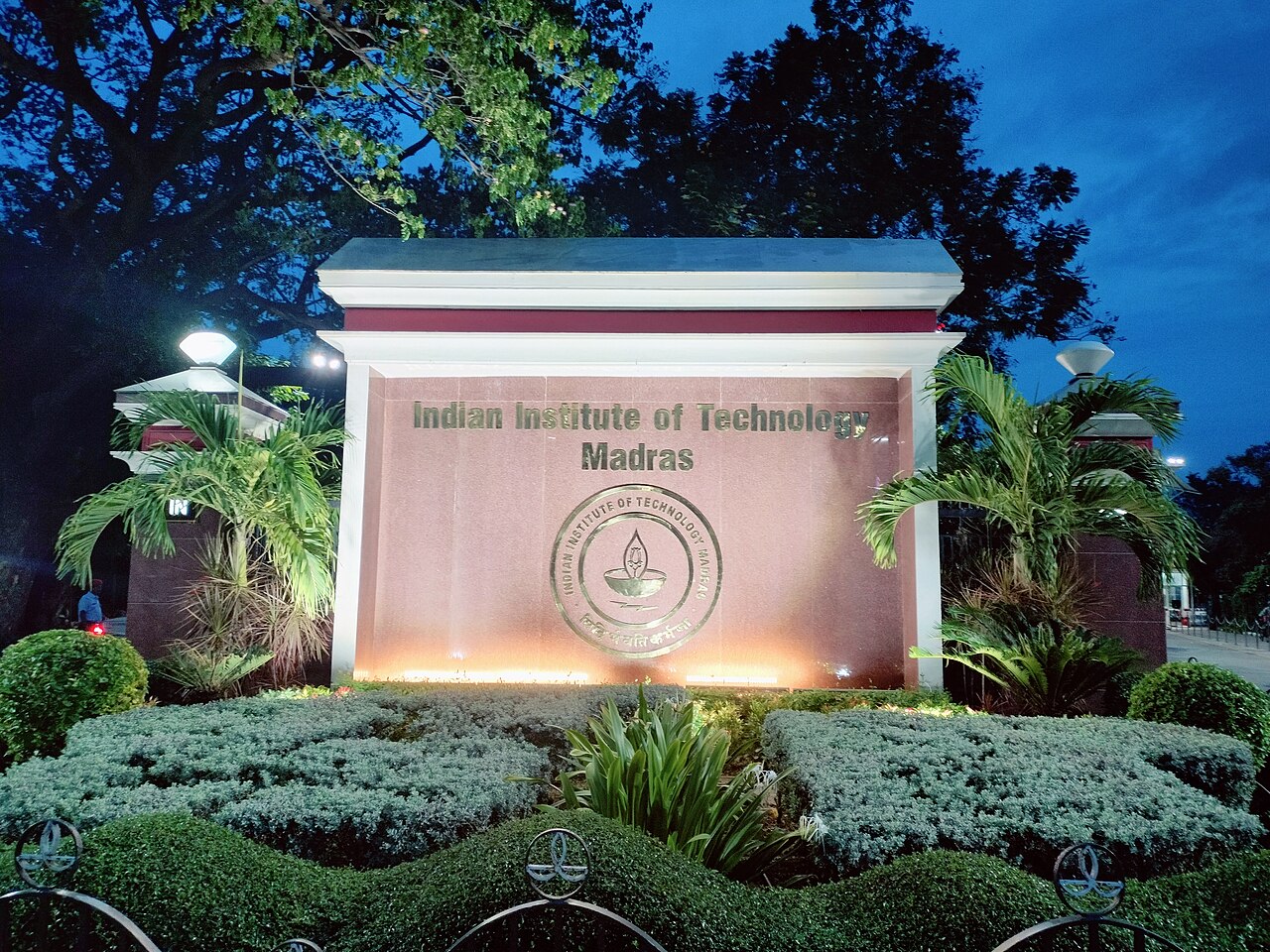
Sources: QS World University Rankings 2027 (18 June 2026); NIRF 2025 Engineering; NIRF 2025 Research; Business Today QS 2027 summary. Image: IIT Madras main gate via Wikimedia Commons. Last updated: 16 August 2026.