

Founder Stories · IIT Madras · Published 1 November 2026
On 26 October 2026, Tarun Mehta told analysts that Ather Energy had made money for the first time. The figure was small: a consolidated profit of ₹1.26 crore for the July to September quarter, against a loss of ₹154.07 crore a year earlier, on revenue from operations of ₹1,464 crore, up 63%, according to the investor presentation Ather filed with BSE. On the call, according to the transcript, he said: "I would be remiss in not acknowledging the first time our business hit positive PAT, something definitely worth celebrating for us. I do want to call out, however, that we're not out of the woods." Forbes India called Ather "the first major standalone EV company in India to turn a profit."
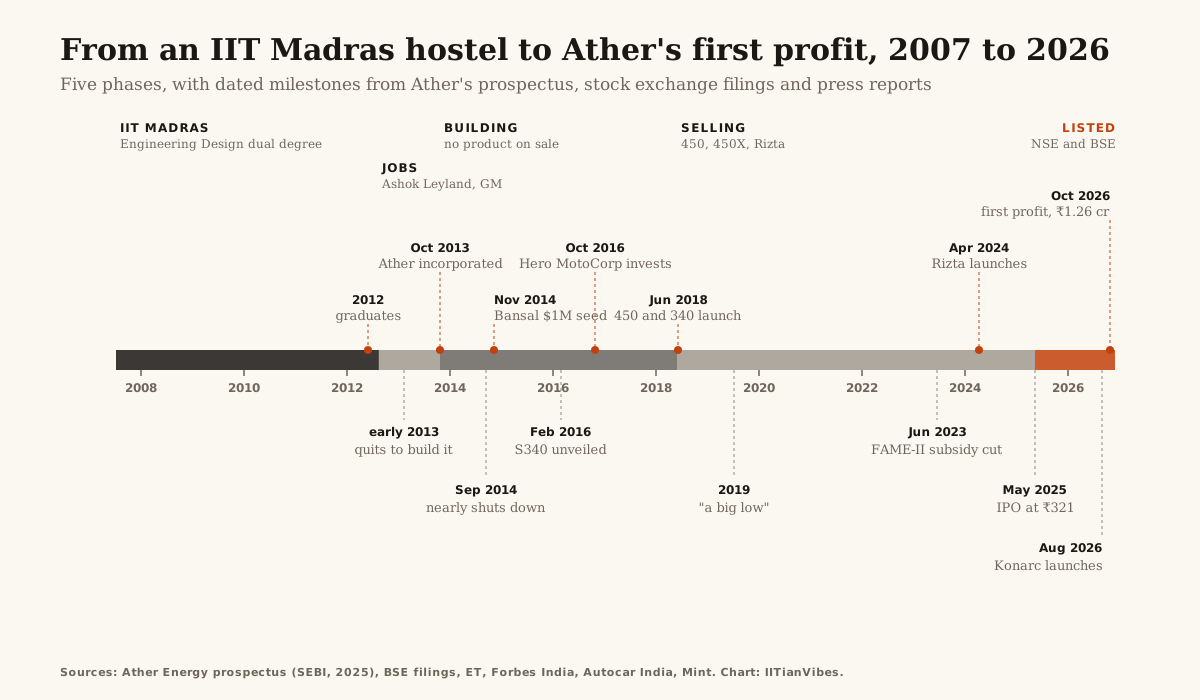
Twelve years earlier, the same company had nearly closed. In September 2014 Ather ran out of money, and Mehta told Forbes India in 2023: "We had decided to close down in November." The shares jumped 14% on results day, News18 reported, and by 29 October Moneycontrol put its market value at about ₹65,000 crore.
Ather was started by two IIT Madras Engineering Design classmates, Mehta and Swapnil Jain, out of the institute's incubation cell. It spent five years building before it sold a scooter, and survived three near-shutdowns. This is how they did it, and what an IIT student can take from it.
Engineering Design, one hostel, and a failed Harvard interview
Mehta describes himself as "a Marwari who grew up in Gujarat", as Mint reported in a 2019 profile. He grew up in Ahmedabad, and getting into an IIT from there was rare in his year: "I think only six people cleared IIT in the entire city (Ahmedabad) during that year," he told Mint.
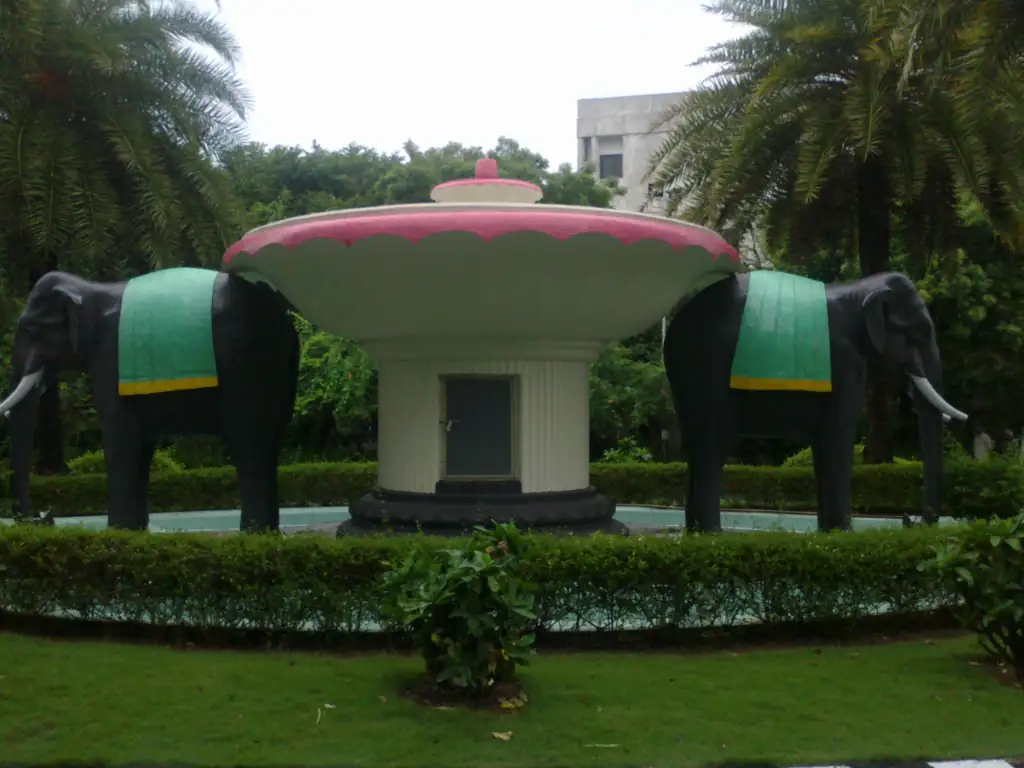
At IIT Madras he joined the five-year dual degree in Engineering Design. Ather's IPO prospectus, filed with SEBI in 2025, says he "holds a bachelor's and masters' degree in technology in engineering design from Indian Institute of Technology, Madras under the dual degree programme." The prospectus uses the same sentence for Swapnil Jain, a Mumbai native who joined IIT Madras in 2007 and finished his master's there in 2012, according to YourStory. The two were, in Mint's words, "in the same department and same hostel." No source we found names the hostel.
In his second year Mehta joined the institute's entrepreneurship cell, and an E-Cell trip to Stanford changed how he thought about work. "While I thought I was just getting a nice paid vacation, Stanford turned out to be a beautiful experience. It was probably the most important experience of the five years of college," he told Mint. Mint also reports that the name "Ather Energy" was Jain's idea, first used for a different student idea.
The Engineering Design department was built around making things. Prof. R. Krishna Kumar, who later advised Ather, told The Economic Times in 2015 that the course wanted "to bring engineering close to practice." Mehta credited it directly in the same piece: "By the time we started Ather, we just knew where to look for what. We had built vehicles several times over from scratch."

He did not plan to start a company. In his final year, in 2012, he applied to Harvard Business School's 2+2 programme, The Economic Times reported in October 2026, citing a podcast interview. He called it "an absolutely pathetic, disastrous interview" and said he was "so married to the idea of Harvard MBA life set". To the Hindustan Times version of the same story he added: "I knew I'm not going to get it. I didn't get it. And I didn't have a plan B."
So he took a job. After graduating, Mehta joined Ashok Leyland and Jain joined General Motors, The Economic Times reported in 2016. Jain told the paper: "I was in Bengaluru with General Motors. I would go on Sundays to Chennai and come back. One fine day, I decided to quit my job and decided to do it in a dedicated fashion."
Back to campus as project associates: a battery pack, then a scooter
Both had quit by March 2013, after about six months on the job, according to The Hindu. They went back to IIT Madras. "We took up project associate work. It was almost like coming back as students," Mehta told The Economic Times, describing hostel rooms and lab benches. "Just six-seven months later, we had built a prototype of both a scooter and a battery pack. We were stupid enough and nobody advised us against it. We just started the company." Prof. Krishna Kumar remembered the request in the same article: "He (Mehta) came back one day and asked 'Can you help us?'"
The first product was not a scooter. "To test our battery pack, we were building a mock vehicle, and realised it is a lot of fun building the vehicle," Mehta told Fortune India in 2025. On Nikhil Kamath's podcast, as Business Today transcribed it, he put it more plainly: "And later we were building a scooter on the side to put that battery pack on and we fell in love with the scooter. So we became a vehicle company."
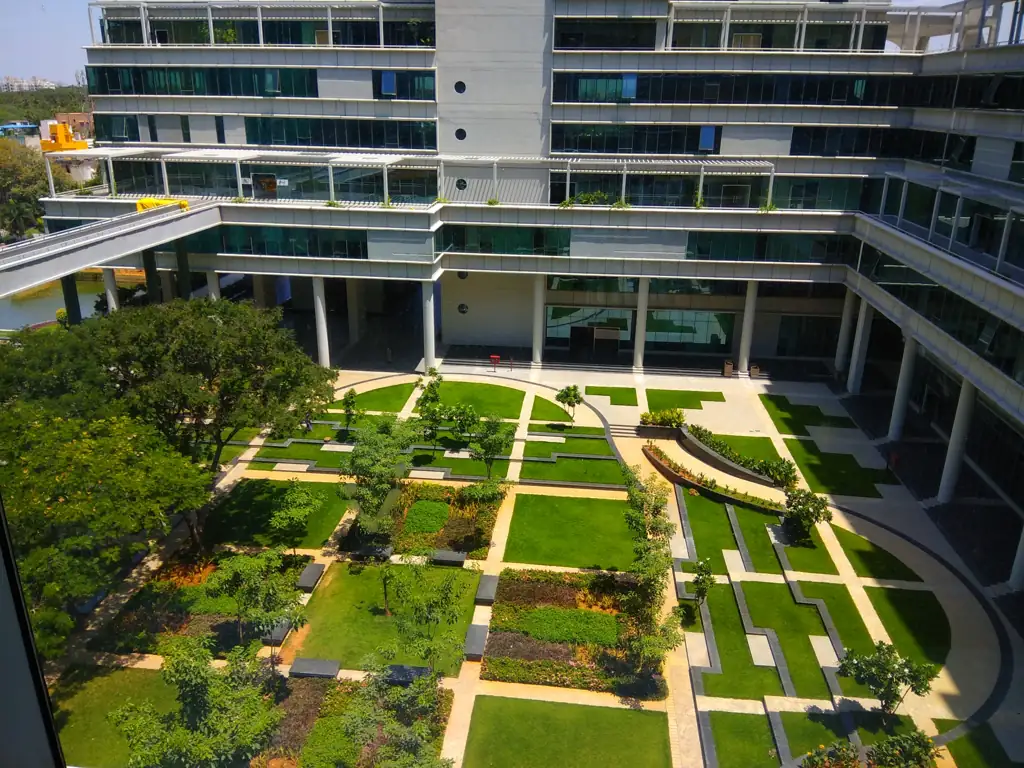
The paperwork followed. The prospectus records that Ather Energy Private Limited was incorporated in Chennai on 21 October 2013, and that IIT Madras's incubation cell took its shares under an incubation agreement dated 23 December 2013. The first money came from people who believed the pitch. "Around 25 of them paid us money upfront," Mehta told Mint; the first person he asked, an IIT Madras professor, "wrote a cheque for ₹85,000 on the spot." An angel investor added ₹25 lakh, and of the institute's incubation money he said: "They (IIT, Madras) gave us another ₹15 lakh, which lasted for a year." The Hindu named the early backers as the Technology Development Board and Srini V. Srinivasan, an IIT alumnus and Aerospike co-founder.
That bet paid the institute back. When Ather listed in May 2025, IIT Madras's incubators sold a small slice of their holding, and YourStory calculated that the institute "netted 40X gains" at the listing price.

Three times Ather nearly died: 2014, 2015 and 2019
September 2014. Forbes India reports that eleven months after incorporation Ather had run out of money, and that the founders kept it going through October on personal loans. Mehta's last idea was a message to Flipkart co-founder Sachin Bansal: "He was my last shot." The pitch had failed with other investors. The Economic Times recorded the exchange: "This pitch is clearly not working. What aspect of it do you think we should change?" Mehta asked. "Nothing," Bansal replied. "If anything is going to get you the money, this will. Changing it will not help." Sachin and Binny Bansal put in $1 million, which The Hindu reported on 31 December 2014. Mehta called them "saviours", Mint wrote.
Early 2015. The second scare came within months. Ather had taken on debt that had to be repaid by 31 March, and a funding deal had been signed but the money was delayed. "We needed Rs40 crore of emergency capital," Mehta told Forbes India, which called it "a near-death experience". Ather then raised $12 million from Tiger Global in May 2015, The Economic Times reported.
The money bought time to build almost everything in-house. By January 2016, Autocar Professional reported, every part except the motor controller had been designed from scratch, from the battery pack to the touchscreen. Hiring was its own problem; for battery-pack design in India, Mehta said, "you are looking at a very very small set of people. Most probably, nobody." At the S340 unveiling in Bengaluru in February 2016 he called the scooter, according to Autocar Professional, "an unapologetically electric vehicle, designed and built mostly in-house with engineering precision."
In October 2016, Hero MotoCorp announced a ₹205 crore investment, per The Economic Times. Mehta's reaction to The Times of India shows how tight things had been: "This allows us to plan beyond the next 12 months." He also insisted: "Neither has our plan changed one bit with this investment, nor are we planning to accelerate the product development." The founders gave up their majority stake but, TOI reported, kept decision-making.
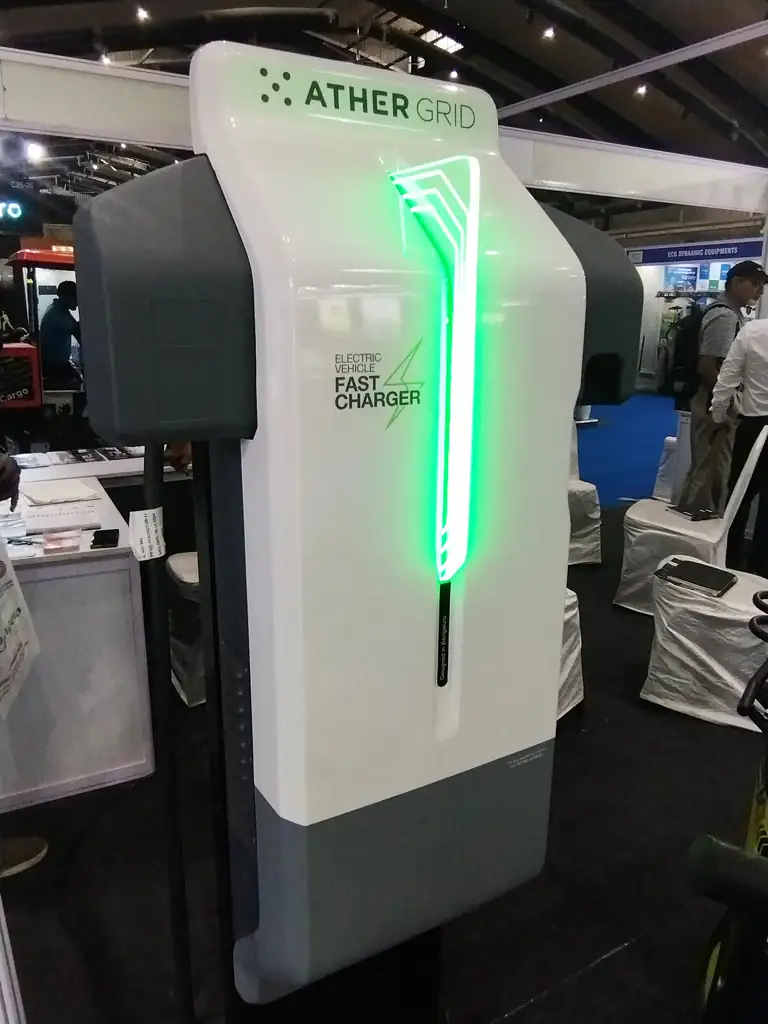
The Ather 340 and 450 finally launched in Bengaluru on 5 June 2018, at ₹1.10 lakh and ₹1.25 lakh on-road, with deliveries set to begin at the Whitefield factory on 10 September 2018, Autocar India reported. Ather had insisted on putting up its own AtherGrid chargers in a city before selling there. That was close to five years after incorporation with nothing on sale.
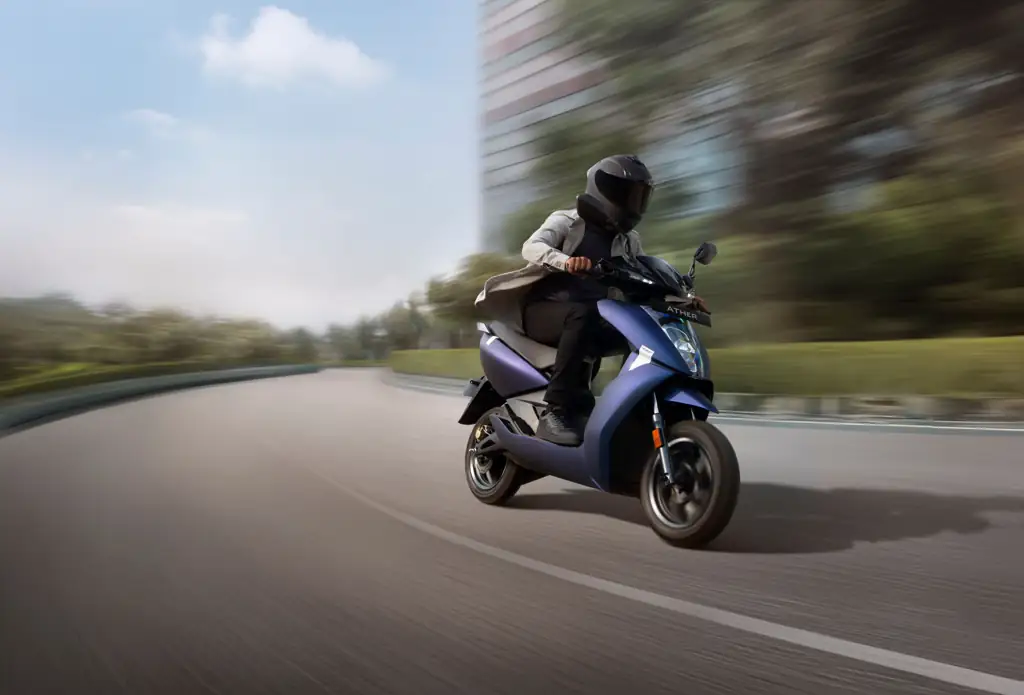
2019. The third crisis was not about cash. "Almost all of 2019 was a big low for us," Mehta told Forbes India. Months after launch, the founders realised the vehicle cost three to four times what they had planned. Forbes India lists the distractions of that year as a low-cost scooter, a motorcycle and international operations. Of one plan he said: "Going down the new plan meant only one thing: Sure-shot bankruptcy." He even tried pitching Ather to American investors as a pure intellectual-property company, Forbes India reports, and that went nowhere. Ather's operating revenue for 2018-19 was ₹4.2 crore, against a loss of ₹107.5 crore, the magazine noted.
The pivot: fix the core, then build for the other 85%
At the end of 2019, Mehta chose to stop chasing new products and go back to the one they had. Forbes India records what he told his team:
"Let’s stick to our guns. Let’s not give up on what we built for years."
Tarun Mehta, as quoted by Forbes India, on Ather's 2019 reset
He asked for a year to "give our engineering team 12 months to fix this". The result was the 450X, launched in 2020. By May 2021 Ather could assemble about 100 scooters in an eight-hour shift, where the first 450 had taken a week to put together, Forbes India reported. Mehta told the magazine: "I would say Ather really started selling in the last one year. Before that it was all a grand controlled experiment in what customers really wanted." In January to March 2021, he said, "For the first time, we had positive gross margins, positive unit economics."
Then the government changed the maths. From June 2023 the FAME-II subsidy on electric two-wheelers was cut sharply. Speaking at the Vibrant Gujarat summit in January 2024, Mehta told Autocar India: "We finished calendar year 2023 with the same volume as what we began the calendar with. If things had gone to plan, we would have at least doubled that. So, we lost 1 year of growth."
The bigger shift was in what Ather made. A cheaper 450S had not moved the numbers much. "When we launched the Ather 450S, we thought price was the big hiccup preventing us from selling more," he told Mint in April 2024. The lesson, he said, was "to not play the price game". Ather's sporty 450 served a small slice of buyers: "We decided we should build other products for 85% of the market." That product was the Rizta, a family scooter launched on 6 April 2024. Two years later, Autocar India reported: "That share rose to 76 percent in FY2026, as Rizta’s sales grew 121 percent year on year, helping Ather post a record annual volume of 2,60,070 electric scooters."
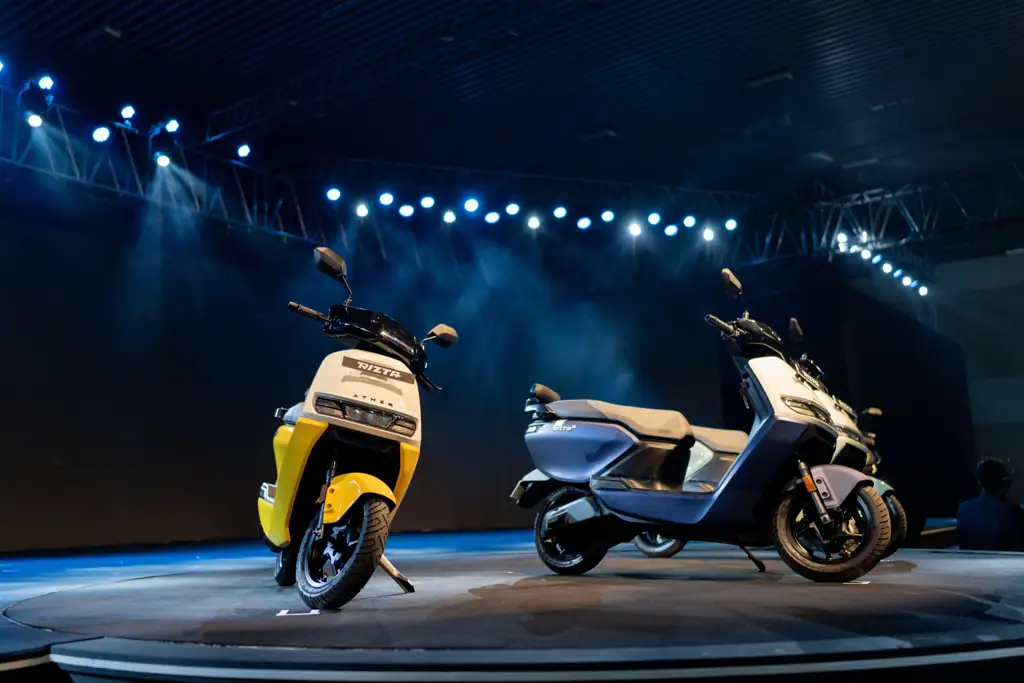
Ather's next base is the EL platform, unveiled in August 2025. "Just as the 450 defined our first chapter, EL will define the next," Mehta said, as Financial Express reported. Its first scooter, the Konarc, launched in August 2026 from ₹99,999 ex-showroom, according to Mint.
His approach is often set against that of his best-known rival, Ola Electric's Bhavish Aggarwal, an IIT Bombay graduate we profiled in July. Asked about building everything in-house, Mehta told Mint in September 2025: "Assembly, manufacturing, ultimately, after a certain point, is only so much valuable. It's a very last step optimization. The much richer optimization is in IP (intellectual property) and brand today. So we will always put our money there."
From the IPO to the first profit, May 2025 to October 2026
Ather's ₹2,980 crore IPO was priced at ₹321 a share. The listing on 6 May 2025 was muted: the stock opened at ₹328 on the NSE and closed the day at ₹302.30, Zee Business reported. Over the following months Ather passed Ola. In July to September 2025 it beat Ola on market value, sales and revenue, Mint reported, selling more than 65,000 scooters to Ola's 52,000.
The founders put their own money back in. In July 2026, Mehta and Jain each committed ₹20 crore, through convertible warrants, to a preferential issue in which the government-backed India-Japan Fund agreed to invest ₹200 crore, Mint reported. In August, Hero MotoCorp agreed to buy up to ₹1,758 crore more of Ather shares, taking its stake to 32.8%, per BusinessLine.
Demand did the rest. After the April to June quarter, Mehta said demand had "really gone into a very different orbit altogether, up 158 percent compared to the same time last year," as Forbes India reported. The July to September quarter brought the first profit.
Ather Energy, July to September 2026 (Q2 FY27)
| Measure | Q2 FY27 | A year earlier | Source |
|---|---|---|---|
| Profit (loss) for the period | ₹1.26 crore | (₹154.07 crore) | Ather investor presentation (BSE) |
| Revenue from operations | ₹1,464.24 crore | ₹898.88 crore | Ather investor presentation (BSE) |
| EBITDA | ₹74.17 crore | (₹90.76 crore) | Ather investor presentation (BSE) |
| Scooters sold | 93,211 | about 66,000 | Ather investor presentation (BSE) |
| Share of electric two-wheeler sales (Vahan) | 15.1% | 17.2% | Ather investor presentation (BSE) |
| Unmet retail demand (company estimate) | about 20,000 a month | n/a | Q2 FY27 call transcript (BSE) |
| Installed capacity target | 11.4 lakh a year by Q2 FY28 | n/a | Q2 FY27 call transcript (BSE) |
| Market value | about ₹65,000 crore (29 Oct) | n/a | Moneycontrol |
The quarter also showed the limits. Ather's share of electric two-wheeler sales fell to 15.1% from 17.2% a year earlier, because it could not make scooters fast enough. On the call, Mehta said the team estimated "roughly about 20,000 units per month of unrealized retail that we are not tapping into yet." The board approved more capacity at Hosur and at the new AURIC plant near Chhatrapati Sambhajinagar, taking installed capacity to 11.4 lakh scooters a year by the second quarter of 2027-28, according to the transcript. He told The Economic Times that Ather is aiming for at least 20% of the market in the near term.
He also chose not to chase volume at any price. The cheapest Konarc variant, the SR1, will wait until the new plant is ready, because launching it now, he said on the call, "it's honestly a margin loss for us, which is not very healthy." And costs are rising: "Commodities have been worse than we estimated a quarter ago," he said, as Financial Express reported.
Where he is now, what riders and investors say, and five lessons
Mehta, who turned 37 on 31 October according to the date of birth in the prospectus, is Ather's executive director and chief executive; Jain is co-founder and chief technology officer, as Financial Express described him in 2025. Mehta held 4.86% of Ather in his own name at the end of September 2026, according to the shareholding pattern as compiled by Screener, with Jain holding the same. The Economic Times, citing Trendlyne, valued his stake at "close to Rs 3,000 crore as of September 2026." We found no Forbes or Hurun estimate of his net worth.

On Reddit, the IIT Madras connection gets noticed. When a 2025 thread in r/StartUpIndia pointed out how much IIT Madras's incubators made on Ather, a reply with 90 upvotes said: "IITM's incubation cell seems to be the most impactful one among all the IITs." (u/FreeBirdy00, r/StartUpIndia, 90 upvotes, 1 May 2025).
Comparisons with Ola come up constantly. In an r/IndianStreetBets thread on Ola Electric's share price falling to ₹27, one commenter said Aggarwal is "spread across too many things instead of fixing the core product", and went on: "compare this to ather's tarun mehta who's laser focused on one thing." (u/PRATYUSHHHHHHH, r/IndianStreetBets, 19 upvotes, 20 February 2026). A Rizta owner in r/Bhopal said they feel it is "one of the best ev scooter", and added: "Please don’t buy Ola its service is terrible." (u/AfterGuava1, r/Bhopal, 19 upvotes, 14 January 2026).
Not everyone is happy. A buyer in r/ATHERENERGY wrote in October about paying ₹1.53 lakh for a Konarc S125 in Bhopal: "where is the affordability that Tarun has been talking about? At this price, I expected better value for money, especially from a brand that positions itself as a premium EV manufacturer." (u/Nibbana_0, r/ATHERENERGY, 112 upvotes, 58 comments, 20 October 2026). A different owner, with two Rizta Z scooters, warned in November 2025: "Avoid Ather at this point ,it's just turning same mess as ola is already in." (u/No-man_show, r/ATHERENERGY, 4 upvotes, 16 November 2025). And on results night, investors who had bought the dip were pleased with themselves: "Moment of silence for those who did not buy the dip. You had 2 full months." (u/RaisedbyNuMetal, r/IndianStockMarket, 34 upvotes, 26 October 2026).
These are individual users, not audited facts. Taken together, they show what Mehta is now judged on: price and service, not whether an IIT Madras startup can build a scooter at all.
Five things worth taking from his story, if you are at an IIT now:
- Your department is a lab, so use it. Mehta and Jain had built vehicles several times over in Engineering Design before Ather existed. The projects you do in college can be the first version of a company.
- A rejection can be the start. A Harvard interview he calls disastrous left him with no plan B, which is how he ended up back on campus building a battery pack.
- Your institute's incubator is real money. ₹15 lakh from IIT Madras lasted Ather a year, and professors wrote the first cheques. Ask early.
- Fix the core before you chase the next idea. In 2019 the options were a cheaper scooter, a motorcycle and overseas markets. He gave engineering 12 months to fix the 450 instead, and that became the 450X.
- Price is not always the problem. The cheaper 450S did not move sales much; a different product for a different buyer, the Rizta, became 76% of volume.
From IIT Madras, or headed there? Wear it: IIT Madras hoodies, tees and varsity jackets, shipped across India.
For more on the institute, read our IIT Madras campus guide and IIT Madras placements 2026. Earlier IIT Madras founder stories include Aravind Srinivas of Perplexity and Sridhar Vembu of Zoho. Last week's profile was Nikesh Arora of Palo Alto Networks.
FAQ
What is Tarun Mehta's educational qualification?
He holds a B.Tech and M.Tech in Engineering Design from IIT Madras under the five-year dual degree programme, according to Ather's 2025 IPO prospectus. He finished in 2012. Co-founder Swapnil Jain holds the same dual degree from the same department and batch.
Who founded Ather Energy, and when?
Tarun Mehta and Swapnil Jain, IIT Madras classmates, founded it. Ather Energy was incorporated in Chennai on 21 October 2013 and incubated at the IIT Madras Incubation Cell. Its first scooters, the 340 and 450, launched in June 2018. It listed on the NSE and BSE in May 2025.
What is Tarun Mehta's net worth?
There is no Forbes or Hurun figure. He held 4.86% of Ather directly at the end of September 2026, per the shareholding pattern. The Economic Times, citing Trendlyne, valued his stake at close to ₹3,000 crore as of September 2026.
Is Ather Energy profitable?
Yes, for the first time in the July to September 2026 quarter: a consolidated profit of ₹1.26 crore against a ₹154.07 crore loss a year earlier, on revenue from operations of ₹1,464 crore. Mehta warned on the earnings call that Ather is "not out of the woods".
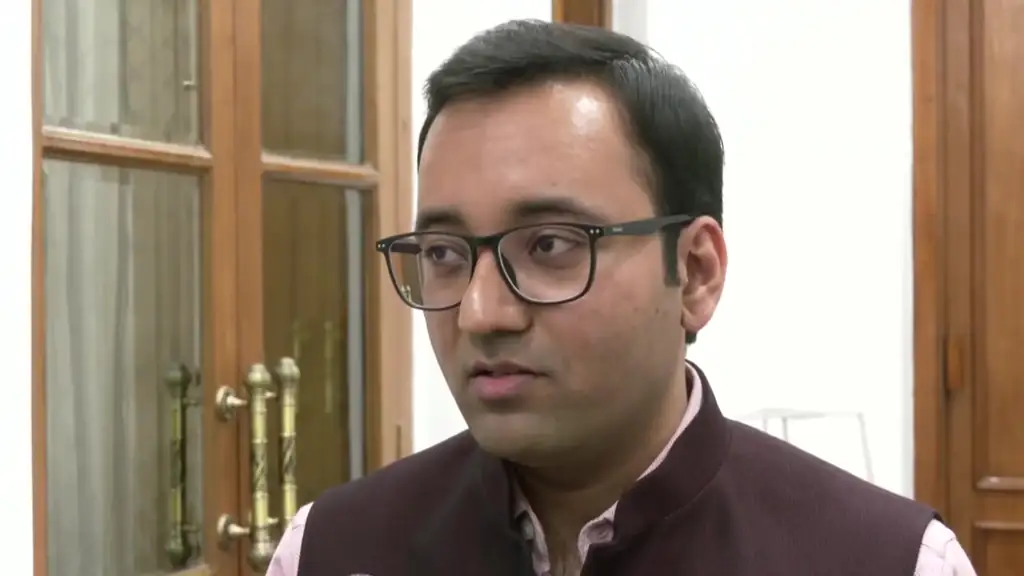
Hero photo: Tarun Mehta in Bengaluru, February 2023, a frame from the PMO India video "PM Modi really sees entrepreneurship as a central force for the country, says Tarun Mehta of Ather", published under a Creative Commons Attribution licence on YouTube. Card design: IITianVibes.
By Arun Raghav S · Co-founder, IITian Vibes · B.Tech, IIT Jodhpur. Last updated: 1 November 2026. Corrections to hello@iitianvibes.com.